






Science, 5th Unit 2 (part 1 - Vertebrates Animals
Animals
Unit 2 (part 1 - Vertebrates
By Daniel Juan
Table of Contents
Tap to jump to:
Introduction
The Animal Kingdom
1 Vertebrates
2 Invertebrates
Conclusion
Introduction
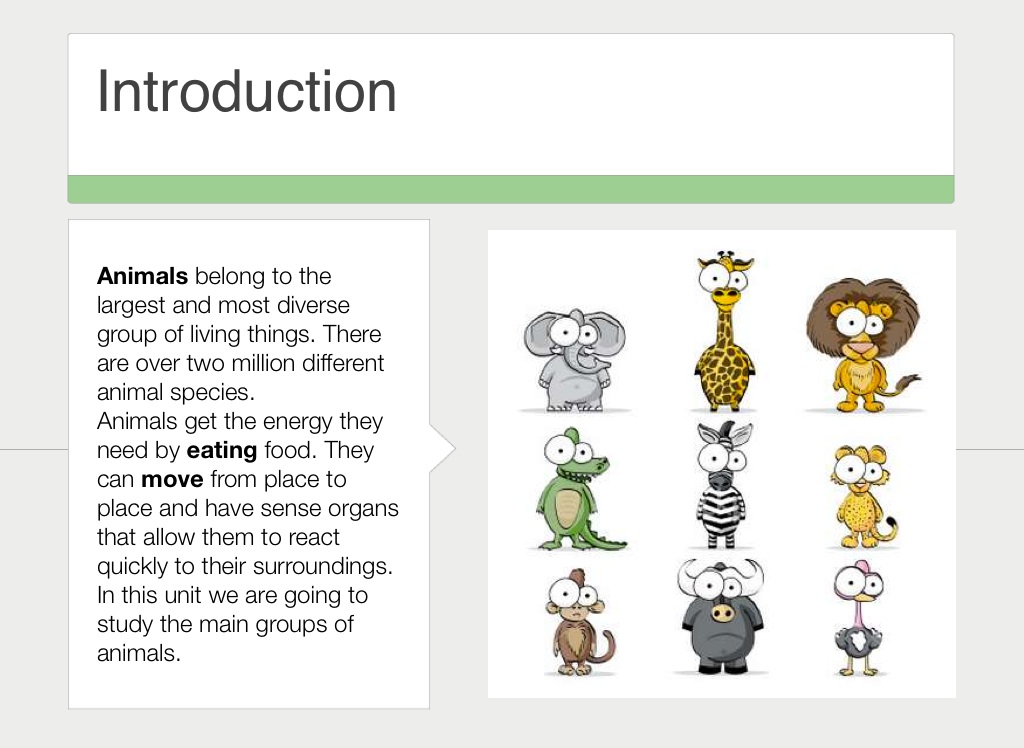
Animals belong to the largest and most diverse group of living things. There are over two million different animal species. Animals get the energy they need by eating food. They can move from place to place and have sense organs that allow them to react quickly to their surroundings. In this unit we are going to study the main groups of animals.
The Animal Kingdom
1.- Vertebrates
Characteristics of Vertebrates
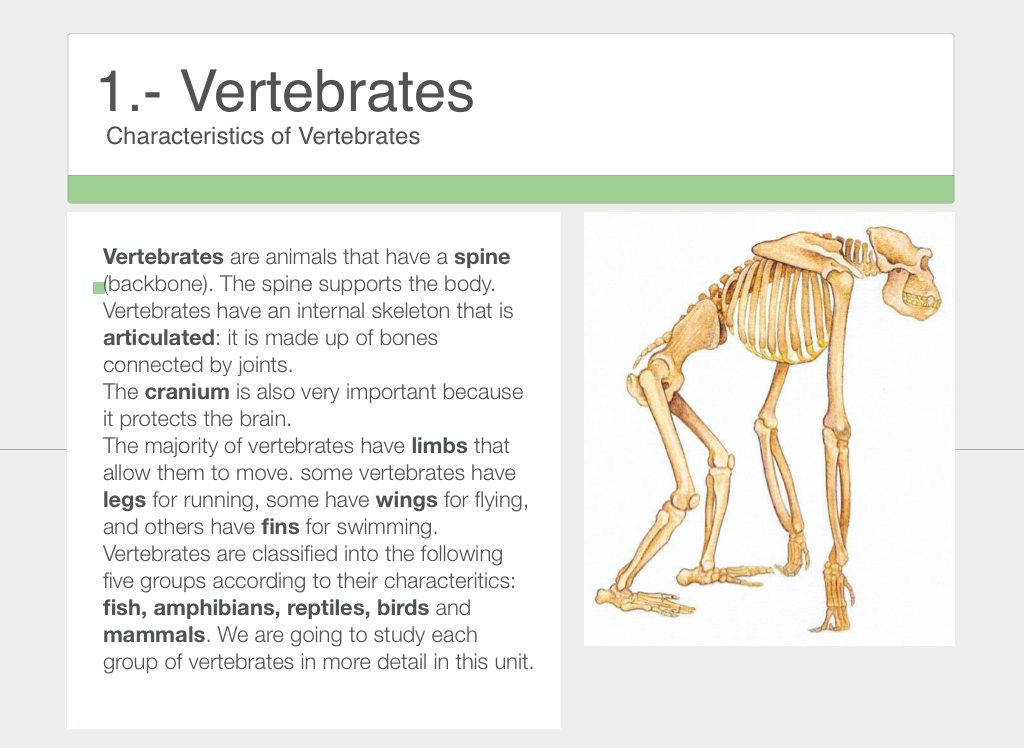
Vertebrates are animals that have a spine (backbone). The spine supports the body. Vertebrates have an internal skeleton that is articulated: it is made up of bones connected by joints. The cranium is also very important because it protects the brain. The majority of vertebrates have limbs that allow them to move. some vertebrates have legs for running, some have wings for flying, and others have fins for swimming. Vertebrates are classified into the following five groups according to their characteritics: fish, amphibians, reptiles, birds and mammals. We are going to study each group of vertebrates in more detail in this unit.
Title area
2.- Invertebrates
Characteristics of invertebrates
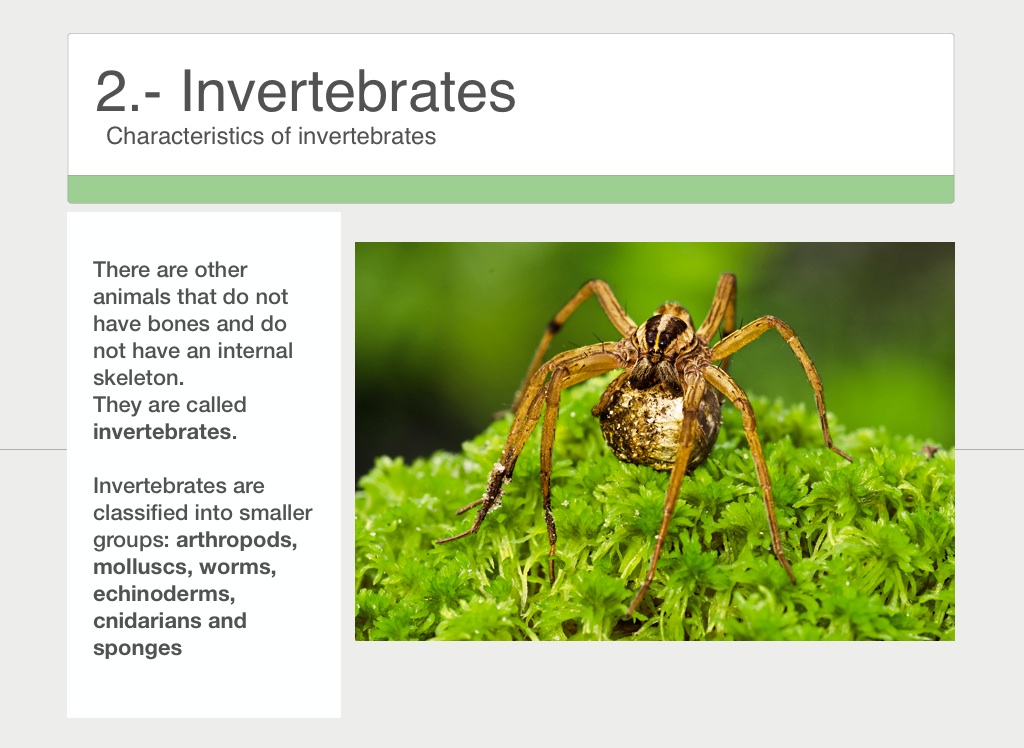
There are other animals that do not have bones and do not have an internal skeleton. They are called invertebrates. Invertebrates are classified into smaller groups: arthropods, molluscs, worms, echinoderms, cnidarians and sponges
Title area
More information
Animal Characteristics Game
Page 2
Page 3
Conclusion
1.1. Mammals
Characteristics of Mammals
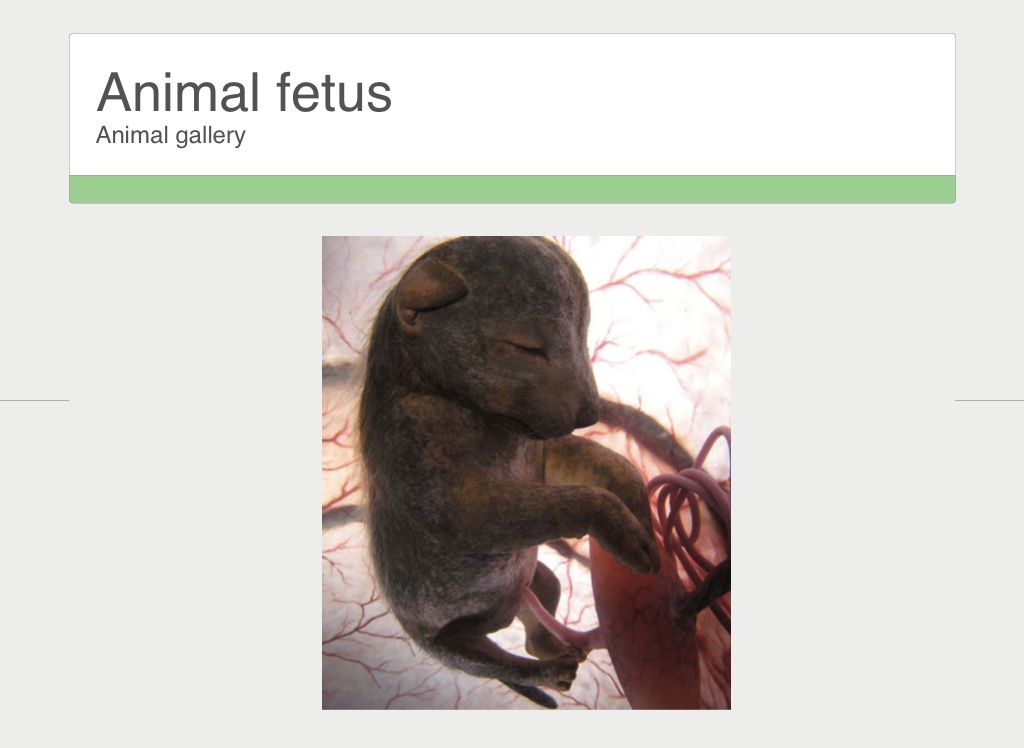
Mammals are vertebrates with the following characteristics: - They are viviparous. This means that the young develop inside the female’s body. The female mammal then gives birth to the live young. - They look after their young. After they are born, young mammals feed on their mother’s milk. - They are the only animals to have a body covered in hair or fur. - The majority of mammals are terrestrial and have four legs, which they use to walk with.
Some mammals, like dolphins and whales, live in the sea and have fins to swim with instead of legs. Bats are the only mammals that can fly. They can fly because they have wings. - Mammals are warm-blooded animals. This means that they keep their body temperature at a constant level. When it is cold, their fur and the layer of insulating fat beneath their skin helps to retain body heat and keep them warm. When they are too hot, they lose heat through their skin by sweating
Animal fetus
Animal gallery
Mammals video helpers
Mammals
What is a mammal?
Funny Song
From Discovery Channel
The most important characteristics of mammals.
The Jungle song.
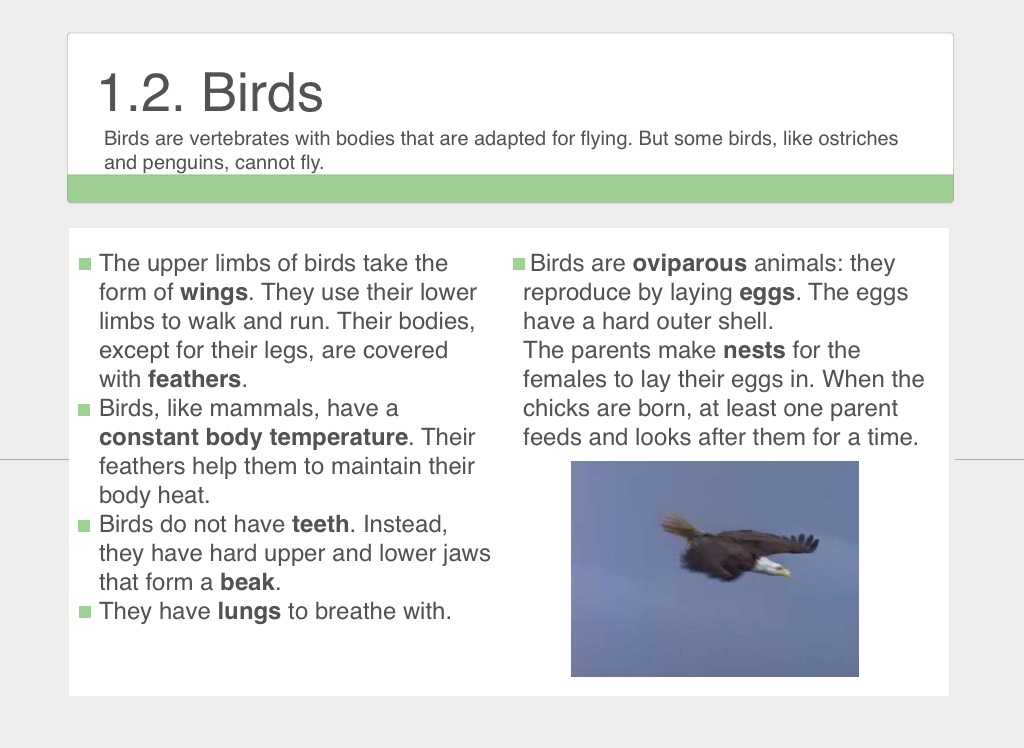
1.2. Birds
Birds are vertebrates with bodies that are adapted for flying. But some birds, like ostriches and penguins, cannot fly.
The upper limbs of birds take the form of wings. They use their lower limbs to walk and run. Their bodies, except for their legs, are covered with feathers. Birds, like mammals, have a constant body temperature. Their feathers help them to maintain their body heat. Birds do not have teeth. Instead, they have hard upper and lower jaws that form a beak. They have lungs to breathe with.
Birds are oviparous animals: they reproduce by laying eggs. The eggs have a hard outer shell. The parents make nests for the females to lay their eggs in. When the chicks are born, at least one parent feeds and looks after them for a time.
Birds video helpers
Top 10 Most beautiful birds
Birds Characteristics Review
Birds
Other kind of birds ;-)
1.3 Amphibians and reptiles
Amphibians are vertebrates that live part of their lives in fresh water and part on land.
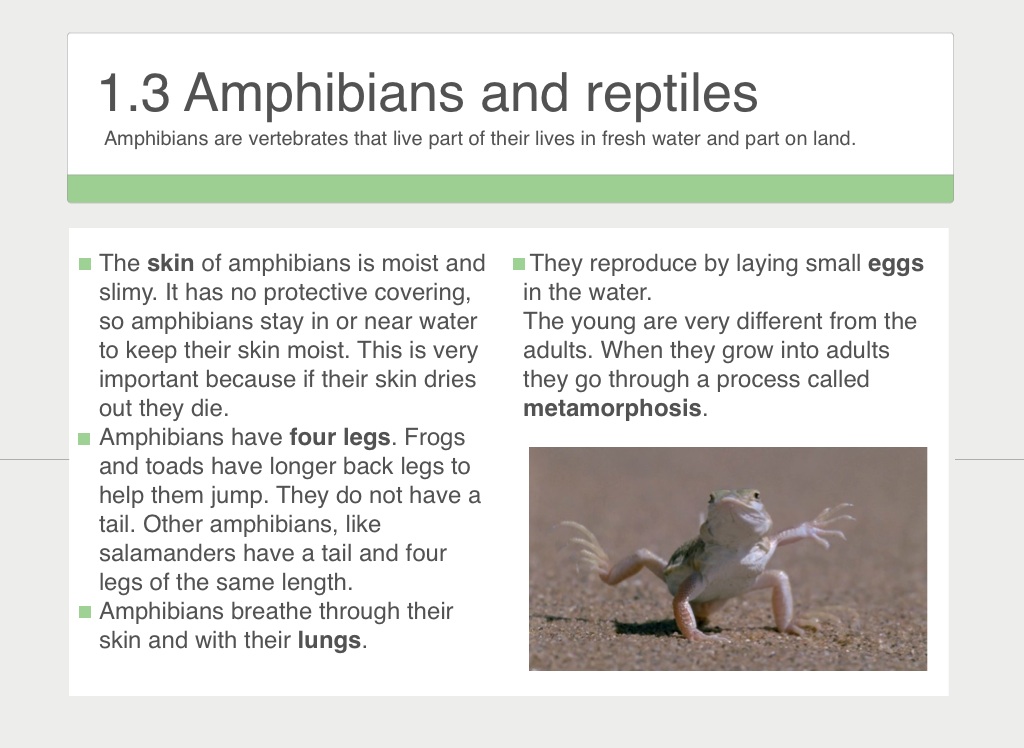
The skin of amphibians is moist and slimy. It has no protective covering, so amphibians stay in or near water to keep their skin moist. This is very important because if their skin dries out they die. Amphibians have four legs. Frogs and toads have longer back legs to help them jump. They do not have a tail. Other amphibians, like salamanders have a tail and four legs of the same length. Amphibians breathe through their skin and with their lungs.
They reproduce by laying small eggs in the water. The young are very different from the adults. When they grow into adults they go through a process called metamorphosis.
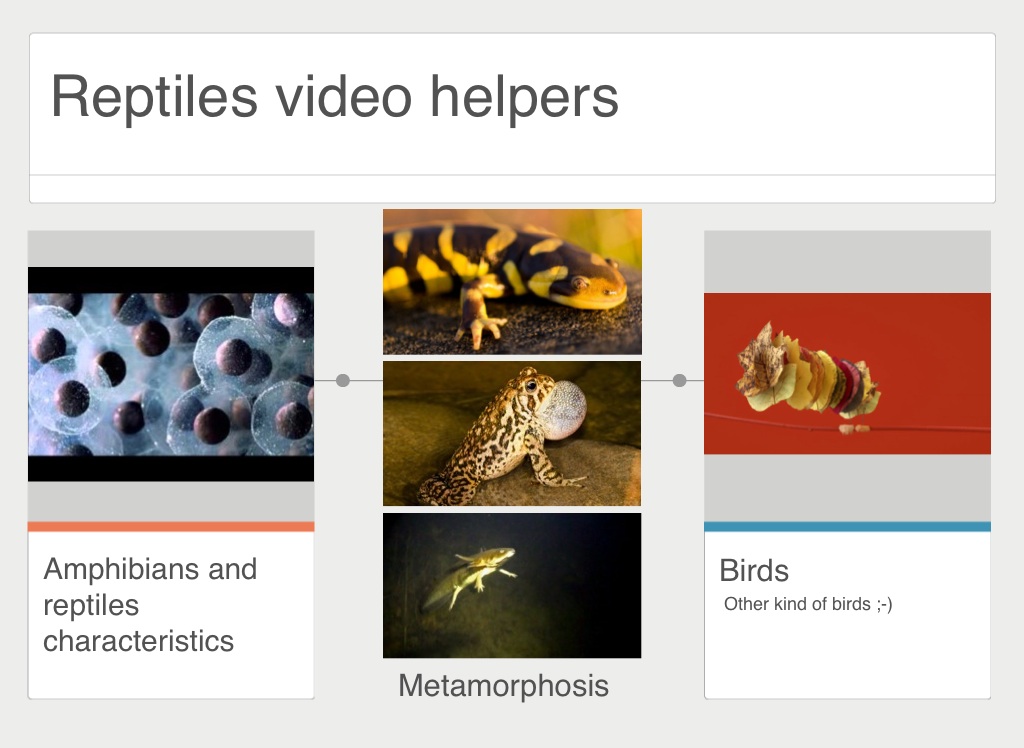
Reptiles video helpers
Amphibians and reptiles characteristics
Birds
Other kind of birds ;-)
Metamorphosis
1.4 Reptiles
Reptiles are cold-blooded vertebrates that are adapted to living on land
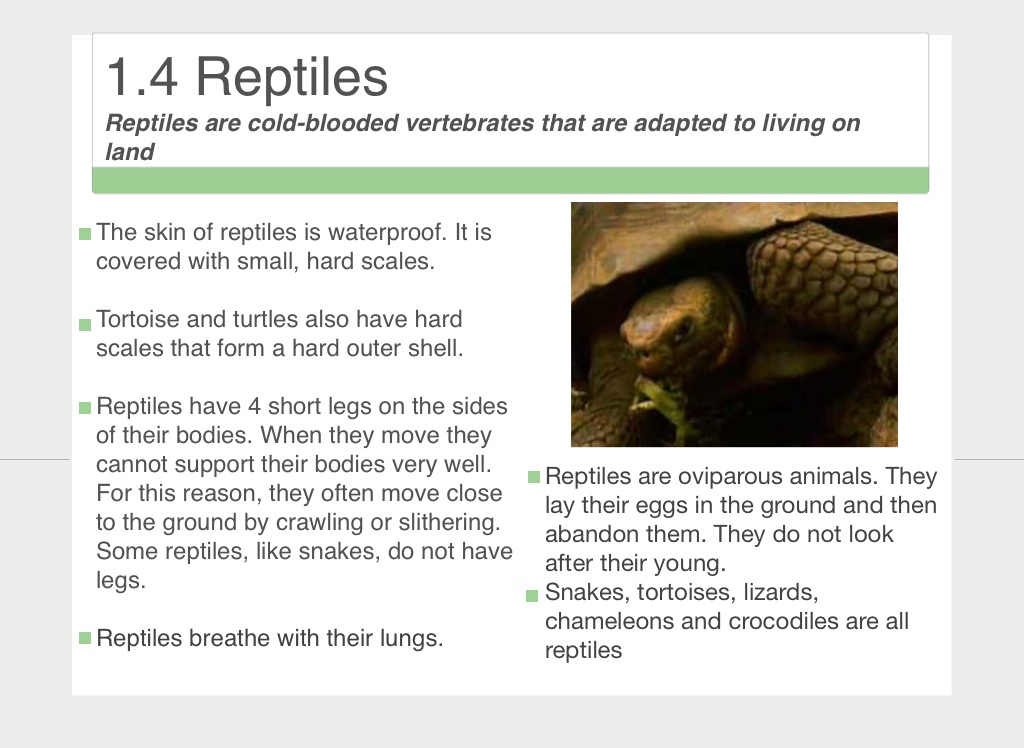
The skin of reptiles is waterproof. It is covered with small, hard scales. Tortoise and turtles also have hard scales that form a hard outer shell. Reptiles have 4 short legs on the sides of their bodies. When they move they cannot support their bodies very well. For this reason, they often move close to the ground by crawling or slithering. Some reptiles, like snakes, do not have legs. Reptiles breathe with their lungs.
Reptiles are oviparous animals. They lay their eggs in the ground and then abandon them. They do not look after their young. Snakes, tortoises, lizards, chameleons and crocodiles are all reptiles
1.5 Fish
The most primitive group of vertebrates are fish. They are also the most numerous. They live in water
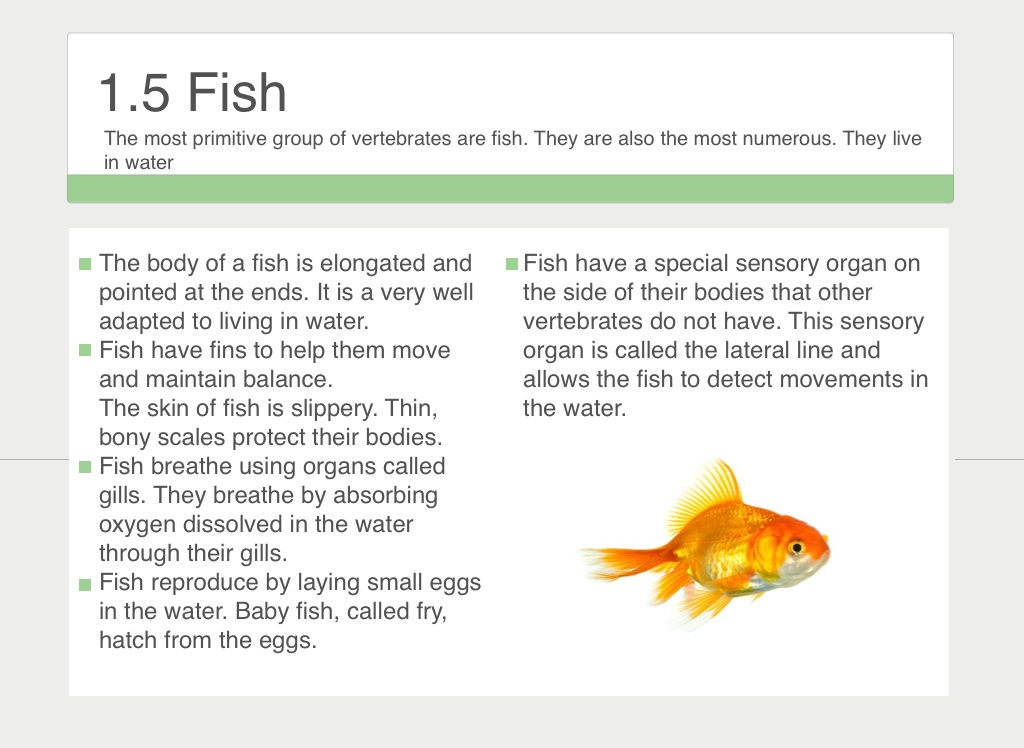
The body of a fish is elongated and pointed at the ends. It is a very well adapted to living in water. Fish have fins to help them move and maintain balance. The skin of fish is slippery. Thin, bony scales protect their bodies. Fish breathe using organs called gills. They breathe by absorbing oxygen dissolved in the water through their gills. Fish reproduce by laying small eggs in the water. Baby fish, called fry, hatch from the eggs.
Fish have a special sensory organ on the side of their bodies that other vertebrates do not have. This sensory organ is called the lateral line and allows the fish to detect movements in the water.
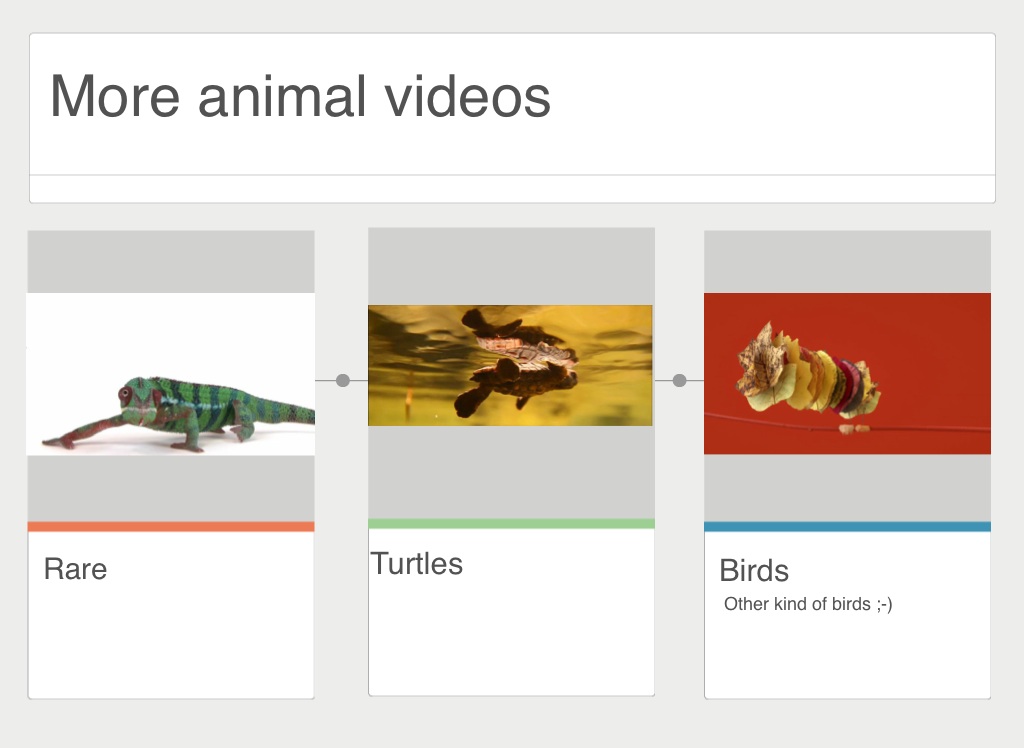
More animal videos
Rare
Turtles
Birds
Other kind of birds ;-)