









Freedom Bound - Stephen Flip Book
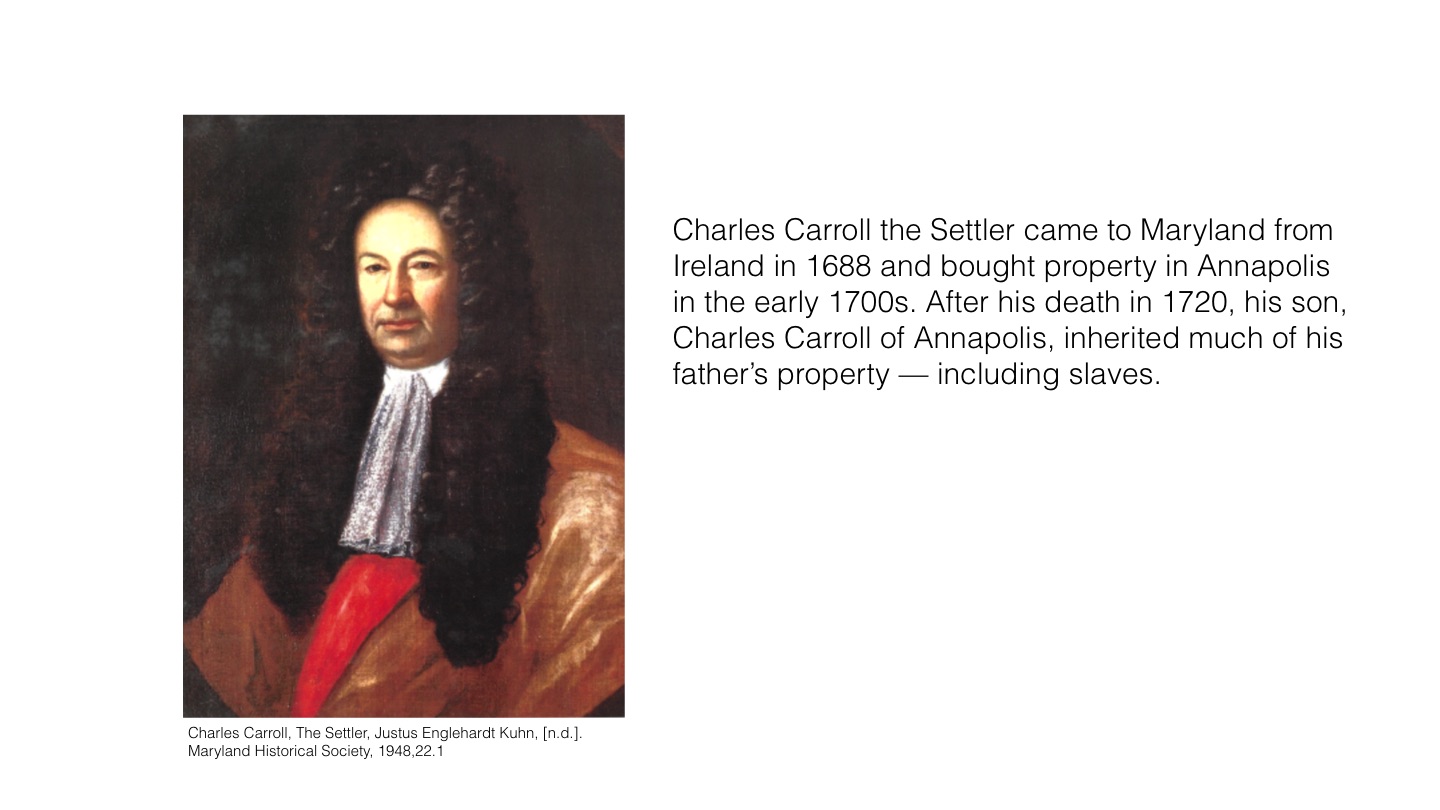
Charles Carroll the Settler came to Maryland from Ireland in 1688 and bought property in Annapolis in the early 1700s. After his death in 1720, his son, Charles Carroll of Annapolis, inherited much of his father’s property — including slaves.
Charles Carroll, The Settler, Justus Englehardt Kuhn, [n.d.]. Maryland Historical Society, 1948,22.1
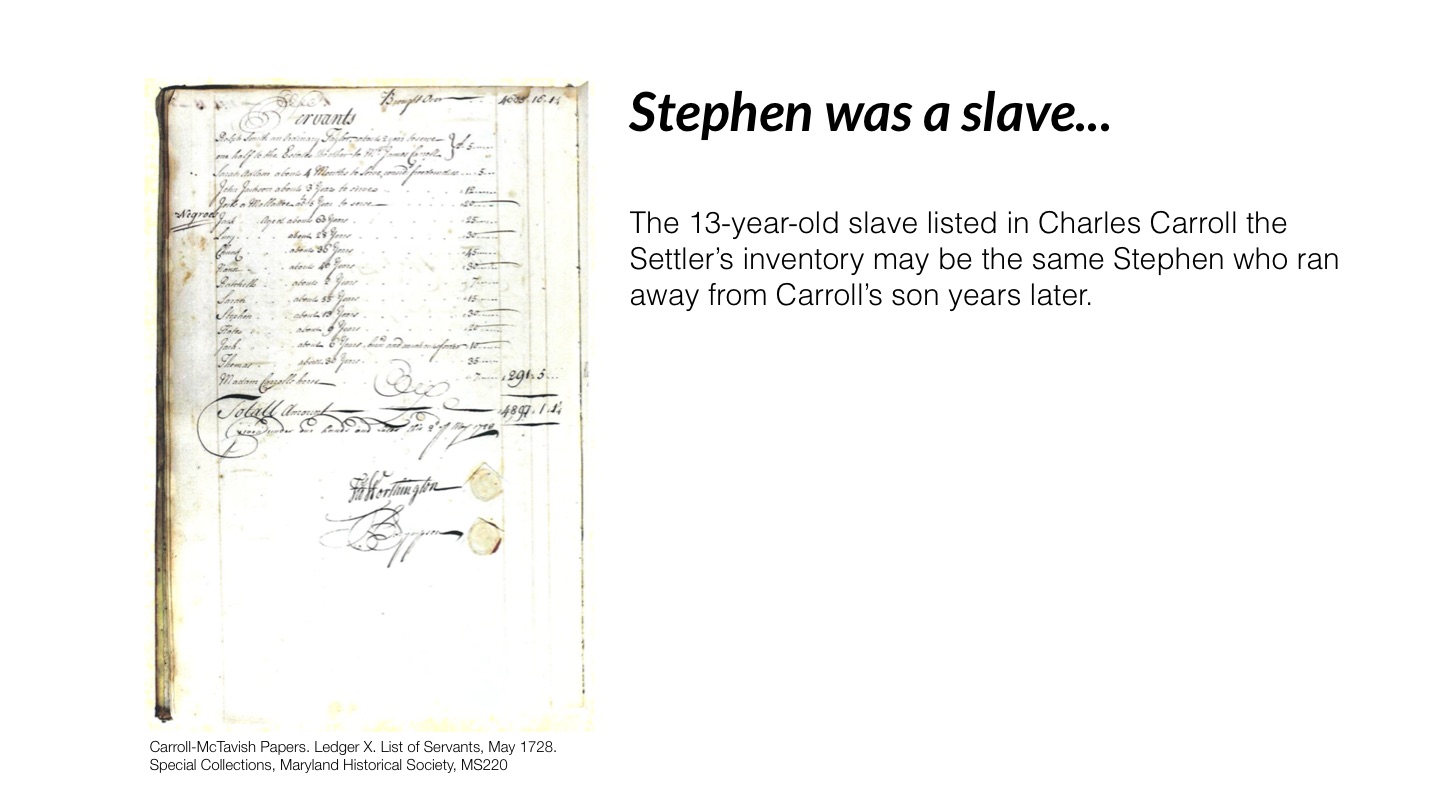
Stephen was a slave...
The 13-year-old slave listed in Charles Carroll the Settler’s inventory may be the same Stephen who ran away from Carroll’s son years later.
Carroll-McTavish Papers. Ledger X. List of Servants, May 1728. Special Collections, Maryland Historical Society, MS220
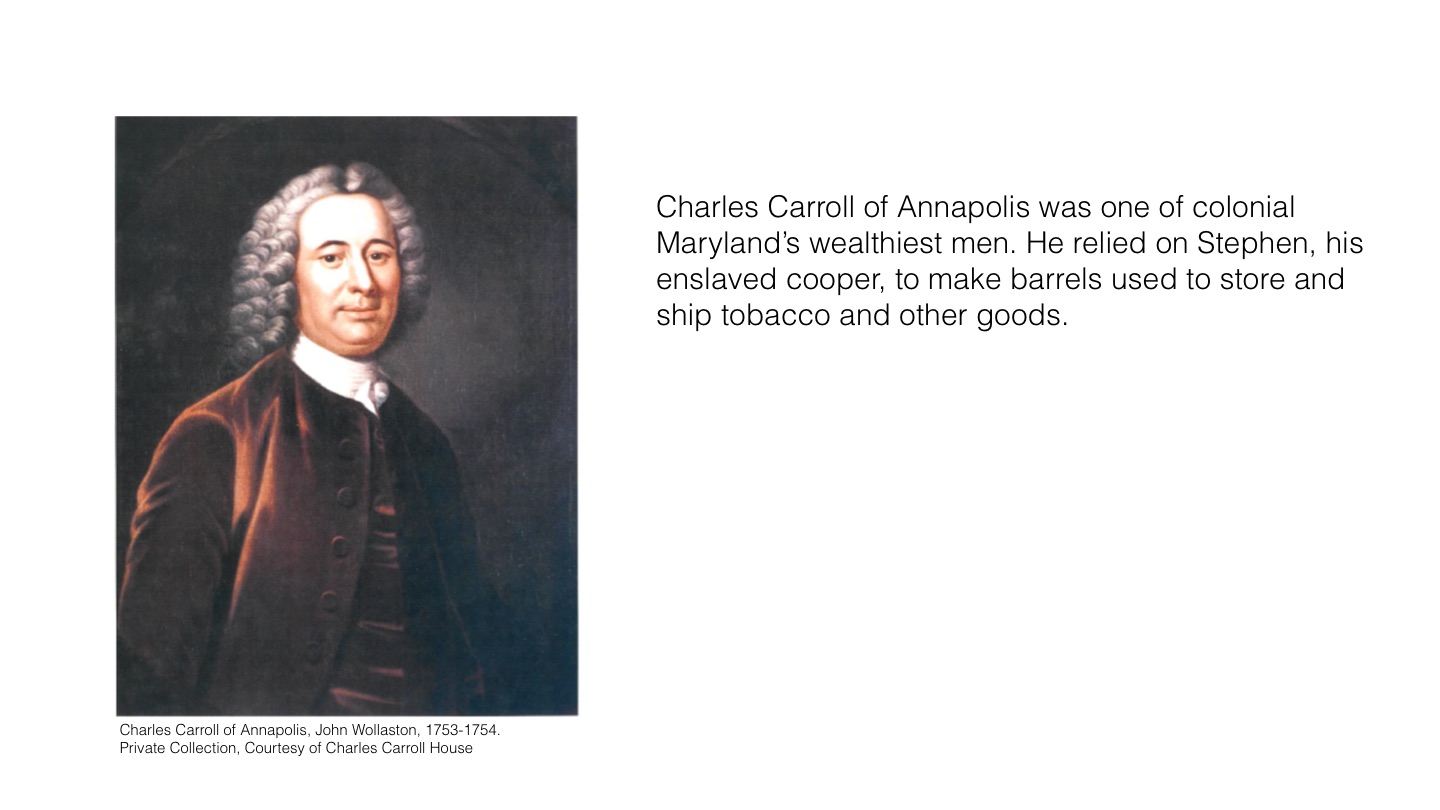
Charles Carroll of Annapolis was one of colonial Maryland’s wealthiest men. He relied on Stephen, his enslaved cooper, to make barrels used to store and ship tobacco and other goods.
Charles Carroll of Annapolis, John Wollaston, 1753-1754. Private Collection, Courtesy of Charles Carroll House
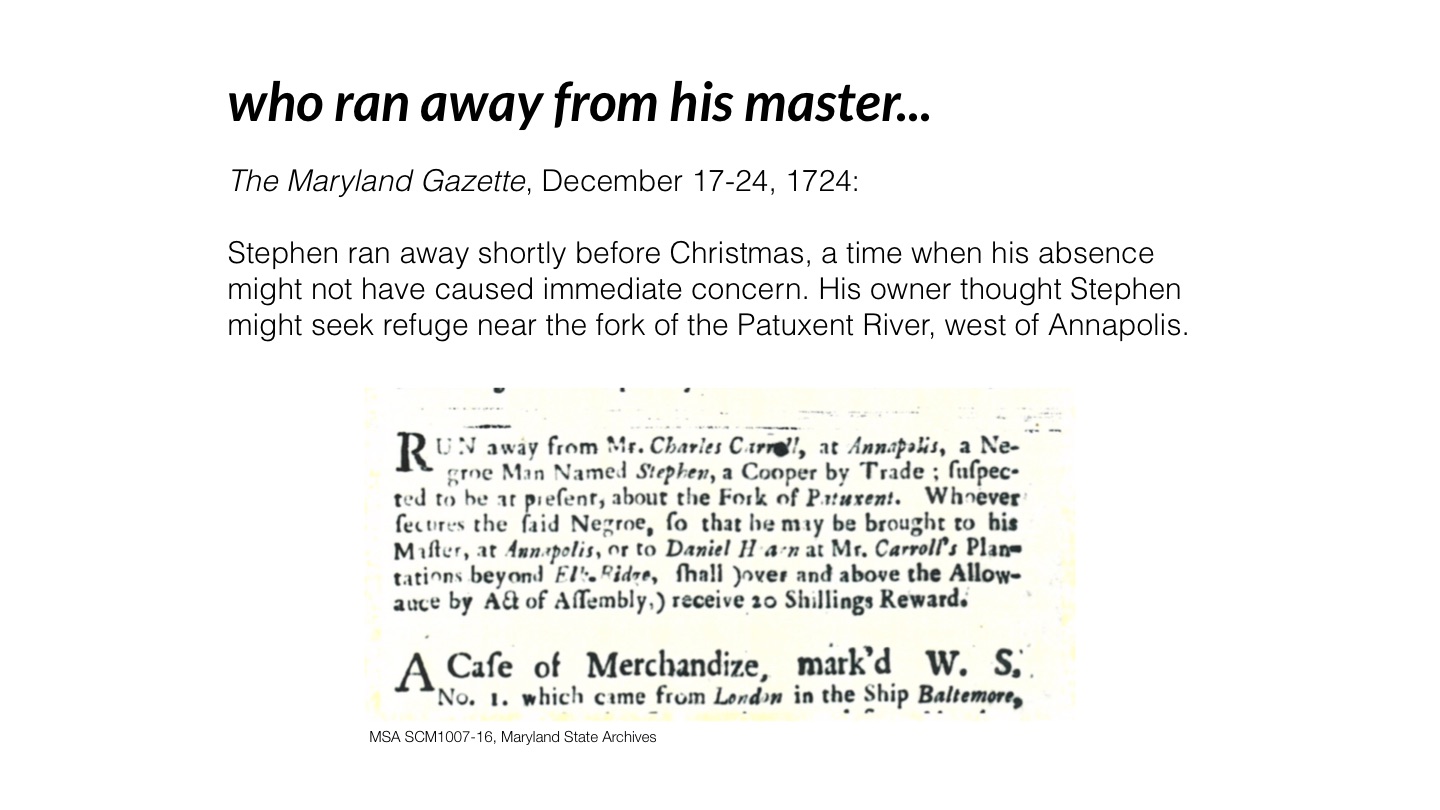
who ran away from his master...
The Maryland Gazette, December 17-24, 1724: Stephen ran away shortly before Christmas, a time when his absence might not have caused immediate concern. His owner thought Stephen might seek refuge near the fork of the Patuxent River, west of Annapolis.
MSA SCM1007-16, Maryland State Archives
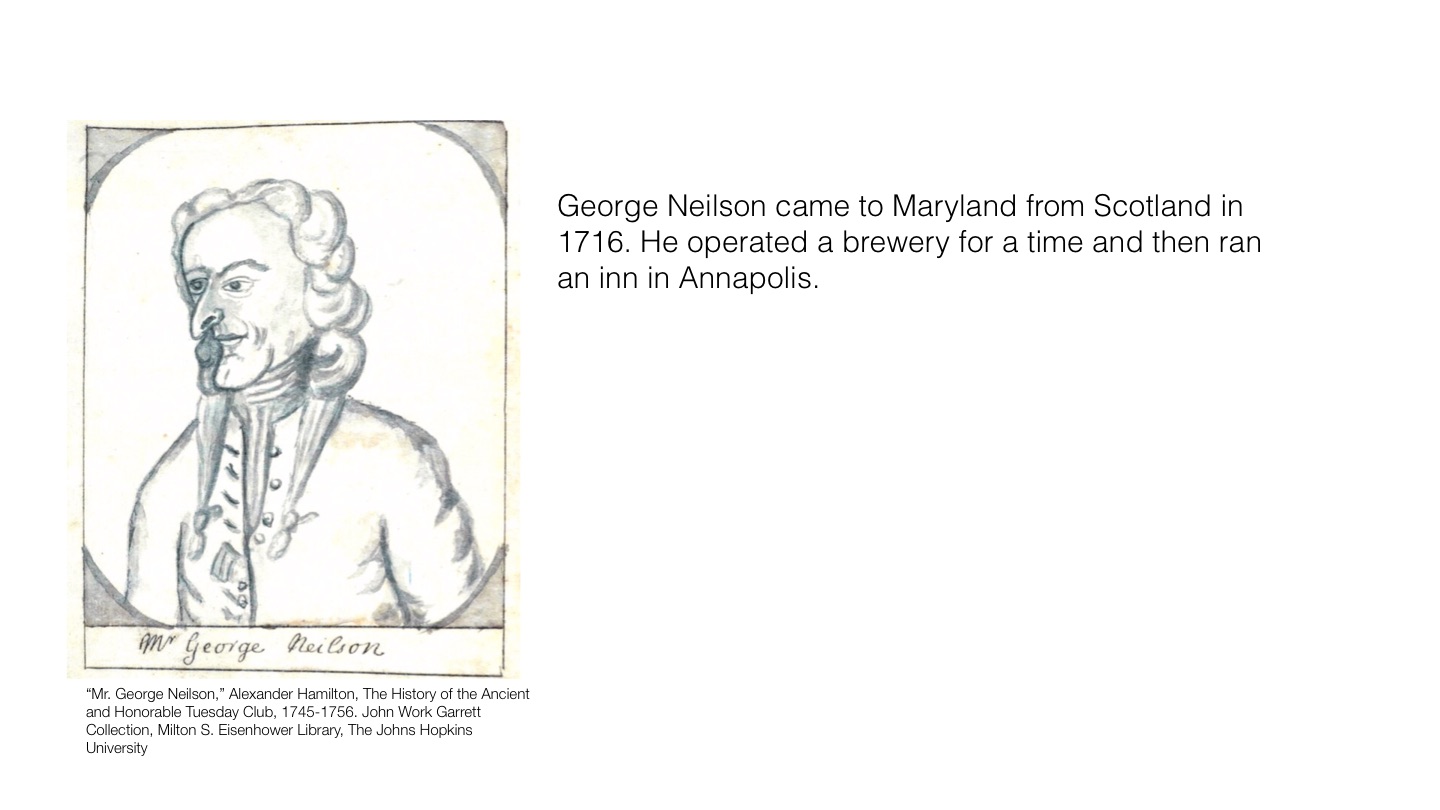
George Neilson came to Maryland from Scotland in 1716. He operated a brewery for a time and then ran an inn in Annapolis.
“Mr. George Neilson,” Alexander Hamilton, The History of the Ancient and Honorable Tuesday Club, 1745-1756. John Work Garrett Collection, Milton S. Eisenhower Library, The Johns Hopkins University
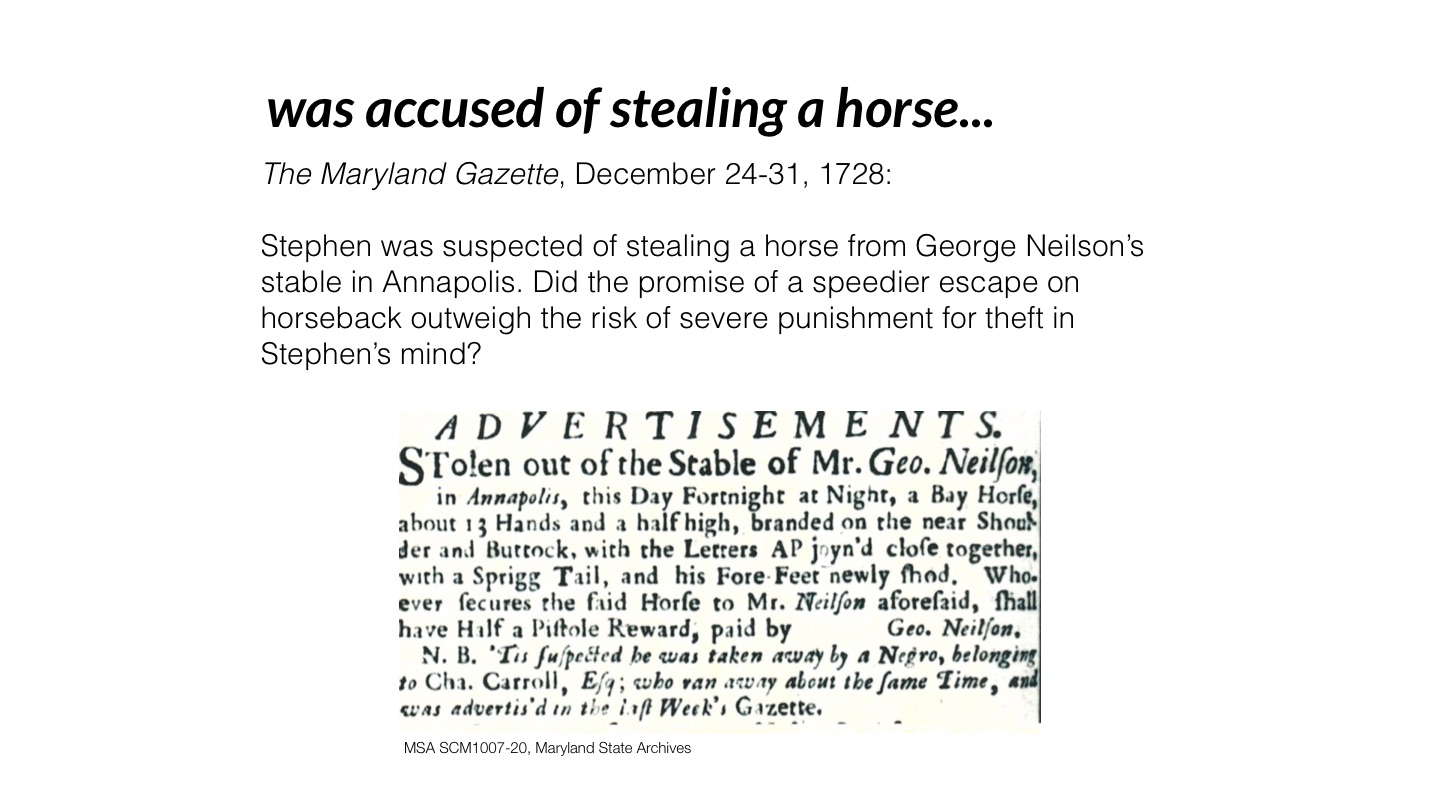
was accused of stealing a horse...
The Maryland Gazette, December 24-31, 1728: Stephen was suspected of stealing a horse from George Neilson’s stable in Annapolis. Did the promise of a speedier escape on horseback outweigh the risk of severe punishment for theft in Stephen’s mind?
MSA SCM1007-20, Maryland State Archives
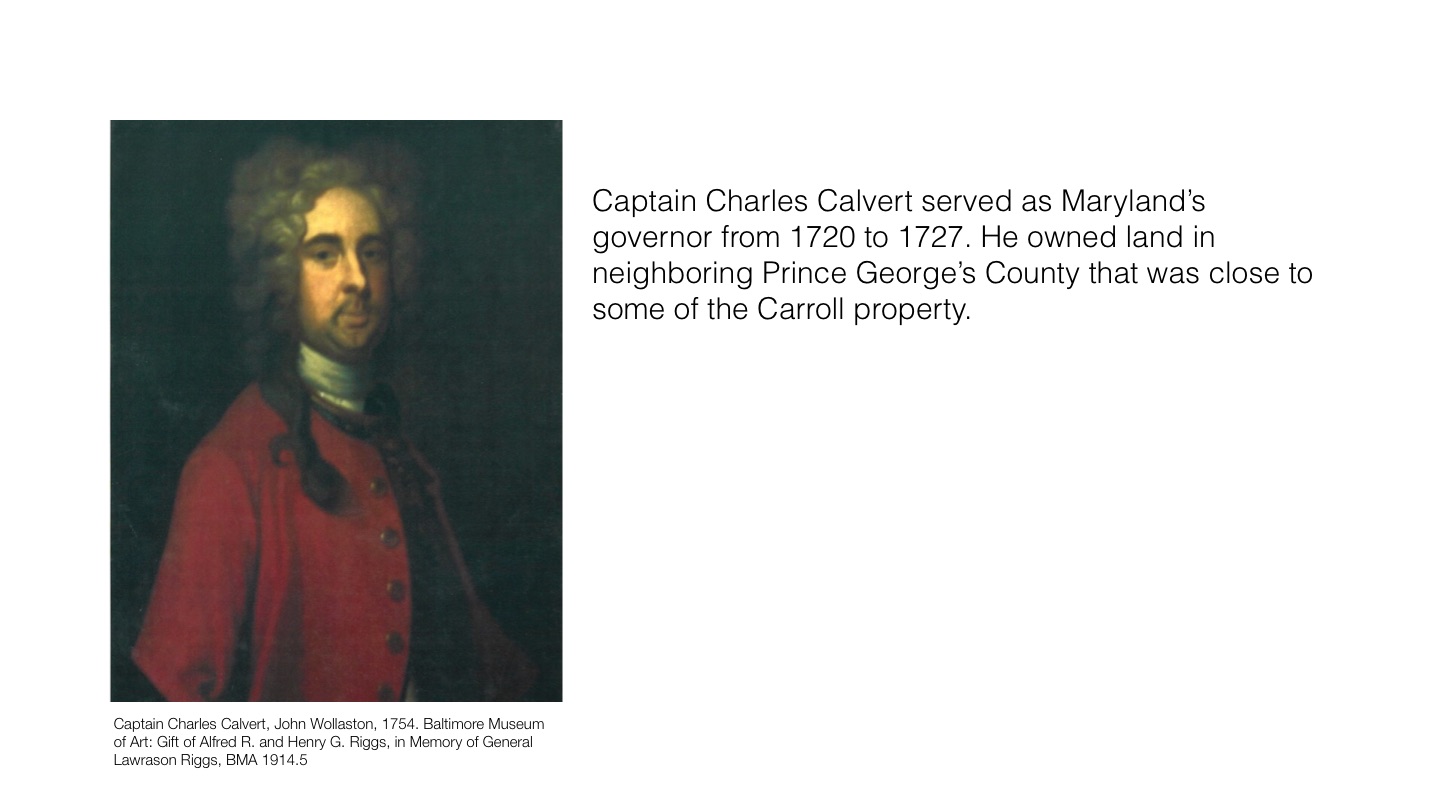
Captain Charles Calvert served as Maryland’s governor from 1720 to 1727. He owned land in neighboring Prince George’s County that was close to some of the Carroll property.
Captain Charles Calvert, John Wollaston, 1754. Baltimore Museum of Art: Gift of Alfred R. and Henry G. Riggs, in Memory of General Lawrason Riggs, BMA 1914.5
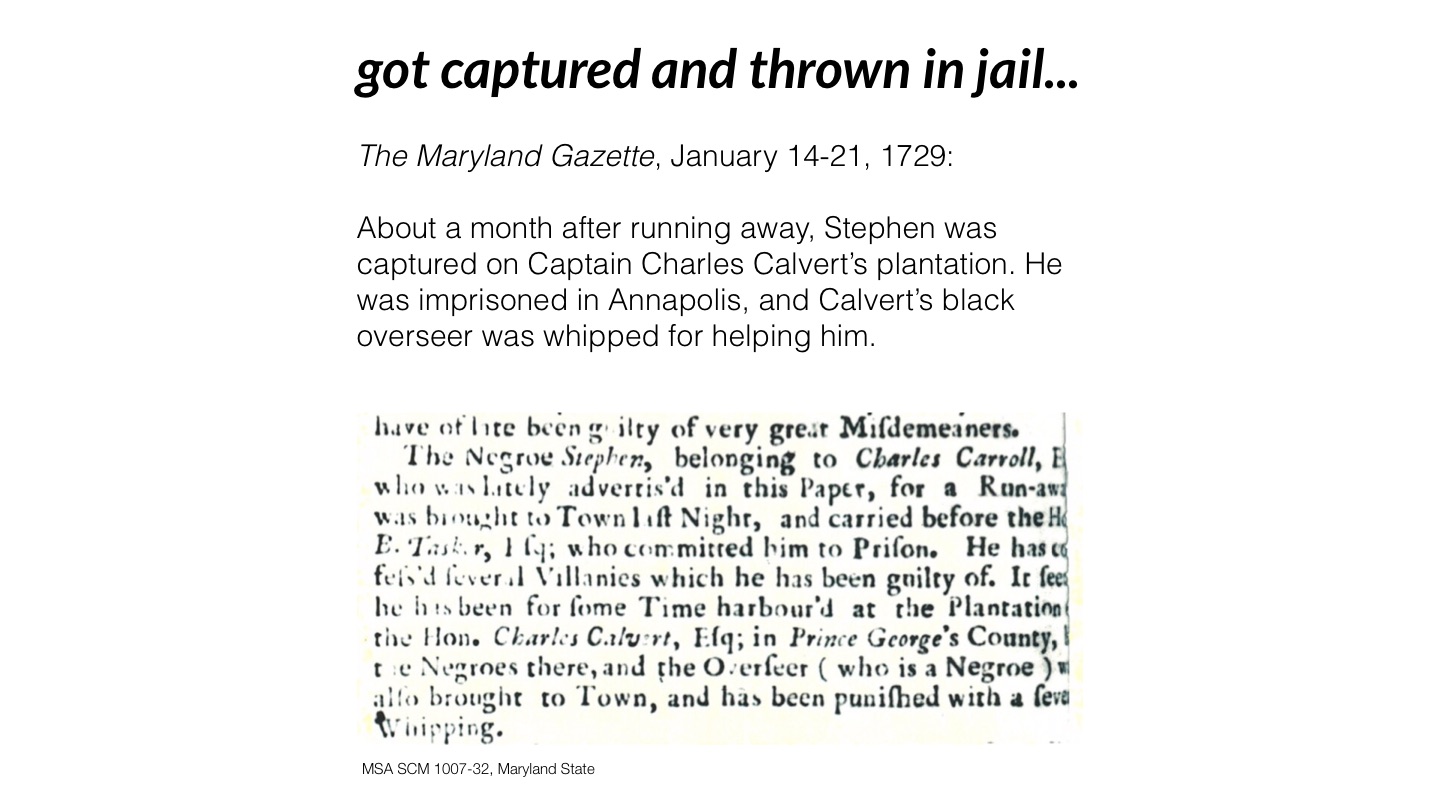
got captured and thrown in jail...
The Maryland Gazette, January 14-21, 1729: About a month after running away, Stephen was captured on Captain Charles Calvert’s plantation. He was imprisoned in Annapolis, and Calvert’s black overseer was whipped for helping him.
MSA SCM 1007-32, Maryland State Archives
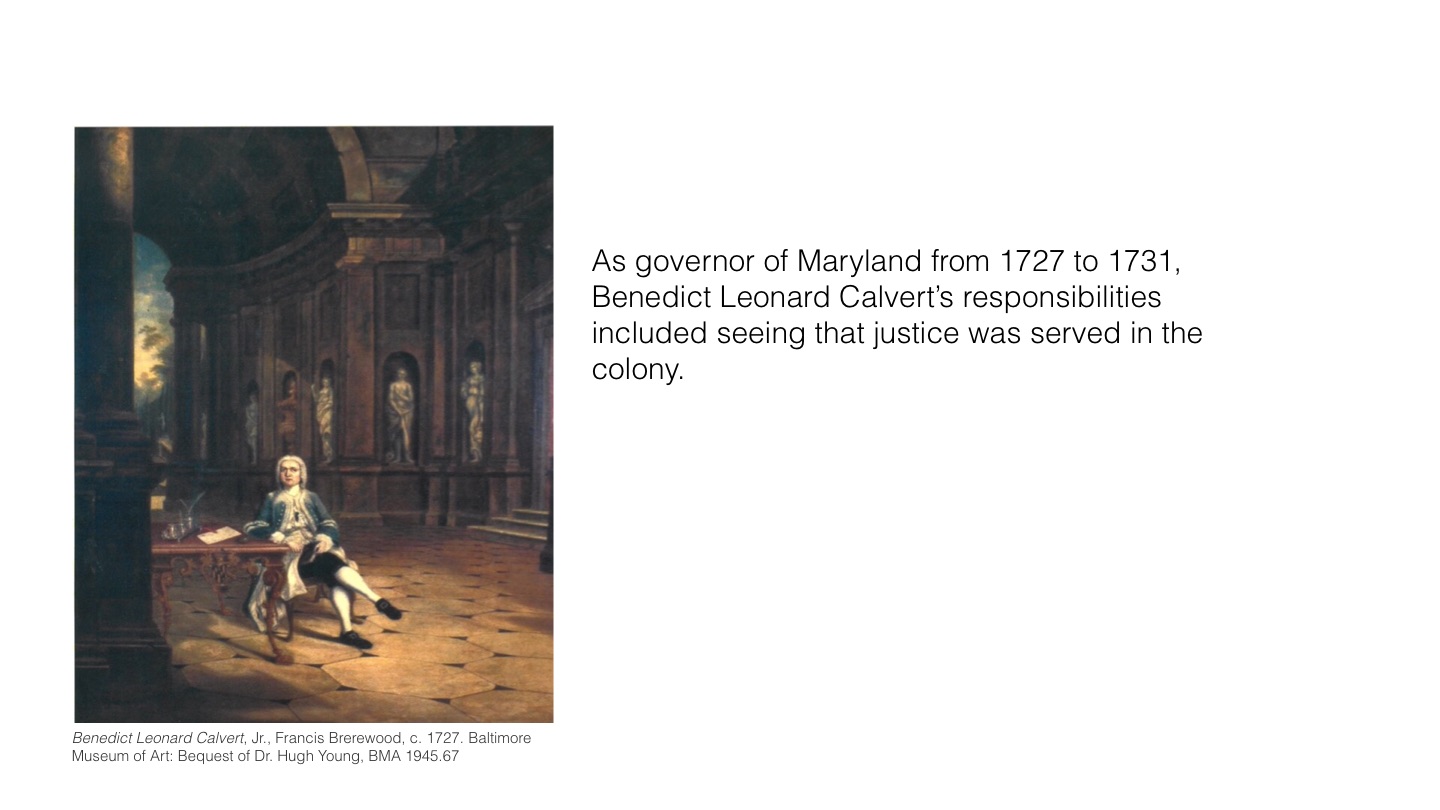
As governor of Maryland from 1727 to 1731, Benedict Leonard Calvert’s responsibilities included seeing that justice was served in the colony.
Benedict Leonard Calvert, Jr., Francis Brerewood, c. 1727. Baltimore Museum of Art: Bequest of Dr. Hugh Young, BMA 1945.67
was sentenced to die, and then spared...
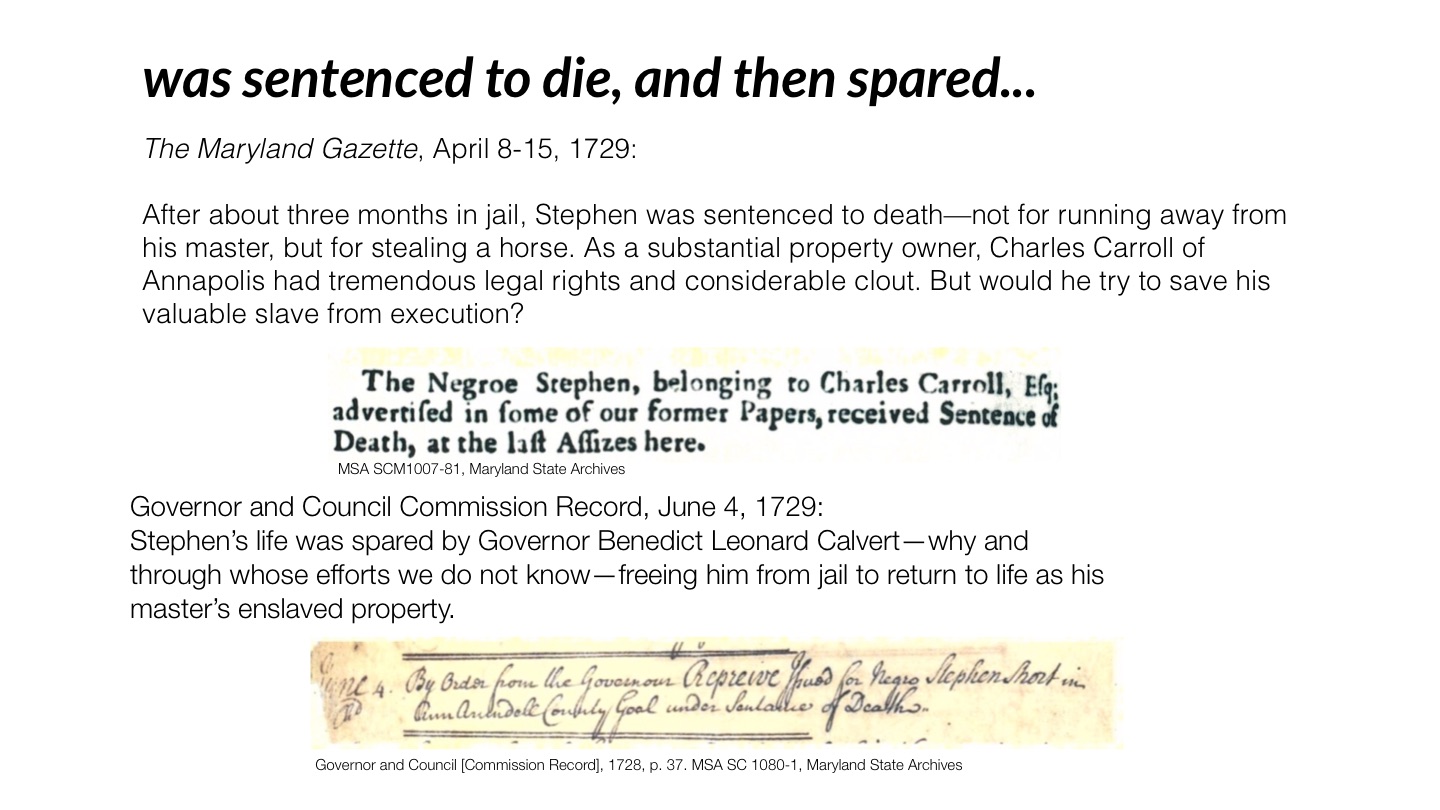
The Maryland Gazette, April 8-15, 1729: After about three months in jail, Stephen was sentenced to death—not for running away from his master, but for stealing a horse. As a substantial property owner, Charles Carroll of Annapolis had tremendous legal rights and considerable clout. But would he try to save his valuable slave from execution?
MSA SCM1007-81, Maryland State Archives
Governor and Council Commission Record, June 4, 1729: Stephen’s life was spared by Governor Benedict Leonard Calvert—why and through whose efforts we do not know—freeing him from jail to return to life as his master’s enslaved property.
Governor and Council [Commission Record], 1728, p. 37. MSA SC 1080-1, Maryland State Archives