






Human Trafficking Emily and Mary Clare
Human Trafficking
by Emily Burkhardt and Mary Clare Morley
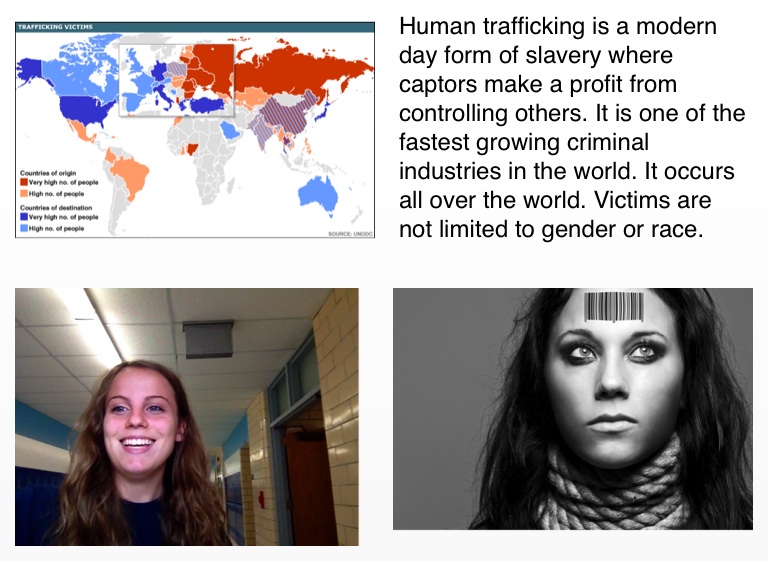
Human trafficking is a modern day form of slavery where captors make a profit from controlling others. It is one of the fastest growing criminal industries in the world. It occurs all over the world. Victims are not limited to gender or race.
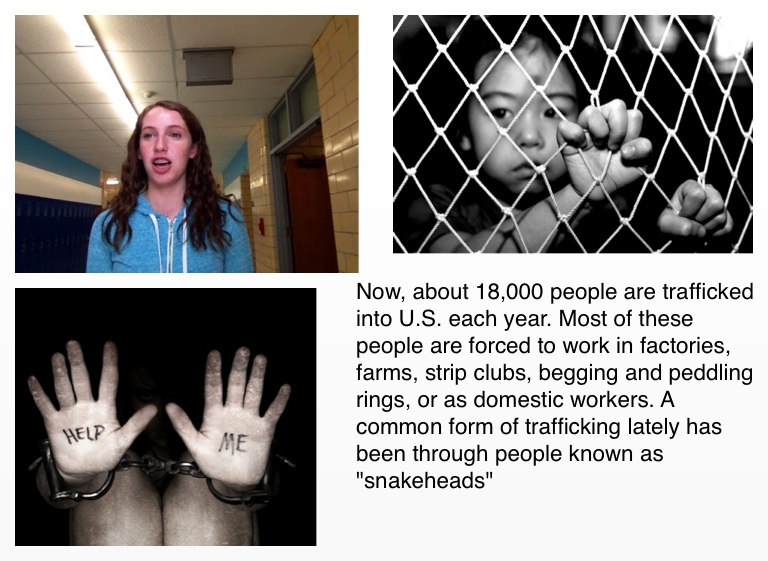
Now, about 18,000 people are trafficked into U.S. each year. Most of these people are forced to work in factories, farms, strip clubs, begging and peddling rings, or as domestic workers. A common form of trafficking lately has been through people known as "snakeheads"
Today, 20.9 million people are in various types of slavery around the world. Someone is considered to be in slavery if they are: mentally or physically forced to work, owned and controlled by the threat of abuse, dehumanized and bought/sold as property, or if they are physically constrained or have restrictions on their movement. There are many different types of slavery.
Children make up the majority of slaves today. Most child slaves are domestic workers who work in the cocoa, cotton or fishing industry. In war-torn countries, children have been kidnapped and sold to political parties as child soldiers. Forced child labor is the dominant form of slavery in Haiti.
Typical Victims Road to Recovery Tactics
In wealthy countries such as the United States, the most common forms of slavery are sex slavery and forced migrant labor. Sex slavery is also the most common type of slavery in Eastern Europe, Israel, and Southeast Asia.
2.4 million people were victims of human trafficking from 1995-2005. 1 million children are exploited in the global sex trade each year. 80% of transnational victims are women or girls. There are 127 countries of origin and 137 destination countries.