







Prehistoric Template
PREHISTORIC GIANTS
i n t r o d u c i n g
FROM ERAS PAST
Class Name
Student(s) Name
Instructor(s) Name
00/00/00
T A B L E O F C O N T E N T S
Introduction
Herbivores
A summary on the Precambrian Era
How did plant eaters get so thunderously large?
Atmosphere Composition
Carnivores
Early plant life in the age of the dinosaurs
See the beauty and ferocity of these killing machines
Plant Life
Extinction
Early plant life in the age of the dinoaurs
The asteroid and the earth-altering aftermath
Aquatic Life
Review
Explore the physical structure and eating habits of everything trilobites to mosasaur
Answer questions and discuss topics regarding the beginnings of earth
INTRODUCTION TO
THE
PRECAMBRIAN
This time period ranged from 4600 - 541 million years ago.
The Precambrian (or Pre-Cambrian) is the large span of time in Earth's history before the current Phanerozoic Eon, and is a Supereon divided into several eons of the geologic time scale. It spans from the formation of Earth about 4600 million years ago (Ma) to the beginning of the Cambrian Period, about 541.0 ± 1.0 Ma, when macroscopic hard-shelled animals first appeared in abundance. The Precambrian is so named because it precedes the Cambrian, the first period of the Phanerozoic Eon, which is named after Cambria, the classical name for Wales, where rocks from this age were first studied. The Precambrian accounts for 88% of geologic time.
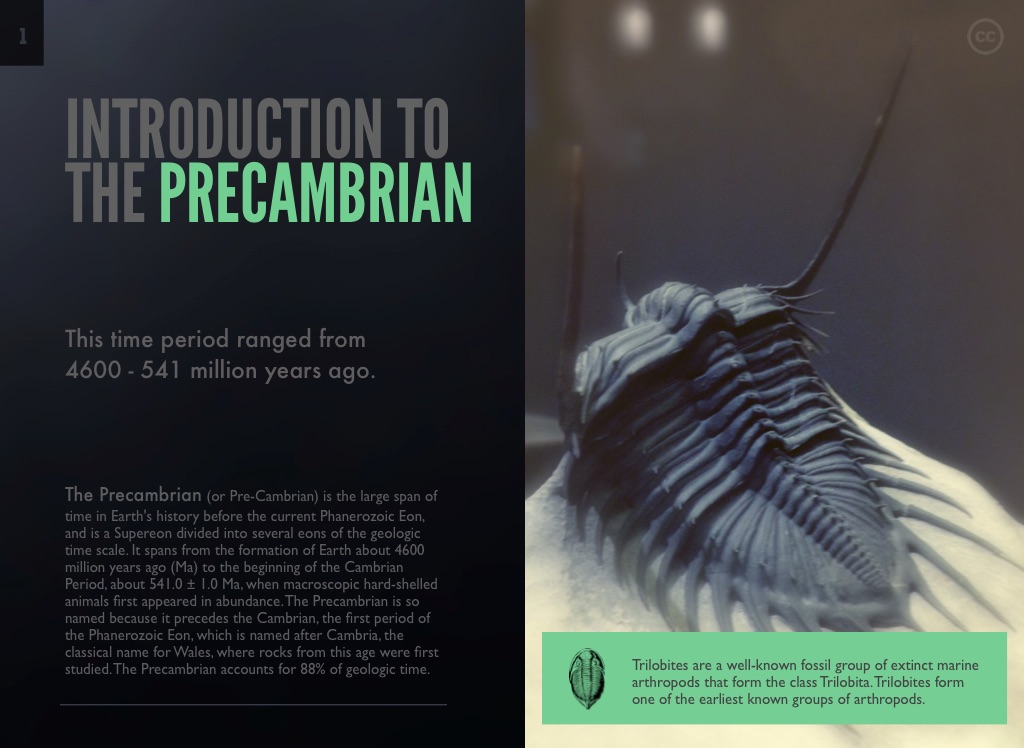
Trilobites are a well-known fossil group of extinct marine arthropods that form the class Trilobita. Trilobites form one of the earliest known groups of arthropods.
E a r l y A t m o s p h e r e
Composition of the sky
The atmosphere of Earth is a layer of gases surrounding the planet Earth that is retained by Earth's gravity. The atmosphere protects life on Earth by absorbingultraviolet solar radiation, warming the surface through heat retention (greenhouse effect), and reducing temperature extremes between day and night (the diurnal temperature variation). The common name given to the atmospheric gases used in breathing andphotosynthesis is air. By volume, dry air contains 78.09% nitrogen, 20.95% oxygen,[1]0.93% argon, 0.039% carbon dioxide, and small amounts of other gases.
The atmosphere of Earth is a layer of gases surrounding the planet Earth that is retained by Earth's gravity. The atmosphere protects life on Earth by absorbingultraviolet solar radiation, warming the surface through heat retention (greenhouse effect), and reducing temperature extremes between day and night (the diurnal temperature variation). The common name given to the atmospheric gases used in breathing andphotosynthesis is air. By volume, dry air contains 78.09% nitrogen, 20.95% oxygen,[1]0.93% argon, 0.039% carbon dioxide, and small amounts of other gases.
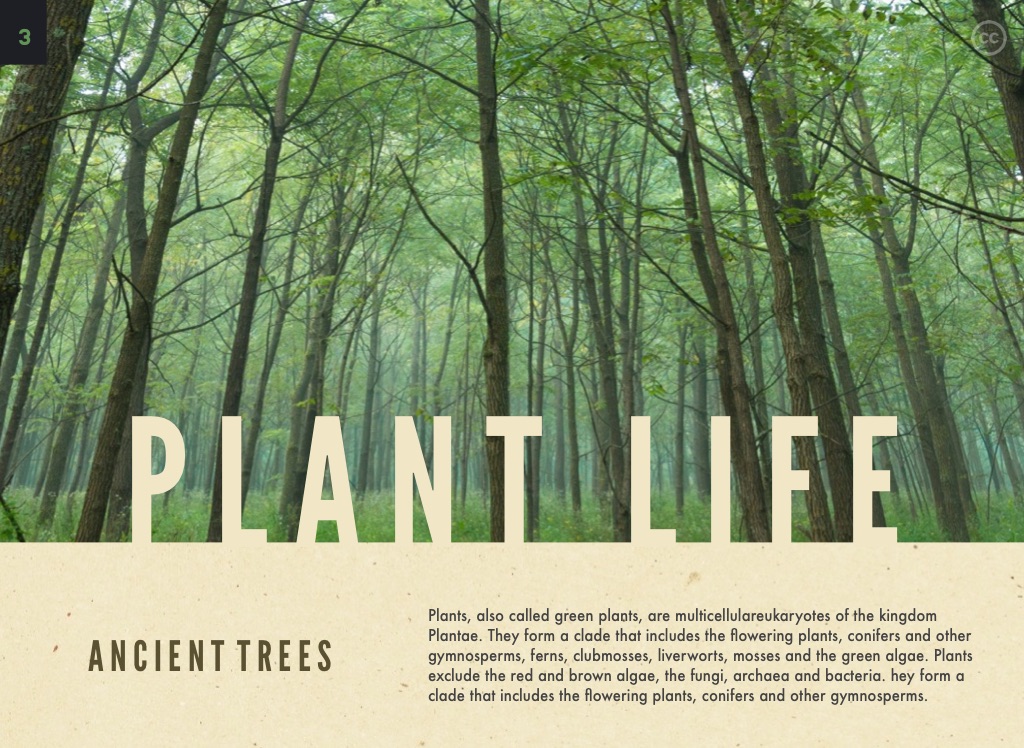
P L A N T L I F E
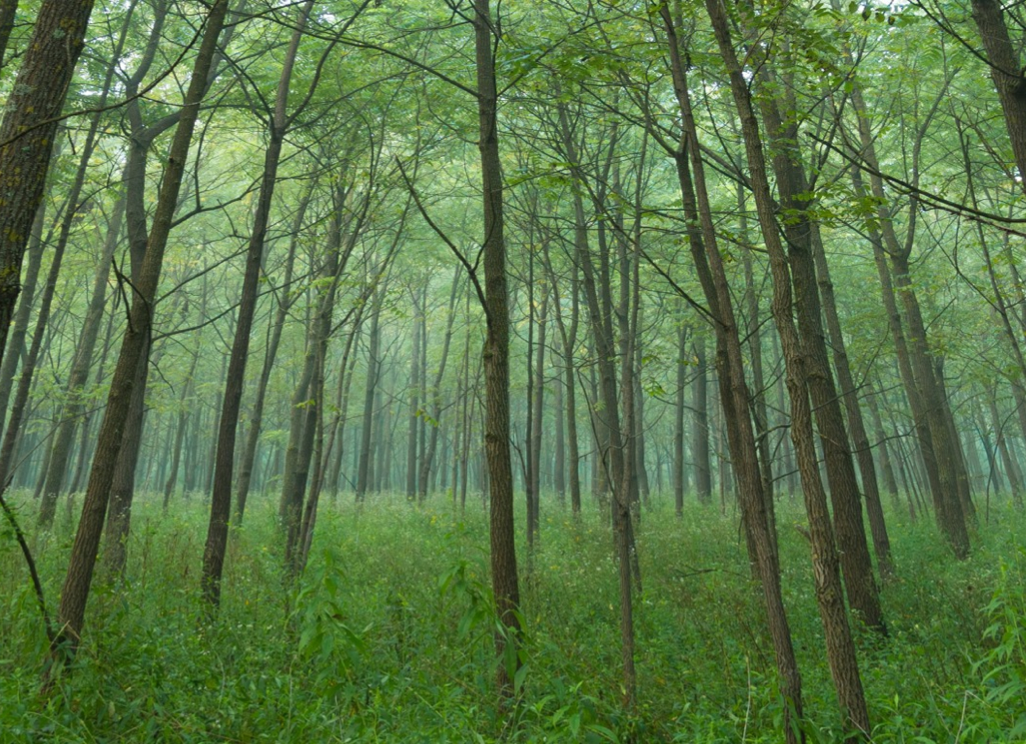
Plants, also called green plants, are multicellulareukaryotes of the kingdom Plantae. They form a clade that includes the flowering plants, conifers and other gymnosperms, ferns, clubmosses, liverworts, mosses and the green algae. Plants exclude the red and brown algae, the fungi, archaea and bacteria. hey form a clade that includes the flowering plants, conifers and other gymnosperms.
A N C I E N T T R E E S
D E E P S E A
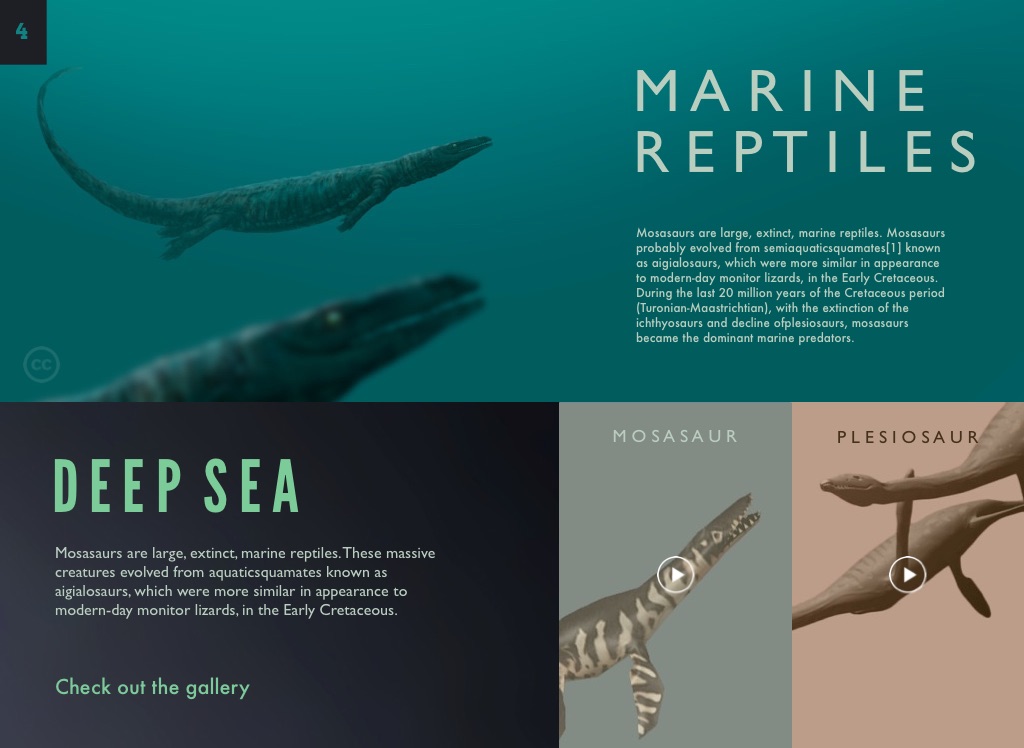
M A R I N E
R E P T I L E S
Mosasaurs are large, extinct, marine reptiles. Mosasaurs probably evolved from semiaquaticsquamates[1] known as aigialosaurs, which were more similar in appearance to modern-day monitor lizards, in the Early Cretaceous. During the last 20 million years of the Cretaceous period (Turonian-Maastrichtian), with the extinction of the ichthyosaurs and decline ofplesiosaurs, mosasaurs became the dominant marine predators.
M O S A S A U R
P L E S I O S A U R
Mosasaurs are large, extinct, marine reptiles. These massive creatures evolved from aquaticsquamates known as aigialosaurs, which were more similar in appearance to modern-day monitor lizards, in the Early Cretaceous.
Check out the gallery
ON THE NATURE
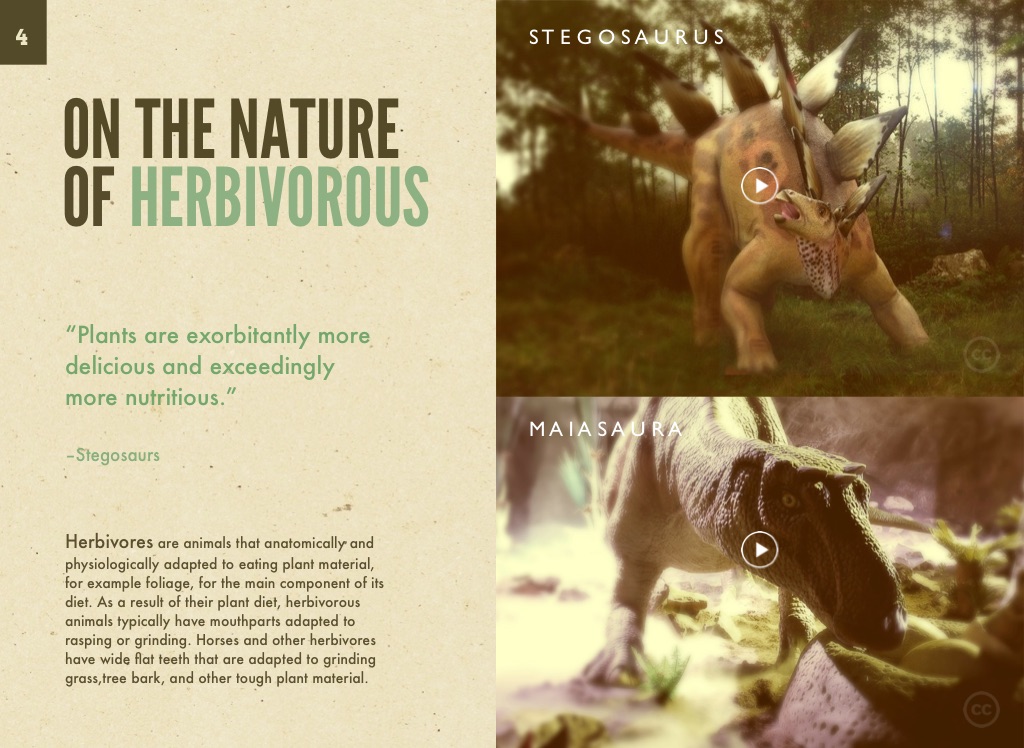
S T E G O S A U R U S
OF
HERBIVOROUS
“Plants are exorbitantly more delicious and exceedingly more nutritious.” –Stegosaurs
M A I A S A U R A
Herbivores are animals that anatomically and physiologically adapted to eating plant material, for example foliage, for the main component of its diet. As a result of their plant diet, herbivorous animals typically have mouthparts adapted to rasping or grinding. Horses and other herbivores have wide flat teeth that are adapted to grinding grass,tree bark, and other tough plant material.
On the nature of
Carnivores and
their proclivity
to eviscerate
their friends
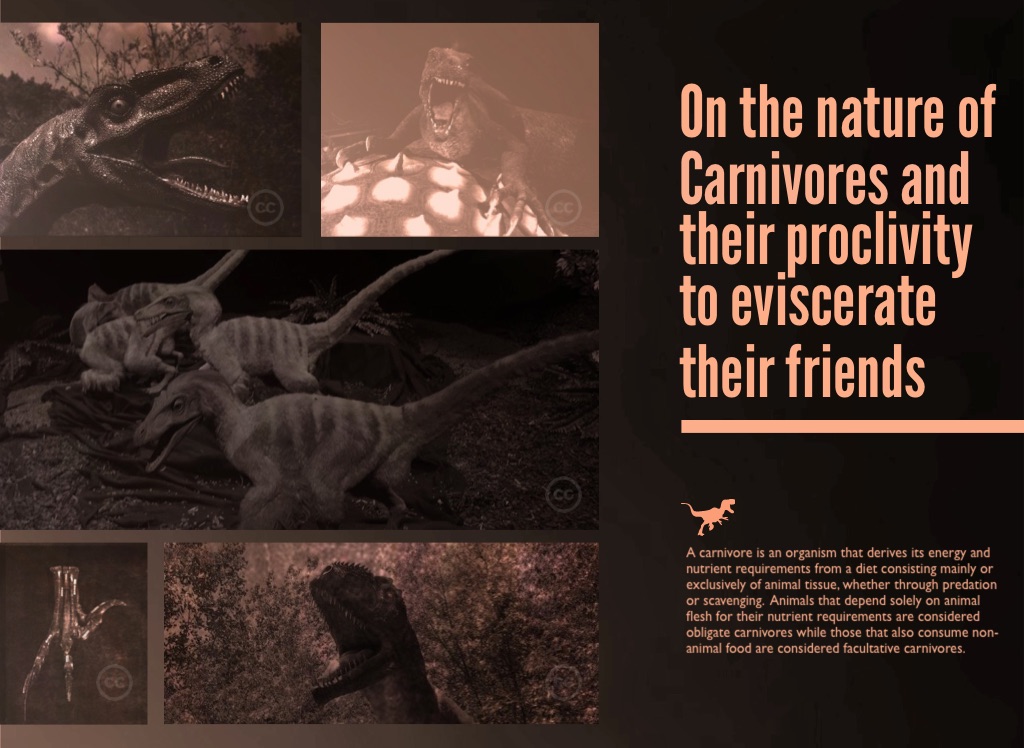
A carnivore is an organism that derives its energy and nutrient requirements from a diet consisting mainly or exclusively of animal tissue, whether through predation or scavenging. Animals that depend solely on animal flesh for their nutrient requirements are considered obligate carnivores while those that also consume non-animal food are considered facultative carnivores.
Include a short description of the carnivores that lived during this era
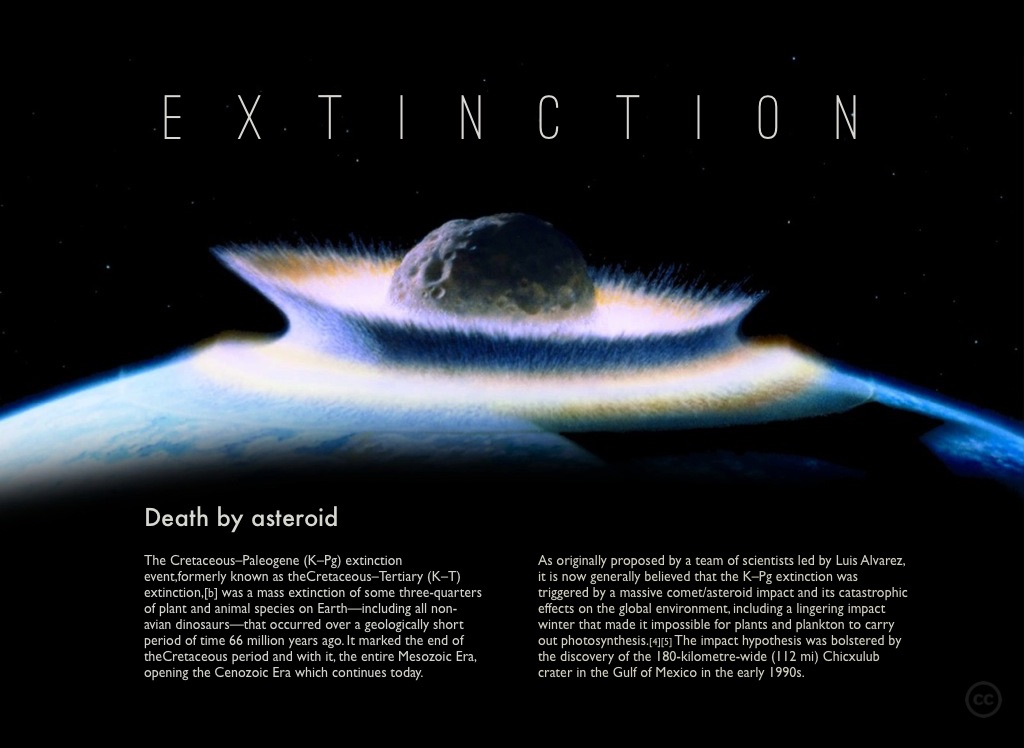
E X T I N C T I O N
Extinction
Death by asteroid
The Cretaceous–Paleogene (K–Pg) extinction event,formerly known as theCretaceous–Tertiary (K–T) extinction,[b] was a mass extinction of some three-quarters of plant and animal species on Earth—including all non-avian dinosaurs—that occurred over a geologically short period of time 66 million years ago. It marked the end of theCretaceous period and with it, the entire Mesozoic Era, opening the Cenozoic Era which continues today.
As originally proposed by a team of scientists led by Luis Alvarez, it is now generally believed that the K–Pg extinction was triggered by a massive comet/asteroid impact and its catastrophic effects on the global environment, including a lingering impact winter that made it impossible for plants and plankton to carry out photosynthesis.[4][5] The impact hypothesis was bolstered by the discovery of the 180-kilometre-wide (112 mi) Chicxulub crater in the Gulf of Mexico in the early 1990s.
C I T A T I O N S
Contributors' names (Last edited date). Title of resource. Retrieved from http://Web address for OWL resource Angeli, E., Wagner, J., Lawrick, E., Moore, K., Anderson, M., Soderlund, L., & Brizee, A. (2010, May 5). General format. Retrieved from http://owl.english.purdue.edu/owl/resource/560/01/
Contributors' names (Last edited date). Title of resource. Retrieved from http://Web address for OWL resource Angeli, E., Wagner, J., Lawrick, E., Moore, K., Anderson, M., Soderlund, L., & Brizee, A. (2010, May 5). General format. Retrieved from http://owl.english.purdue.edu/owl/resource/560/01/
Contributors' names (Last edited date). Title of resource. Retrieved from http://Web address for OWL resource Angeli, E., Wagner, J., Lawrick, E., Moore, K., Anderson, M., Soderlund, L., & Brizee, A. (2010, May 5). General format. Retrieved from http://owl.english.purdue.edu/owl/resource/560/01/
For help creating proper citations visit
http://www.citationmachine.net/
R U B R I C
Download the Word (.docx) Format >