








Mutation Project-Levise
Mutations Project by: Hannah Levise
Point mutations
A mutation affecting only one or very few nucleotides in a gene sequence. -Insertion -Deletion -Substitution -Frame Shift -Missense -Nonsense -Silence
Insertion
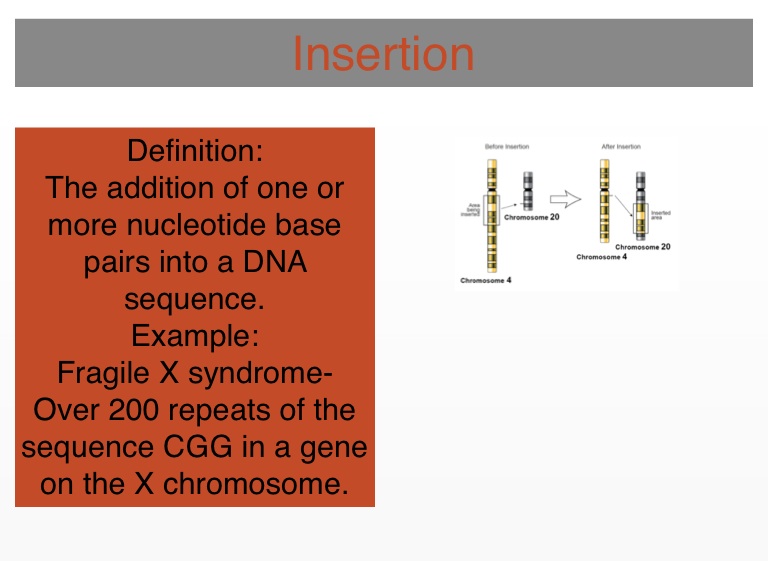
Definition: The addition of one or more nucleotide base pairs into a DNA sequence. Example: Fragile X syndrome- Over 200 repeats of the sequence CGG in a gene on the X chromosome.
Deletion
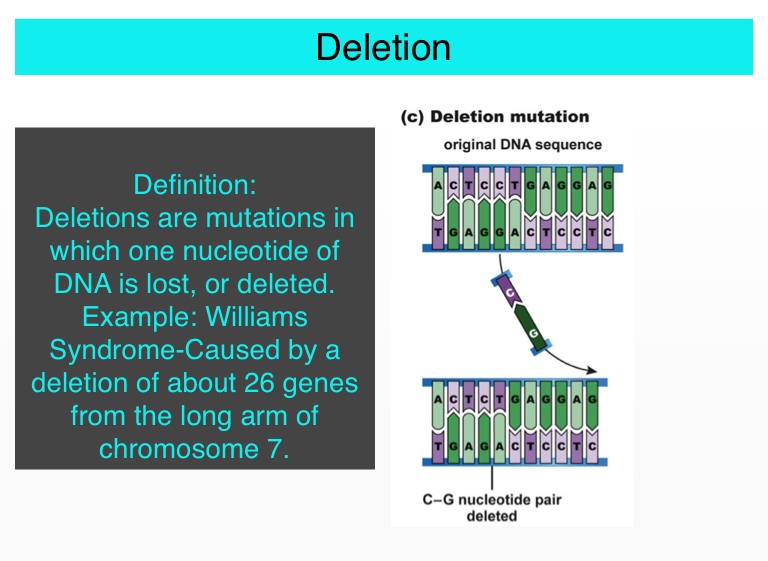
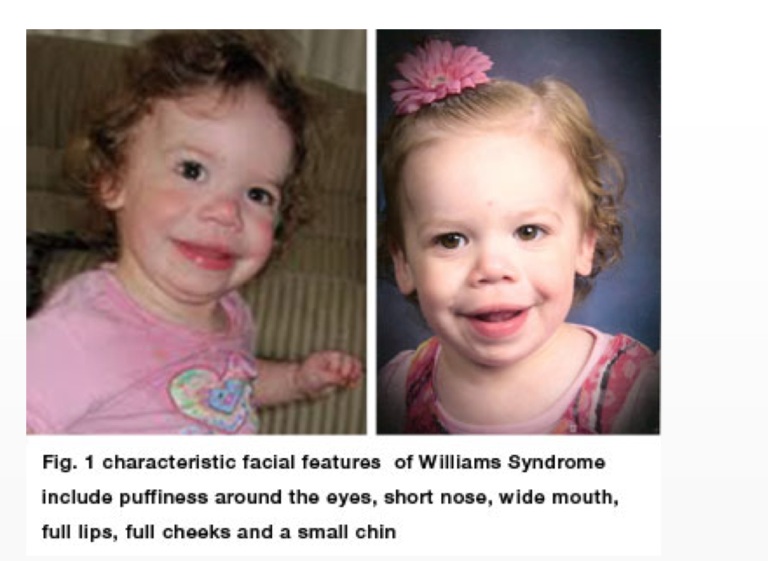
Definition: Deletions are mutations in which one nucleotide of DNA is lost, or deleted. Example: Williams Syndrome-Caused by a deletion of about 26 genes from the long arm of chromosome 7.
Substitution
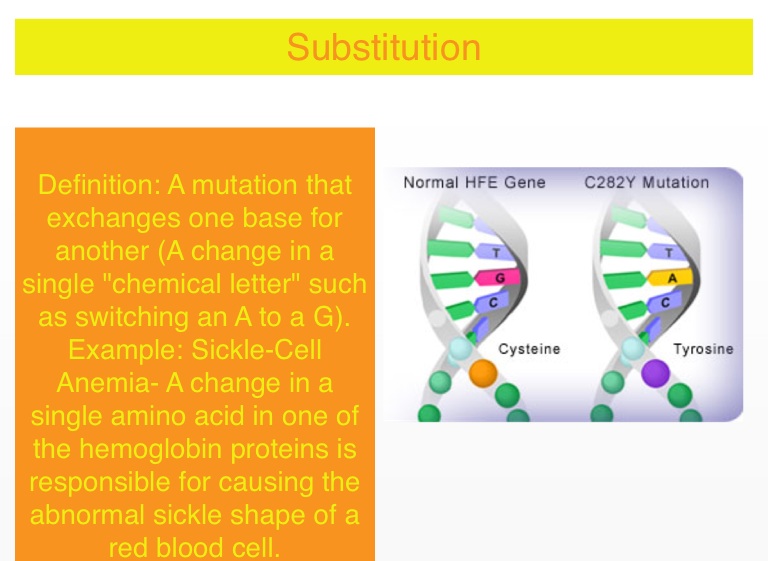
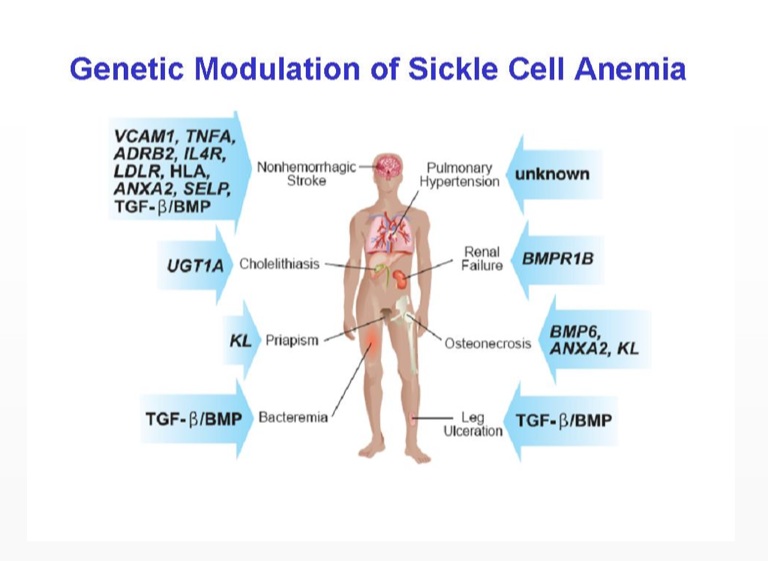
Definition: A mutation that exchanges one base for another (A change in a single "chemical letter" such as switching an A to a G). Example: Sickle-Cell Anemia- A change in a single amino acid in one of the hemoglobin proteins is responsible for causing the abnormal sickle shape of a red blood cell.
Frame shift
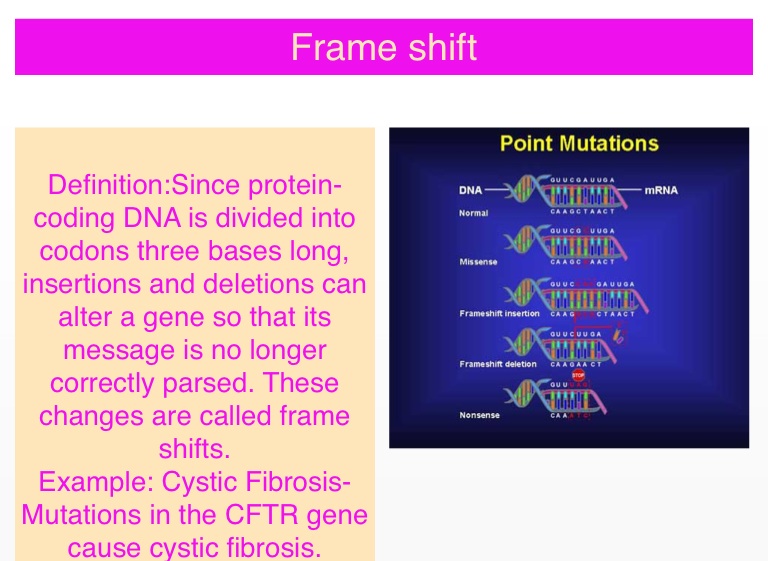
Definition:Since protein-coding DNA is divided into codons three bases long, insertions and deletions can alter a gene so that its message is no longer correctly parsed. These changes are called frame shifts. Example: Cystic Fibrosis-Mutations in the CFTR gene cause cystic fibrosis.
Missense
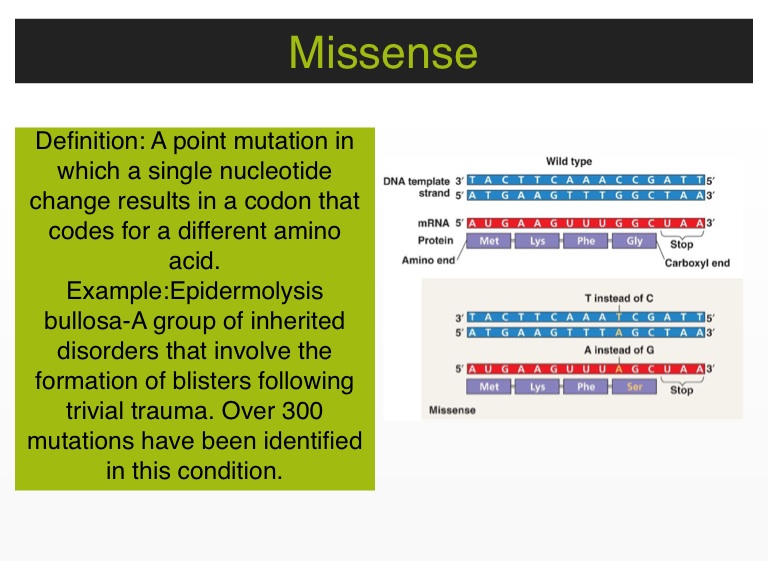
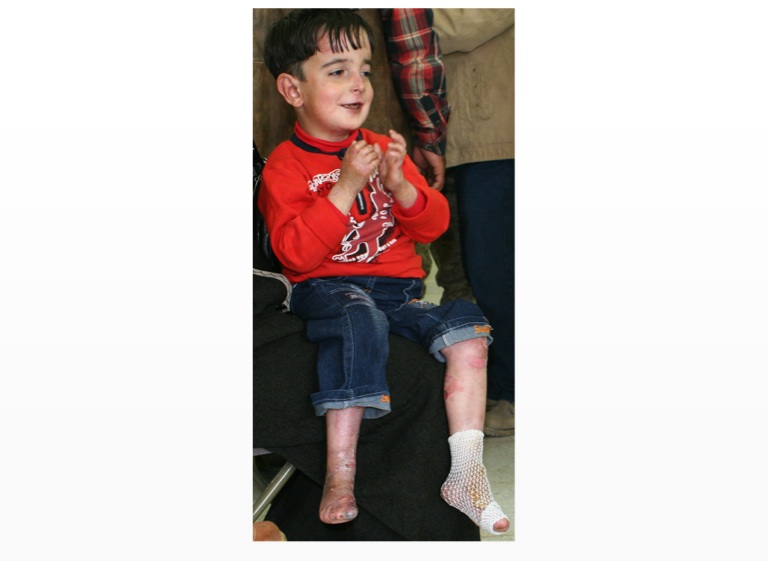
Definition: A point mutation in which a single nucleotide change results in a codon that codes for a different amino acid. Example:Epidermolysis bullosa-A group of inherited disorders that involve the formation of blisters following trivial trauma. Over 300 mutations have been identified in this condition.
Nonsense
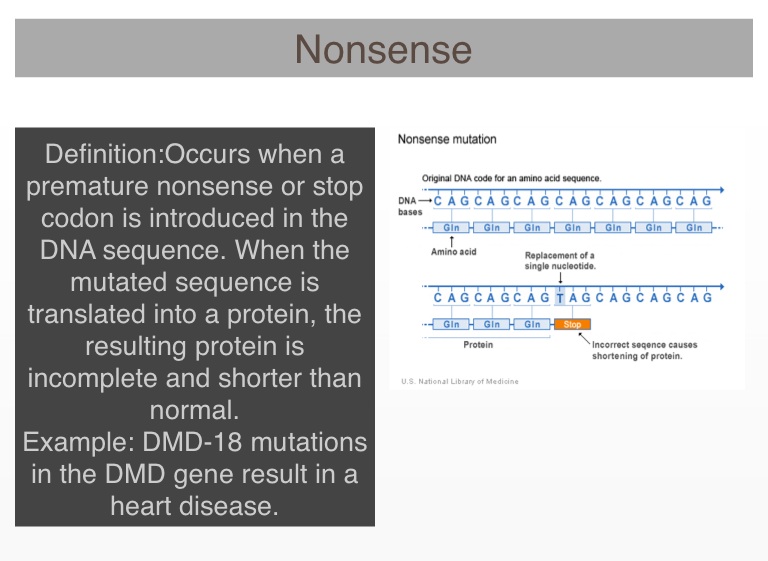
Definition:Occurs when a premature nonsense or stop codon is introduced in the DNA sequence. When the mutated sequence is translated into a protein, the resulting protein is incomplete and shorter than normal. Example: DMD-18 mutations in the DMD gene result in a heart disease.
Silence
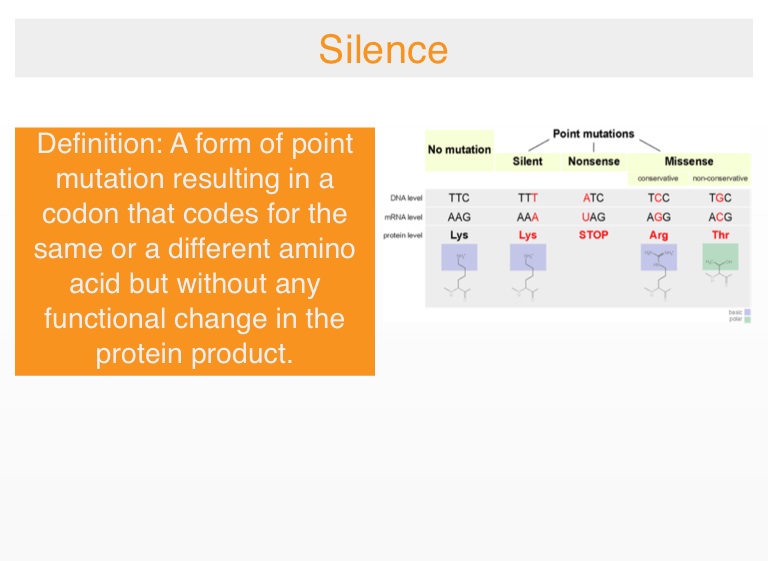
Definition: A form of point mutation resulting in a codon that codes for the same or a different amino acid but without any functional change in the protein product.
Chromosomal Mutation
Any event that changes genetic structure; any alteration in the inherited nucleic acid sequence of the genotype of an organism. -Translation -Deletion -Duplication -Inversion -Insertion
Translocation
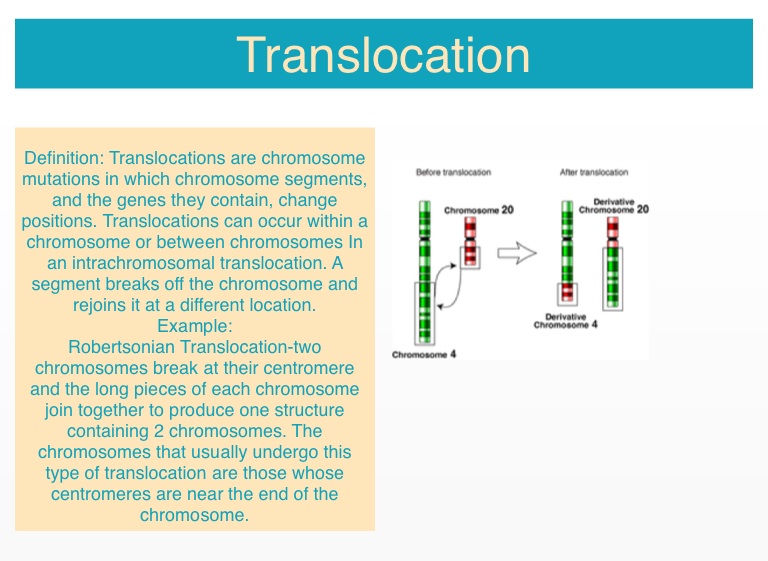
Definition: Translocations are chromosome mutations in which chromosome segments, and the genes they contain, change positions. Translocations can occur within a chromosome or between chromosomes In an intrachromosomal translocation. A segment breaks off the chromosome and rejoins it at a different location. Example: Robertsonian Translocation-two chromosomes break at their centromere and the long pieces of each chromosome join together to produce one structure containing 2 chromosomes. The chromosomes that usually undergo this type of translocation are those whose centromeres are near the end of the chromosome.
Deletion
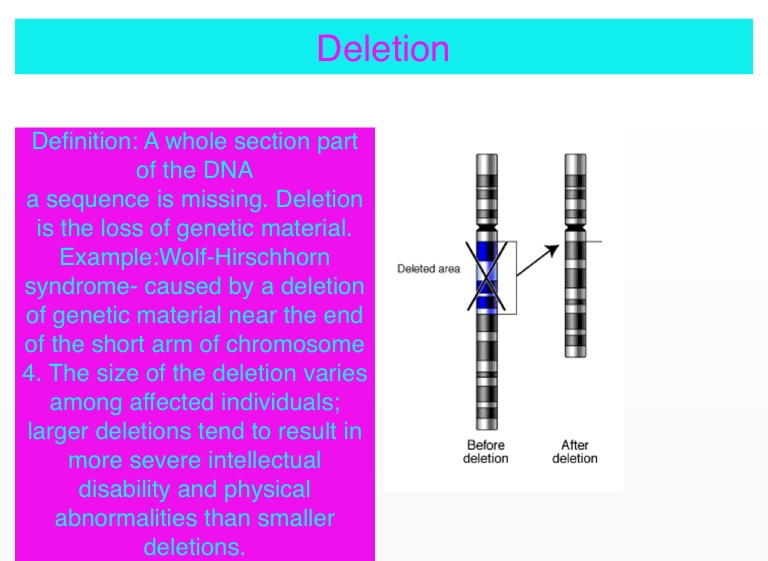
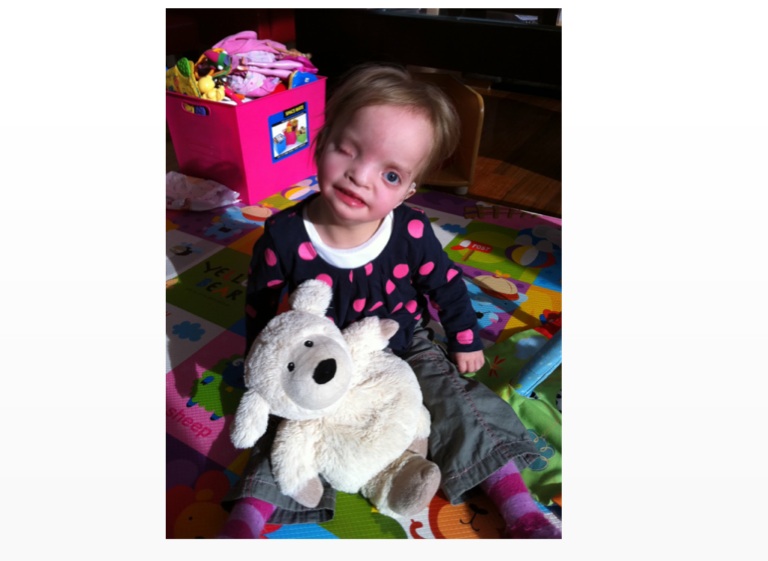
Definition: A whole section part of the DNA a sequence is missing. Deletion is the loss of genetic material. Example:Wolf-Hirschhorn syndrome- caused by a deletion of genetic material near the end of the short arm of chromosome 4. The size of the deletion varies among affected individuals; larger deletions tend to result in more severe intellectual disability and physical abnormalities than smaller deletions.
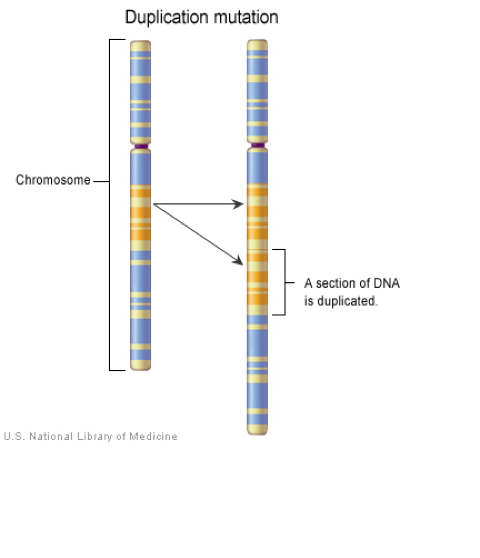
Duplication
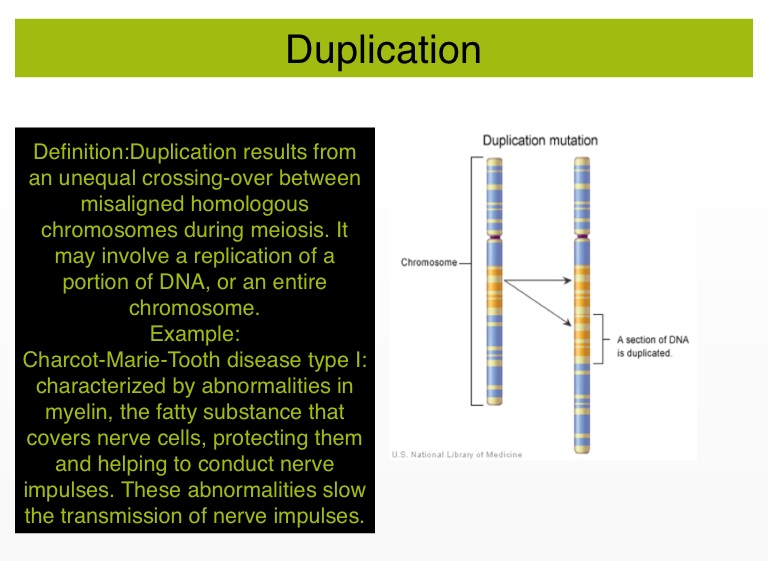
Definition:Duplication results from an unequal crossing-over between misaligned homologous chromosomes during meiosis. It may involve a replication of a portion of DNA, or an entire chromosome. Example: Charcot-Marie-Tooth disease type I: characterized by abnormalities in myelin, the fatty substance that covers nerve cells, protecting them and helping to conduct nerve impulses. These abnormalities slow the transmission of nerve impulses.
Inversion
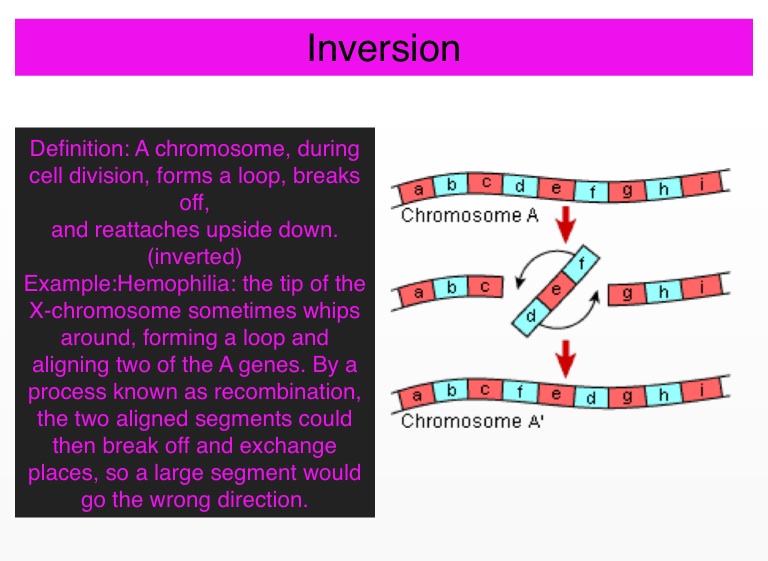
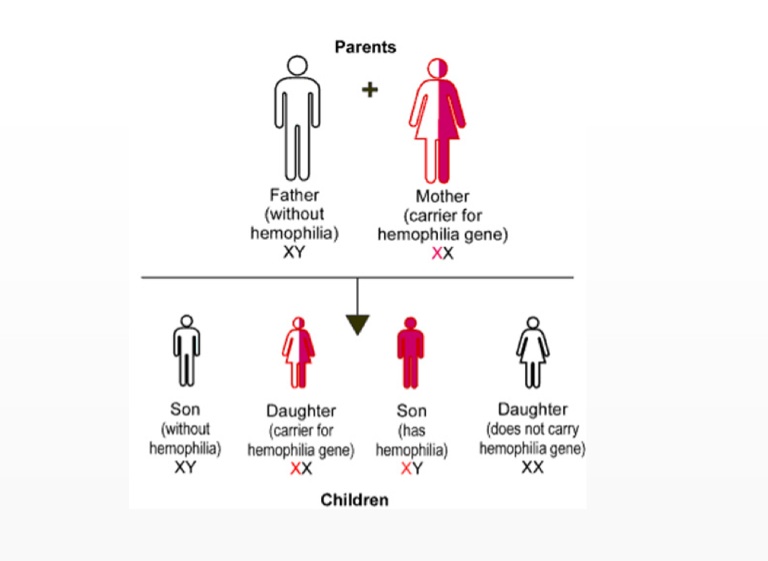
Definition: A chromosome, during cell division, forms a loop, breaks off, and reattaches upside down.(inverted) Example:Hemophilia: the tip of the X-chromosome sometimes whips around, forming a loop and aligning two of the A genes. By a process known as recombination, the two aligned segments could then break off and exchange places, so a large segment would go the wrong direction.
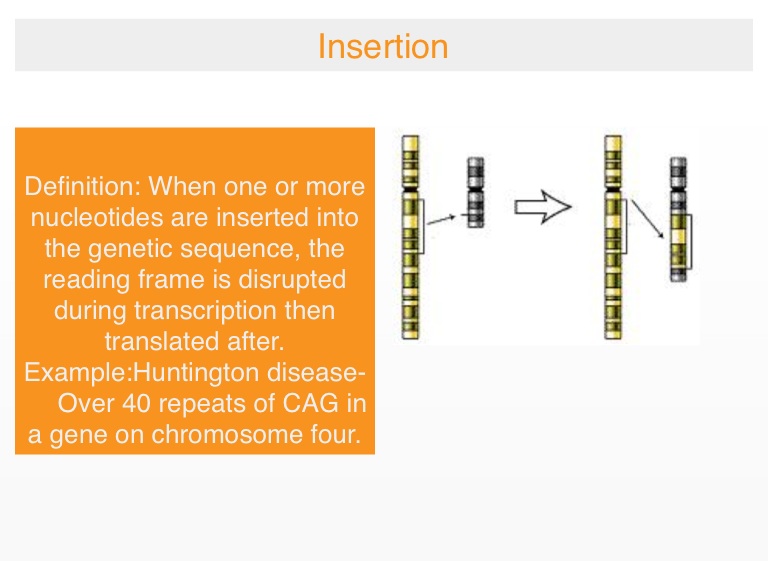
Insertion
Definition: When one or more nucleotides are inserted into the genetic sequence, the reading frame is disrupted during transcription then translated after. Example:Huntington disease- Over 40 repeats of CAG in a gene on chromosome four.