





Earth by Matthew Metz
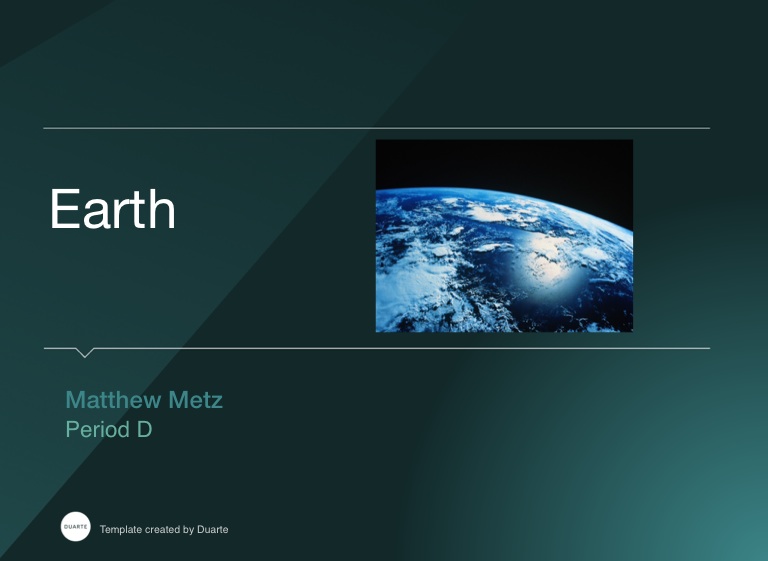
Earth
Matthew Metz
Period D
Template created by Duarte
Earth's Origin
structure
Full Name: Earth
How it got its name: English/German name that means "ground." It comes from the Old English words 'ero(th)e' and ertha.
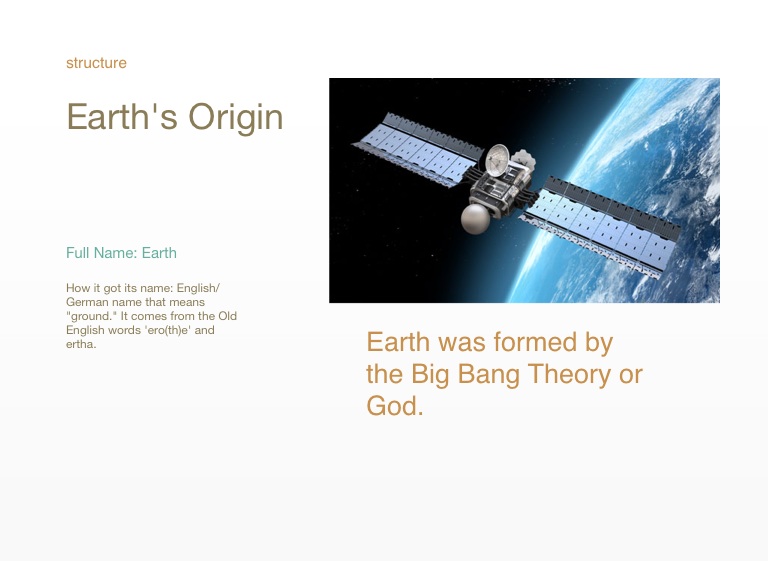
Earth was formed by the Big Bang Theory or God.
Location
introduction
Location in Solar System
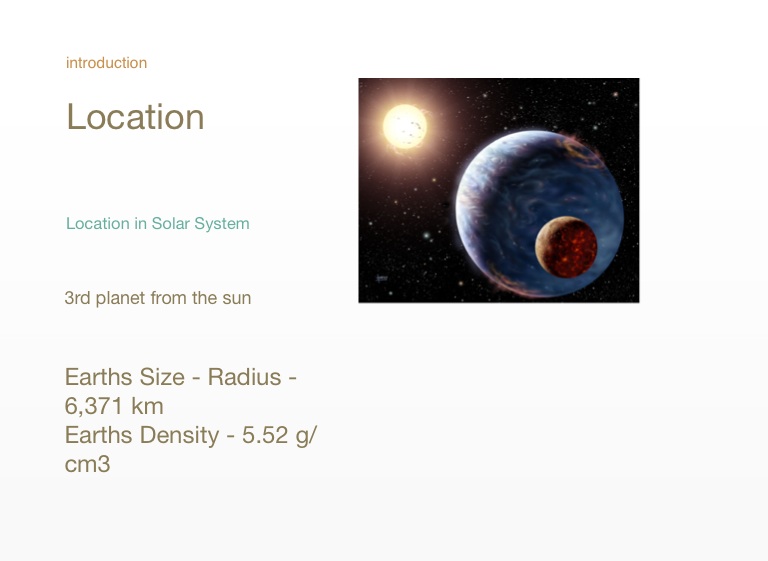
3rd planet from the sun
Earths Size - Radius - 6,371 km Earths Density - 5.52 g/cm3
How it is Studied
introduction
Physical geology involves the study of the processes which shape the Earth's surface, for example the work of gravity, the atmosphere, weathering, wind, water, ice, rivers and the sea. Petrology involves the study of the nature, make up, textures and origins of igneous, metamorphic and sedimentary rocks. Mineralogy involves the study of the make up and physical characteristics (including crystal forms) of naturally formed substances with chemical compositions and atomic structures (minerals). Sedimentology involves the study of the processes which form sedimentary rocks. Stratigraphy involves the historical study of the rocks that make up the Earth's crust, their relationship with each other, their structure, how they are grouped, the conditions involved in their formation and their fossil content. It is common to study particular periods of geological time, for example Quaternary or Precambrian. Palaeontology involves the study of the history of life on Earth, its anatomical development and evolution.
Internal Structure
introduction
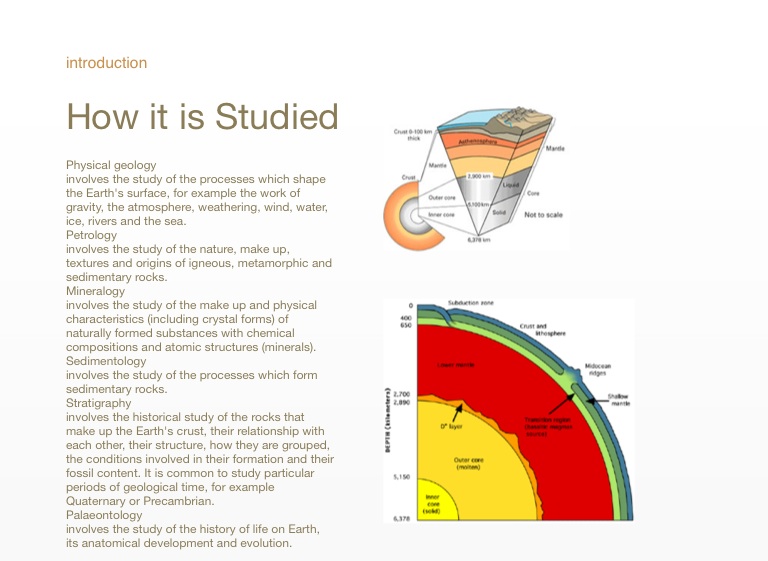
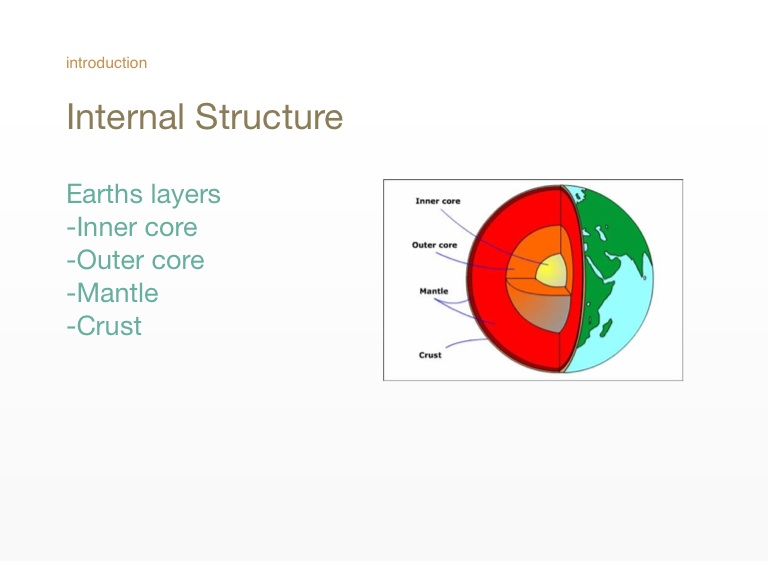
Earths layers -Inner core -Outer core -Mantle -Crust
Earths Temperature
introduction
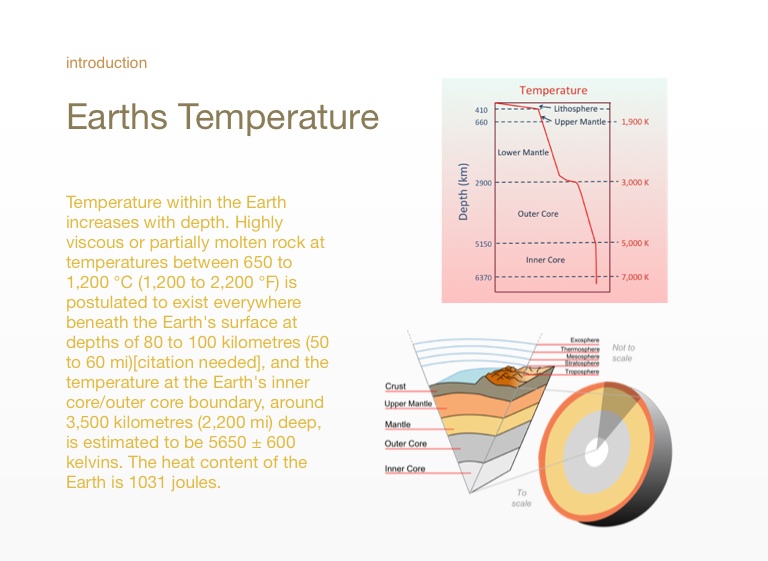
Temperature within the Earth increases with depth. Highly viscous or partially molten rock at temperatures between 650 to 1,200 °C (1,200 to 2,200 °F) is postulated to exist everywhere beneath the Earth's surface at depths of 80 to 100 kilometres (50 to 60 mi)[citation needed], and the temperature at the Earth's inner core/outer core boundary, around 3,500 kilometres (2,200 mi) deep, is estimated to be 5650 ± 600 kelvins. The heat content of the Earth is 1031 joules.
Earths Orbit
introduction
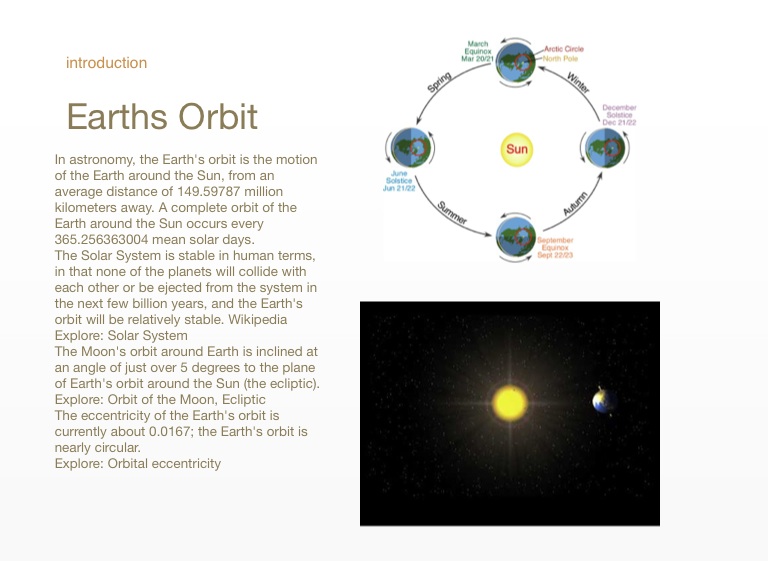
In astronomy, the Earth's orbit is the motion of the Earth around the Sun, from an average distance of 149.59787 million kilometers away. A complete orbit of the Earth around the Sun occurs every 365.256363004 mean solar days. The Solar System is stable in human terms, in that none of the planets will collide with each other or be ejected from the system in the next few billion years, and the Earth's orbit will be relatively stable. Wikipedia Explore: Solar System The Moon's orbit around Earth is inclined at an angle of just over 5 degrees to the plane of Earth's orbit around the Sun (the ecliptic). Explore: Orbit of the Moon, Ecliptic The eccentricity of the Earth's orbit is currently about 0.0167; the Earth's orbit is nearly circular. Explore: Orbital eccentricity
Impact on Earth
introduction
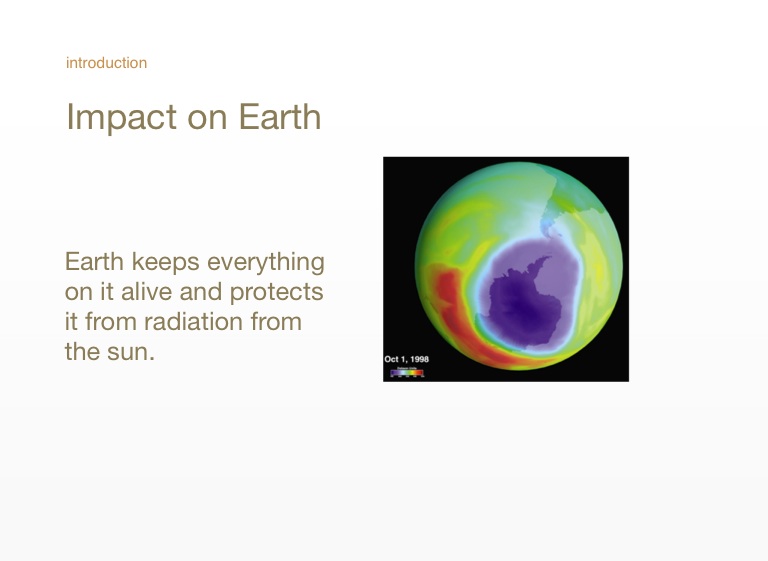
Earth keeps everything on it alive and protects it from radiation from the sun.
Fact
Interesting
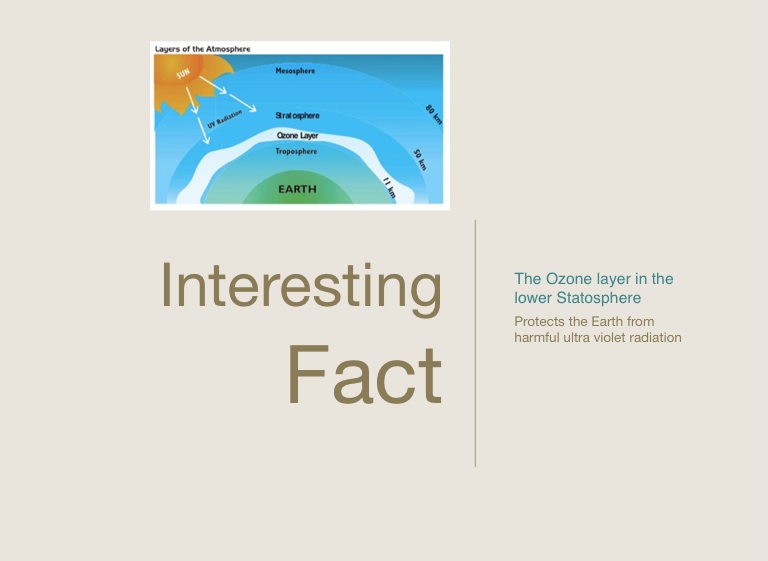
The Ozone layer in the lower Statosphere
Protects the Earth from harmful ultra violet radiation
2 Test Questions
Earth is the _____ planet from the sun
Earth has ______ amount of moon(s)
Sources
https://media.goboard.io/earth
https://media.goboard.io/19102-amazing-facts-earth.html
https://media.goboard.io/earth.html
Matthew Metz
NASA
Earth