Sign up for FlowVella
Sign up with FacebookAlready have an account? Sign in now
By registering you are agreeing to our
Terms of Service
Loading Flow

Downloading Image /
Downloading Image /
Downloading Image /
Downloading Image /
Downloading Image /


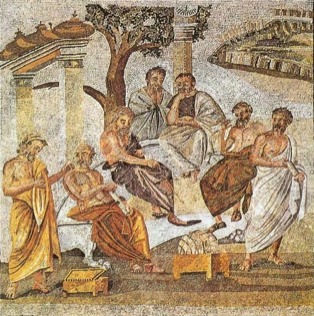
4. Founding the Academy
Sometime around 385 B.C., Plato founded a school of learning, known as the Academy, which he presided over until his death. It is believed the school was located at an enclosed park named for a legendary Athenian hero. The Academy operated until 529 A.D., when it was closed by Roman Emperor Justinian I, who feared it was a source of paganism and a threat to Christianity. Over its years of operation, the Academy's curriculum included astronomy, biology, mathematics, political theory and philosophy. Plato hoped the Academy would provide a place for future leaders to discover how to build a better government in the Greek city-states.
In 367, Plato was invited by Dion, a friend and disciple, to be the personal tutor of his nephew, Dionysus II, the new ruler of Syracuse (Sicily). Dion believed that Dionysus showed promise as an ideal leader. Plato accepted, hoping the experience would produce a philosopher king. But Dionysius fell far short of expectations and suspected Dion, and later Plato, of conspiring against him. He had Dion exiled and Plato placed under "house arrest." Eventually, Plato returned to Athens and his Academy. One of his more promising students there was Aristotle, who would take his mentor's teachings in new directions.

GALLERY
WATCH
Downloading Image /
Downloading Image /



FlowVella, Previously Known As Flowboard
© 2026 FlowVella
 FlowVella