Sign up for FlowVella
Sign up with FacebookAlready have an account? Sign in now
By registering you are agreeing to our
Terms of Service
Loading Flow

Downloading Image /
Downloading Image /
Downloading Image /
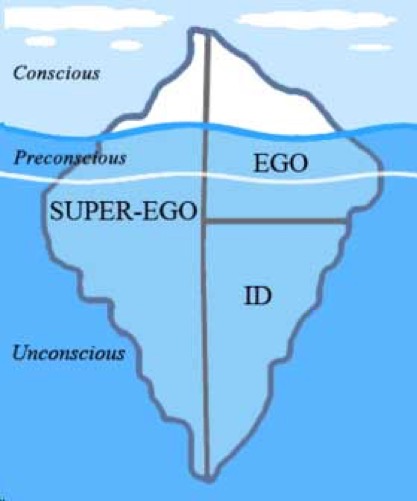
Freud’s Theory of Personality
The id is the primitive and instinctive component of personality. It consists of all the inherited (i.e. biological) components of personality, including the sex (life) instinct – Eros (which contains the libido), and the aggressive (death) instinct - Thanatos.
The id is the primitive and instinctive component of personality. It consists of all the inherited (i.e. biological) components of personality, including the sex (life) instinct – Eros (which contains the libido), and the aggressive (death) instinct - Thanatos.
The ego develops in order to mediate between the unrealistic id and the external real world. It is the decision making component of personality. Ideally the ego works by reason, whereas the id is chaotic and totally unreasonable.
The ego operates according to the reality principle, working out realistic ways of satisfying the id’s demands, often compromising or postponing satisfaction to avoid negative consequences of society. The ego considers social realities and norms, etiquette and rules in deciding how to behave.
Like the id, the ego seeks pleasure and avoids pain, but unlike the id the ego is concerned with devising a realistic strategy to obtain pleasure.
The superego incorporates the values and morals of society which are learned from one's parents and others. The superego's function is to control the id's impulses, especially those which society forbids, such as sex and aggression. It also has the function of persuading the ego to turn to moralistic goals rather than simply realistic ones and to strive for perfection.
Retrieved from http://www.simplypsychology.org/psyche.html on 2016 April 2016.
 Powered by FlowVella © 2025 Terms
 FlowVella