










Plants
Plants
by Daniel Juan
Unit 3
INTRODUCTION
Plants make up one of the largest groups of living things on Earth. There are many different species of plants. These include: algae, mosses, ferns and flowering plants. Plants are different to animals as they can make their own food and they do not move from place to place. They are very important for life on Earth because they produce oxygen and provide food for other living things. Without plants there would be no life on Earth.
Classification of plants
Characteristics of plants
Plants have the following characteristics: 1.- They do not feed on other organisms. Instead, they make their own food through photosynthesis. 2.- Plants are green because they contain a green pigment called chlorophyll, which they use in photosynthesis. 3.- Plants cannot move from place to place
Classification of plants
Classification of plants
Plants are classified into two main groups: flowering plants (spermatophytes) and non-flowering plants. Flowering plants are a numerous and diverse plant group. They reproduce through flowers and seeds. Non-flowering plants are a smaller plant group. Algae, mosses and ferns are all examples of non-flowering plants. They have a simple structure and do not have flowers or seeds. Instead, they reproduce through spores.
NON-FLOWERING PLANTS
1.- ALGAE
Algae are the simplest form of plants. They do not have roots, a stem or leaves. They live in water, in the sea or in fresh water. Nearly all plants that live in the sea are algae. Some algae float freely in water while others are fixed to sand or rocks. Not all types of algae are green. Some are red or brown because their cells have other substances apart from chlorophyll that give them different colours.
Algae
2.- MOSSES
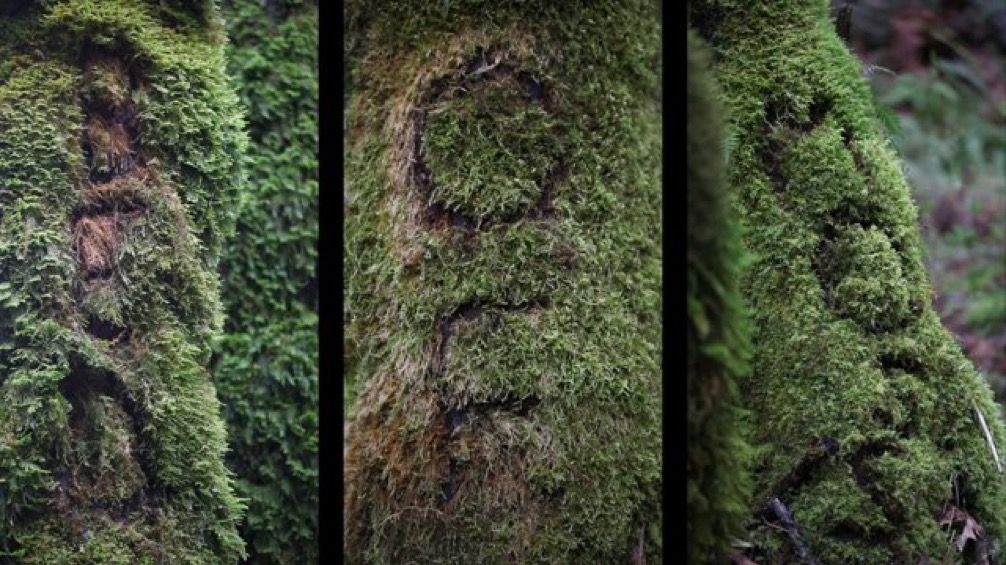
Mosses are small land plants that grow in shady and damp places, like forest floors or near water. Mosses are made up of very stems with tiny leaves. They grow very close together in groups and are fixed to the ground by filaments.
Bed of Moss
Mossgrove
3.- FERNS
Ferns are larger, more complex plants than mosses and algae. They have roots, a stem and leaves. * The roots absorb the water that the plant needs. * The stem is thick and usually grows horizontally underground. * The leaves, called fronds, grow up from the stem and are normally quite large. Ferns grow in dark, damp areas, often in forests. They form part of the undergrowth in a forest, and can grow up to one metre hight
Ferns
FLOWERING PLANTS (SPERMATOPHYTES)
CHARACTERISTICS OF SPERMATOPHYTES
Spermatophytes reproduce through flowers. They are the most numerous o all the plant groups and include trees, grasses and cultivated plants. Spermatophytes are divided into three parts: roots, a stem and leaves
ROOTS
The roots hold the plant in the ground and absorb the water and minerals salts the plant needs. Spermatophytes have a large primary root that grows downwards. Other smaller roots, called secondary roots, grow out from the primary root.
THE STEM
The stem supports the leaves. Minerals and water travel up through the stem to the leaves. The stem also distributes the food made in the leaves to the rest of the plants. In many plants, the stem divides into branches. The main axis is called the primary stem. There are two types of stems: herbaceous and woody. Herbaceuous stems are soft, green and flexible. Grasses have herbaceous stems. Woody stems are hard and thick. Trees and shrubs have a woody stem, called a trunk.
LEAVES
The leaves are the organs that make food for the plant. The flat part of a leaf is called the blade. It is attached to the stem by an extension called a petiole. A leaf blade has little veins that strengthen the leaf. Leaf blades are different in all plants. We can classify leaves according to their shape and margin.