Sign up for FlowVella
Sign up with FacebookAlready have an account? Sign in now
By registering you are agreeing to our
Terms of Service
Loading Flow

Downloading Image /
Downloading Image /
Downloading Image /
Downloading Image /
Downloading Image /
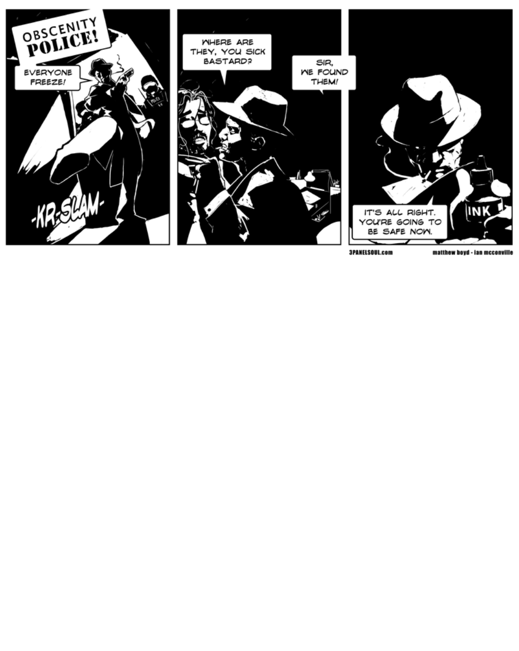
Legal Status
Obscenity is not NECCISARILY protected by the First Amendment and thus can be regulated by the state. However, the state must conform to the three-part test of Miller v. California:
Whether the average person, applying contemporary
community standards, would find that the work,
taken as a whole, appeals to the prurient interest;
Whether the work depicts or describes, in an
offensive way, sexual conduct or excretory
functions, specifically defined by applicable state
law; and
Whether the work, taken as a whole, lacks serious
literary, artistic, political, or scientific value.
Miller v. California 413 US 15 (1973)
The definition of obscenity is reframed to be "utterly without social redeeming value". From this ruling we now the the Miller Test, or the Three Prong Test.
In 1971, Marvin Miller, an operator of a mail-order business specializing in pornographic films and books, sent out a brochure advertising for books and film that graphically depicted sexual activity The brochure used in the mailing contained graphic images from the books and the film. Five of the brochures were mailed to a restaurant in Newport Beach, California. The owner and his mother opened the envelope and seeing the brochures, called the police.
Downloading Image /
Downloading Image /
Downloading Image /
Downloading Image /
Downloading Image /
Downloading Image /
Downloading Image /
Downloading Image /
Downloading Image /
Downloading Image /
Downloading Image /
Downloading Image /
Downloading Image /
Downloading Image /
Downloading Image /
Downloading Image /
Downloading Image /
Downloading Image /
Downloading Image /
Downloading Image /
Downloading Image /
Downloading Image /
Downloading Image /
 Powered by FlowVella © 2026 Terms
 FlowVella