






Reconstruction timeline
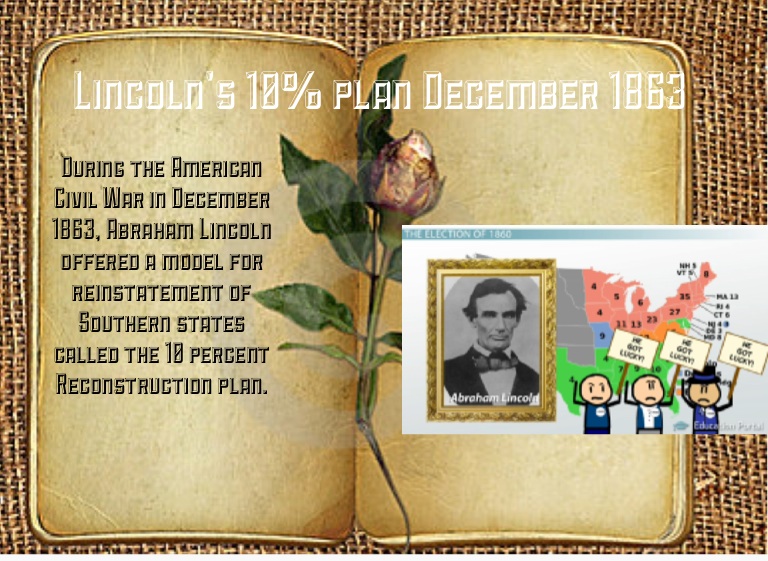
Lincoln's 10% plan December 1863
During the American Civil War in December 1863, Abraham Lincoln offered a model for reinstatement of Southern states called the 10 percent Reconstruction plan.
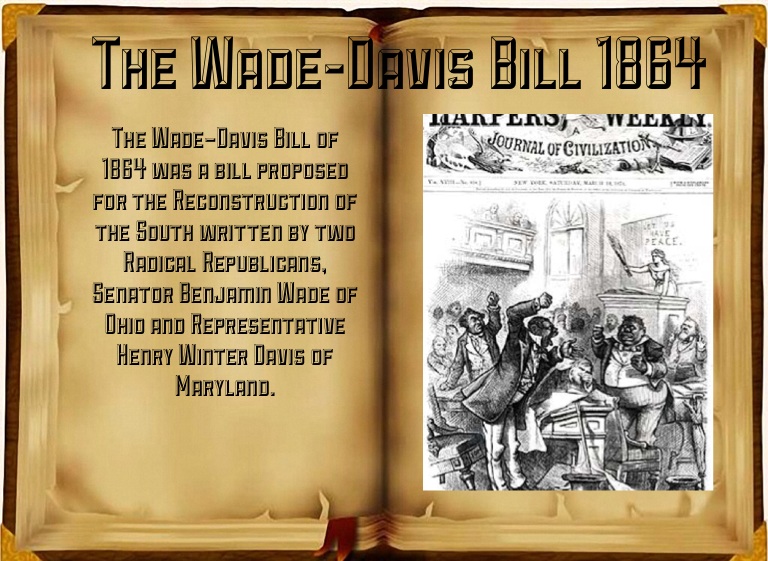
The Wade-Davis Bill 1864
The Wade–Davis Bill of 1864 was a bill proposed for the Reconstruction of the South written by two Radical Republicans, Senator Benjamin Wade of Ohio and Representative Henry Winter Davis of Maryland.
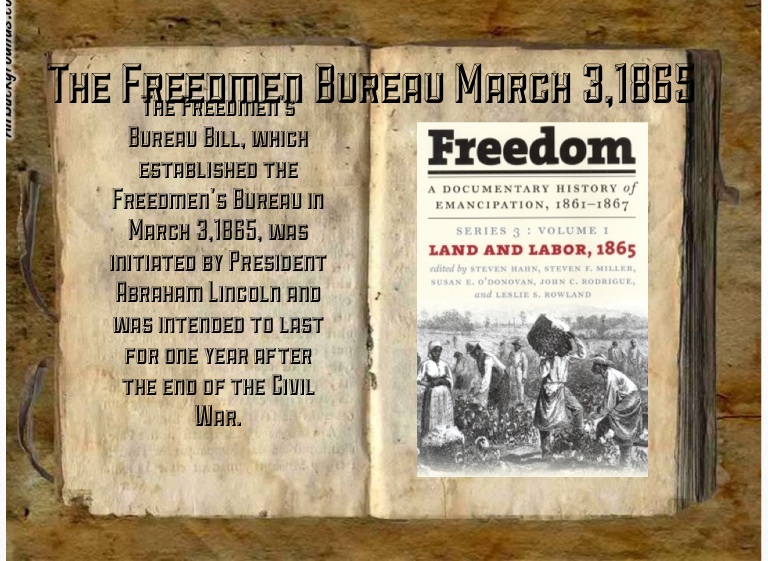
The Freedmen Bureau March 3,1865
The Freedmen's Bureau Bill, which established the Freedmen's Bureau in March 3,1865, was initiated by President Abraham Lincoln and was intended to last for one year after the end of the Civil War.
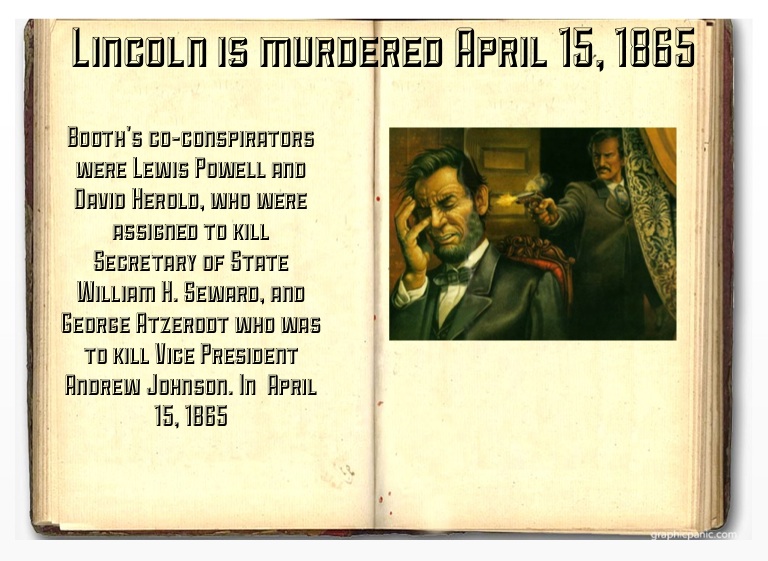
Lincoln is murdered April 15, 1865
Booth's co-conspirators were Lewis Powell and David Herold, who were assigned to kill Secretary of State William H. Seward, and George Atzerodt who was to kill Vice President Andrew Johnson. In April 15, 1865
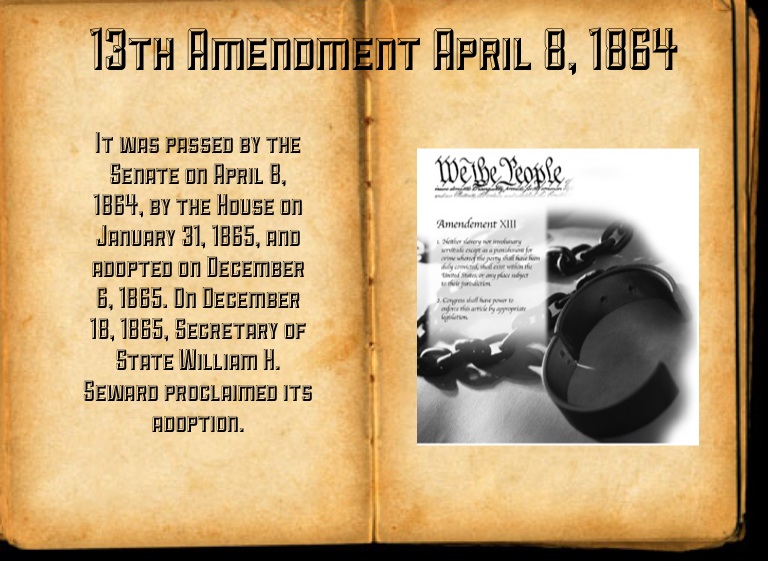
13th Amendment April 8, 1864
It was passed by the Senate on April 8, 1864, by the House on January 31, 1865, and adopted on December 6, 1865. On December 18, 1865, Secretary of State William H. Seward proclaimed its adoption.
14th Amendment July 9, 1868
The Fourteenth Amendment (Amendment XIV) to the United States Constitution was adopted on July 9, 1868, as one of the Reconstruction Amendments.
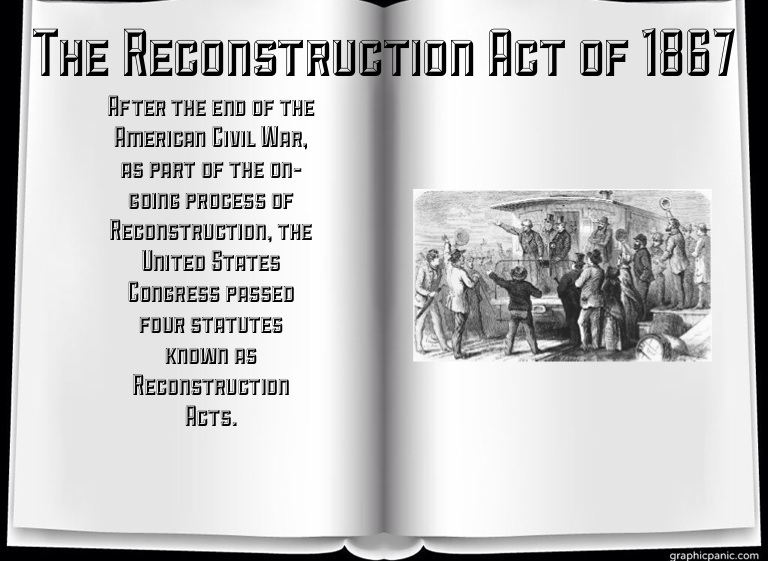
The Reconstruction Act of 1867
After the end of the American Civil War, as part of the on-going process of Reconstruction, the United States Congress passed four statutes known as Reconstruction Acts.
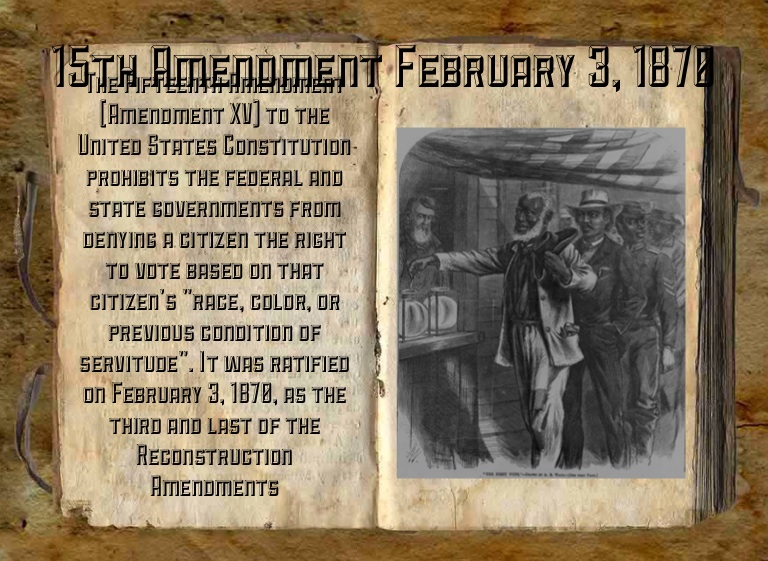
15th Amendment February 3, 1870
The Fifteenth Amendment (Amendment XV) to the United States Constitution prohibits the federal and state governments from denying a citizen the right to vote based on that citizen's "race, color, or previous condition of servitude". It was ratified on February 3, 1870, as the third and last of the Reconstruction Amendments
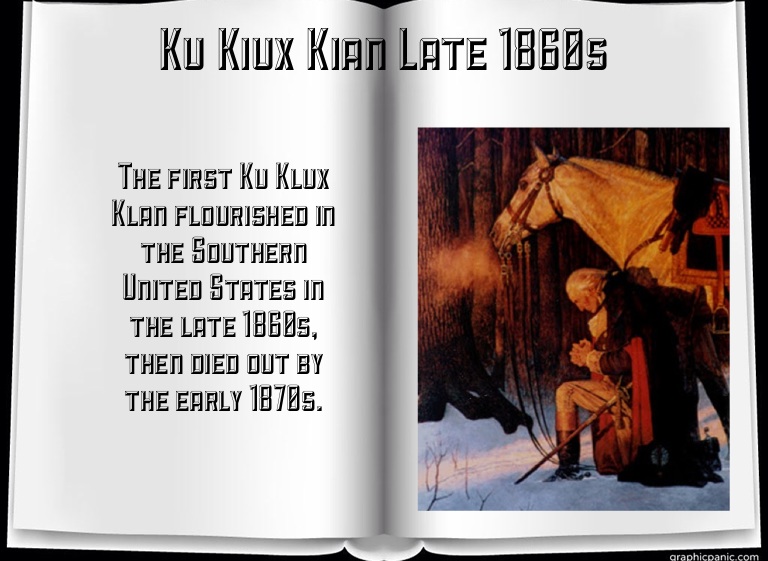
Ku Kiux Kian Late 1860s
The first Ku Klux Klan flourished in the Southern United States in the late 1860s, then died out by the early 1870s.