






EPILEPSY
EPILEPSY
JULIA B. SHAKURA M.
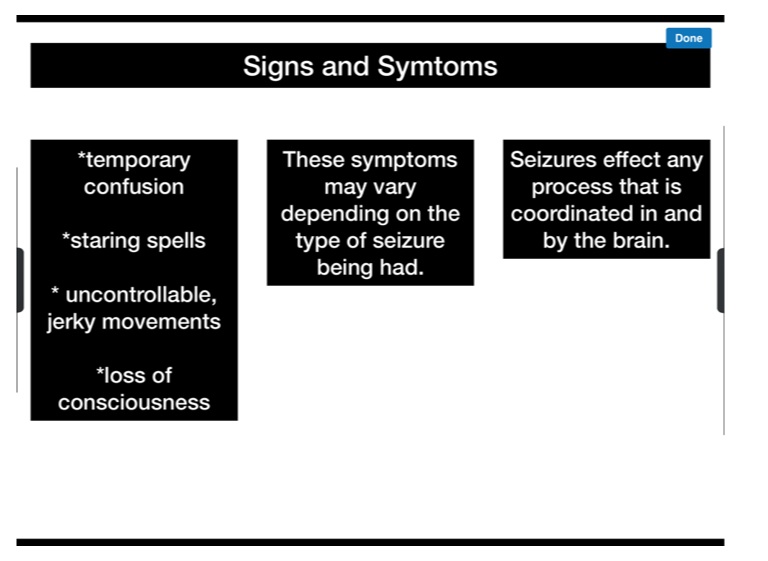
What is Epilepsy? Epileptic : pertaining to a seizure Epilepsy is a neurological disorder located in the CNS. The nerve cell activity in the brain is disturbed, causing a seizure. During the seizure a person experiences abnormal behavior, symptoms and sensations, including loss of consciousness. 1 in 100 people in the United States will have an unprovoked seizure. Seizures vary, and not all seizure are epileptic.
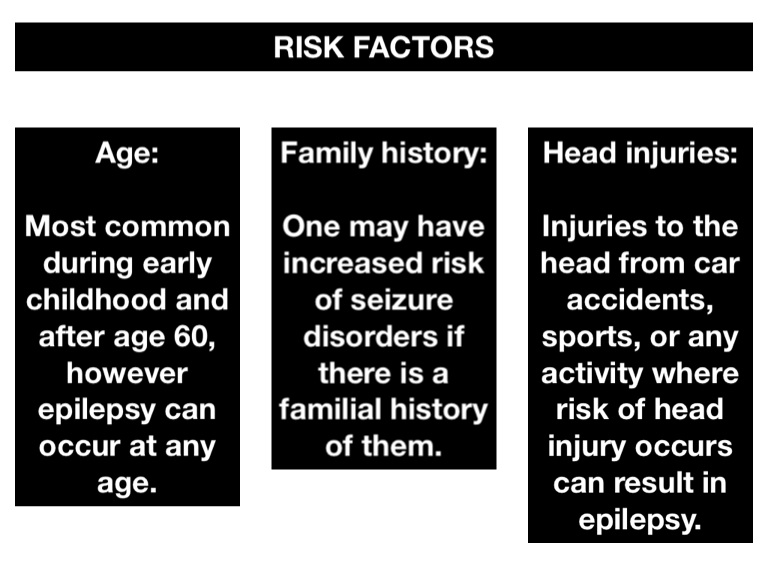
RISK FACTORS
Age: Most common during early childhood and after age 60, however epilepsy can occur at any age.
Family history: One may have increased risk of seizure disorders if there is a familial history of them.
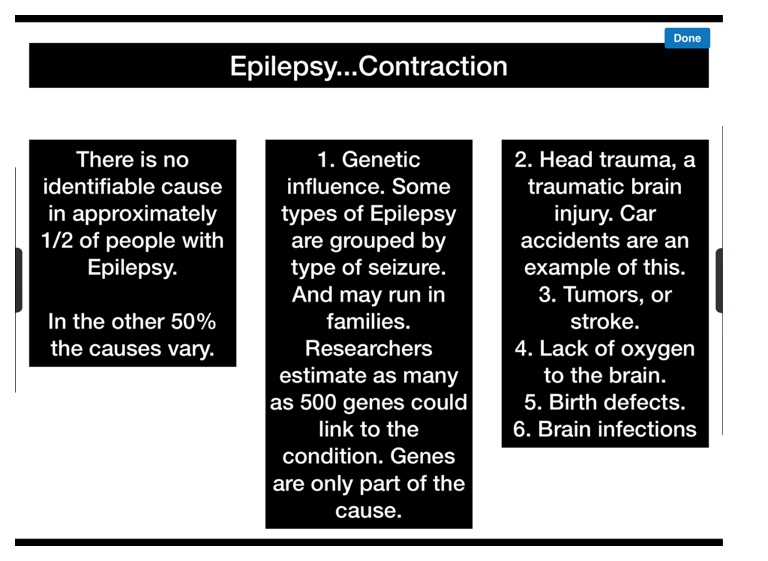
Head injuries: Injuries to the head from car accidents, sports, or any activity where risk of head injury occurs can result in epilepsy.
RISK FACTORS
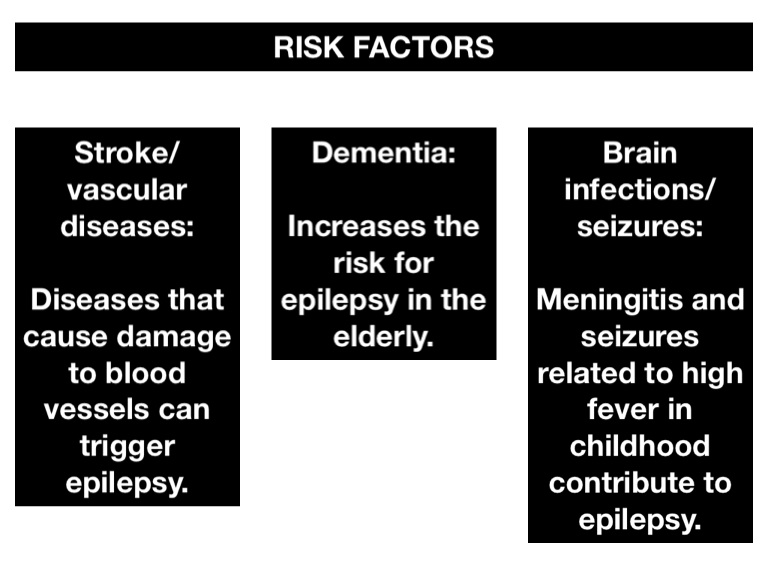
Stroke/vascular diseases: Diseases that cause damage to blood vessels can trigger epilepsy.
Dementia: Increases the risk for epilepsy in the elderly.
Brain infections/seizures: Meningitis and seizures related to high fever in childhood contribute to epilepsy.
Prevention
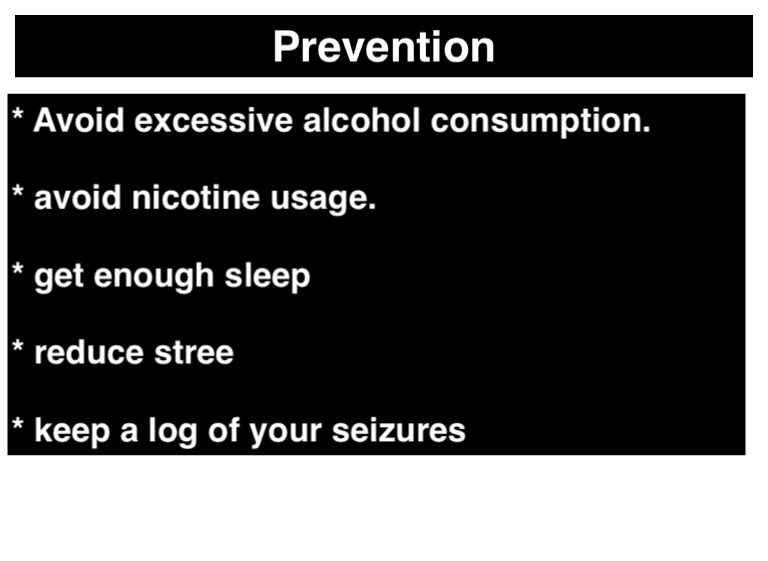
* Avoid excessive alcohol consumption. * avoid nicotine usage. * get enough sleep * reduce stree * keep a log of your seizures
TREATMENT
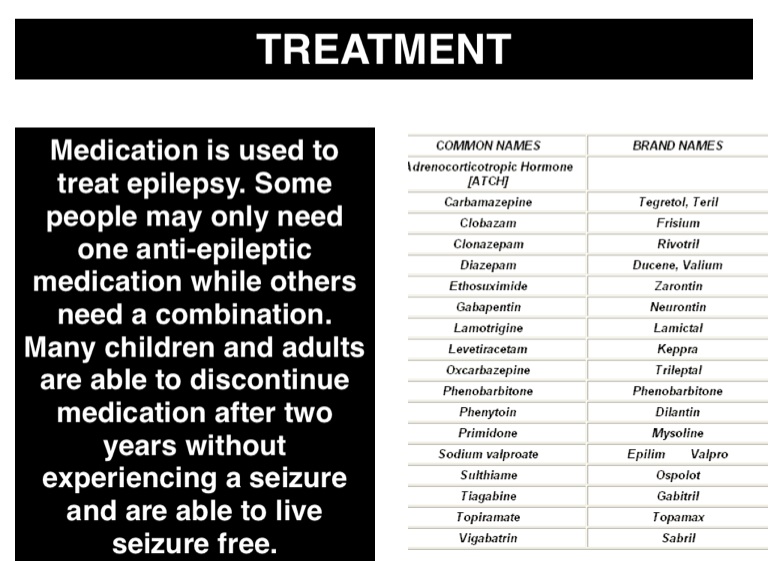
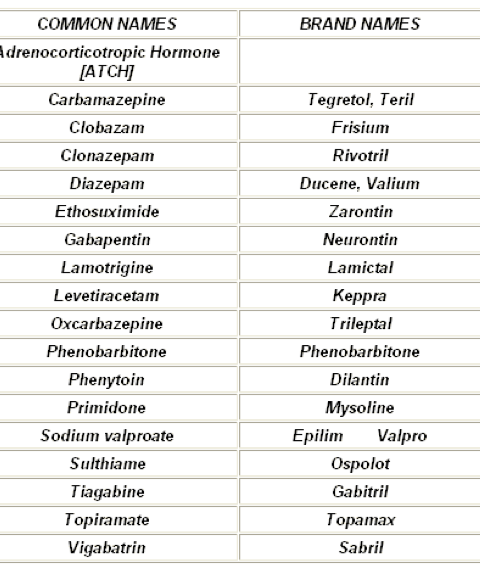
Medication is used to treat epilepsy. Some people may only need one anti-epileptic medication while others need a combination. Many children and adults are able to discontinue medication after two years without experiencing a seizure and are able to live seizure free.