Sign up for FlowVella
Sign up with FacebookAlready have an account? Sign in now
By registering you are agreeing to our
Terms of Service
Loading Flow

Downloading Image /

The Sumerians
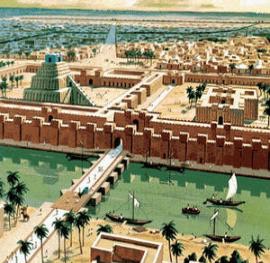
What made Mesopotamia particularly suitable for the development of a civilization, besides the water, soil and sunshine, was its location in an easily accessible area, not surrounded by mountains. This openness allowed for trade with other civilizations that developed later, such as the Indus Valley city of Mohenjo-Daro. The agricultural surplus along with the trade allowed cities to develop.
“Agriculture and trade made Sumerian city-states prosperous. They bartered grain, vegetable oil and leather with one another and with foreign regions, from which they acquired natural resources not found in Sumer, such as metals, timber, and precious stones. Sumerian traders travelled as far east as India, sailing for weeks to reach that distant land."
The Mesopotamian society developed from egalitarian to a rigid hierarchy. Before cities, most people were equal, doing sustenance farming. Then some people produced more and accumulated more livestock than others, thus gaining higher status. As the agricultural surplus grew, more people began to specialize as artisans, for example, in metal working or trading. This new group of specialists was considered to be higher in status than farmers. As time marched on, society stratified into a hierarchy, with the king on top, followed by the priests, then bureaucrats, artisans, unskilled workers, and slaves at the bottom. Once a person was in a class, it was difficult to work one’s way up to a higher level.
Downloading Image /
Downloading Image /
Downloading Image /
Downloading Image /



FlowVella, Previously Known As Flowboard
© 2026 FlowVella
 FlowVella