Sign up for FlowVella
Sign up with FacebookAlready have an account? Sign in now
By registering you are agreeing to our
Terms of Service
Loading Flow

Downloading Image /
Downloading Image /
Downloading Image /
Thích Quảng Đứcbranch
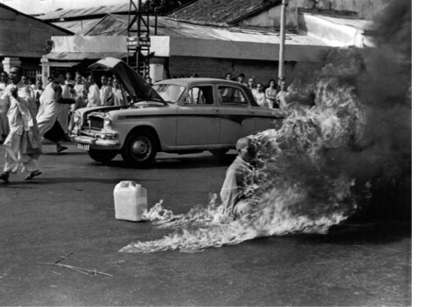
When rebelling, people will go to the extreme and may die a martyr. They may even sacrifice themselves to show that they are willing to die for what they believe in. One's actions may influence a another to revolt therefore having butterfly effect. This means if somebody saw him do this they would feel like they were able to do it also. When people see others doing heroic actions it makes them feel more capable of being heroic themselves. In the picture you can see that he is surrounded by a group of people. When he was being burned he did not move a muscle nor did he make a sound. In this picture, Thích Quảng Đứcbranch, immolates himself to protest against the racism of his people. Buddhists were being persecuted by the government and many were being killed. These are a kind group of people, but something needed to be done to draw attention to what was happening. He was willing to die for what he believed in. He died a martyr in front of all of his other monks which caused other people to rebel and support the cause. This happened a busy Saigon road intersection on June 11 1963. When he was being burnt, he did not move a muscle nor did he make a sound. Not many people today would do what he had done to support a cause and bring about change. Ultimately, the persecution of the monks ended due to the protests by the people. People who rebel for what they believe in or know is right will do anything to defend themselves and what they believe in. Others see their actions and are inspired by the martyrs.
Downloading Image /



FlowVella, Previously Known As Flowboard
© 2026 FlowVella
 FlowVella