Sign up for FlowVella
Sign up with FacebookAlready have an account? Sign in now
By registering you are agreeing to our
Terms of Service
Loading Flow

Downloading Image /
Downloading Image /
Downloading Image /
Downloading Image /
Downloading Image /
Downloading Image /
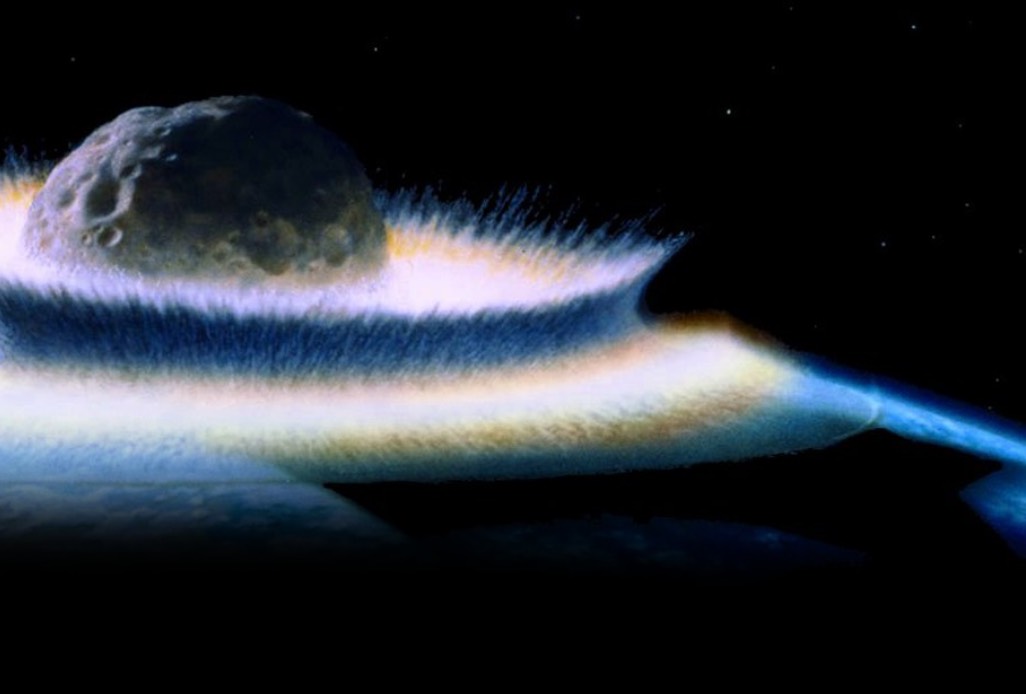
Extinction
ASTRONOMY-the science that deals with the material universe beyond the earth's atmosphere
As originally proposed by a team of scientists led by Luis Alvarez, it is now generally believed that the K–Pg extinction was triggered by a massive comet/asteroid impact and its catastrophic effects on the global environment, including a lingering impact winter that made it impossible for plants and plankton to carry out photosynthesis.[4][5] The impact hypothesis was bolstered by the discovery of the 180-kilometre-wide (112 mi) Chicxulub crater in the Gulf of Mexico in the early 1990s.
THE IMPORTANCE OF ASTRONOMY IS TO HAVE A WAY FOR PEOPLE TO PREDICT WHEN OR IF A METEOR WILL COME.

One of the earliest advanced civilizations, Ancient Egypt, had a rich religious tradition which permeated every aspect of society. As in most early cultures, the patterns and behaviors of the sky led to the creation of a number of myths to explain the astronomical phenomena. For the Egyptians, the practice of astronomy went beyond legend: huge temples and pyramids were built to have a certain astronomical orientation. Although many of the religious aspects of Egyptian life were known for centuries, it was not until recently that a number of archaeoastronomers attempted to find out how important astronomy really was in ancient Egypt.


Downloading Image /
Downloading Image /



FlowVella, Previously Known As Flowboard
© 2026 FlowVella
 FlowVella