Sign up for FlowVella
Sign up with FacebookAlready have an account? Sign in now
By registering you are agreeing to our
Terms of Service
Loading Flow

Downloading Image /
Downloading Image /
Downloading Image /
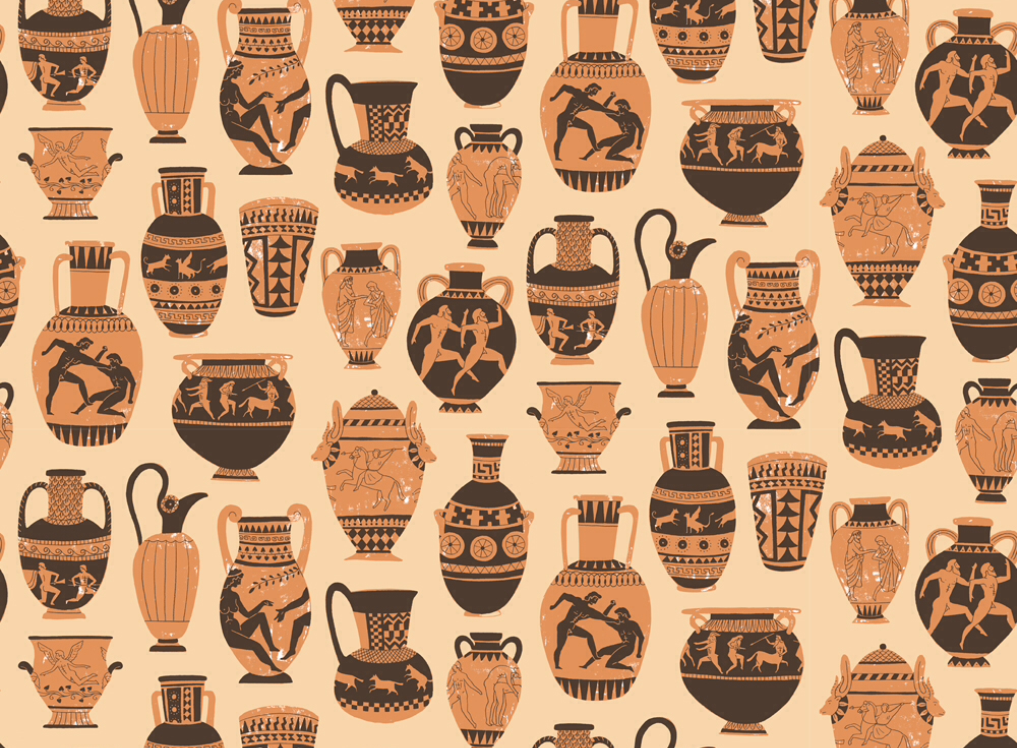





Greeks used a system in their architecture called “orders.” These orders were: Doric, Ionic, and Corinthian. Doric style was more for strength than design. Doric was used in mainland Greece and in Southern Italy. One of the most well known Doric is the Athena Parthenos, which was to honor the goddess of wisdom. Ionic was more slimming than Doric and was found in Eastern Greece and the islands. Corinthian is seldom used in the Greek world, however it was commonly seen in Roman temples.
Mediums for craftsmen were mostly sculpting and weaving. Crafts men were valued today because by their work we can better comprehend what their lives were like.
A famous weaver was Arachne who had challenged Athena (goddess of weaving) to a weaving contest and was transformed into a spider (Araneae). Looms were usually made from wood and twine. Most citizens depended on the resident weavers for their clothing. Weavers could weave beautiful tapestries.
Statues were momentous to the Greeks. The told narratives of great champions, gods, events, mythical creatures, and Greek culture in general. They were usually made of stone, marble, and limestone. Romans deeply respected the Greeks and may have copied them. Greek sculptures were mainly divided into 7 time periods: Mycenaean Art, Sub-Mycenaean or Dark Age, Proto-Geometric, Geometric Art, Archaic, Classical, and Hellenistic.
Downloading Image /
Downloading Image /
Downloading Image /
Downloading Image /
Downloading Image /
Downloading Image /



FlowVella, Previously Known As Flowboard
© 2026 FlowVella
 FlowVella