Sign up for FlowVella
Sign up with FacebookAlready have an account? Sign in now
By registering you are agreeing to our
Terms of Service
Loading Flow

Downloading Image /
Downloading Image /
Downloading Image /

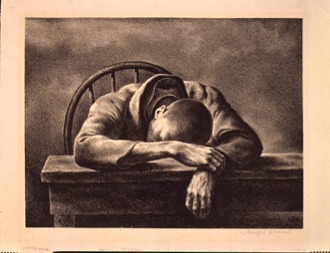
Lunch Hour, Jospeh Hirsch, 1942
Describe
Analyze
Interpret
Loc.gov
-man
-chair
-table
-edge line
-implied shape
-passive
-complex shape
-compound Shape
-horizontal line
-shadow adds dimension
-realistic feel
-negative and positive
-sorrowful
-tired
-smooth texture
- Mainly dark, but hints of light
-helps contrast and highlight
-the lack of color adds to the gloom
-detailed muscle tone
-seems like figure is tense
-helps emphasize the figure
-meticulous use of shadow brings the piece to life and again stresses despair
-the touches of light draw the eye to the focal point of the piece
-colorless affect unifies piece
-complex shape of the man and trace of brightness adds variation
-negative shape puts more emphasis on the figure
Hirsch seems to be representing a character effected by the Great Depression. He uses a somber color scheme to emphasize the distress. The posture of the man and the development of his muscle tone portray that he has given up. Hirsch's use of shadow adds dimension, implies a dark gloom, and gives the piece life.Through his character, Hirsch demonstrates the dreary, weakened, and mournful emotions of all those who went through this same experience.
Downloading Image /
Downloading Image /
Downloading Image /
Downloading Image /
Downloading Image /
Downloading Image /
Downloading Image /



FlowVella, Previously Known As Flowboard
© 2026 FlowVella
 FlowVella