Sign up for FlowVella
Sign up with FacebookAlready have an account? Sign in now
By registering you are agreeing to our
Terms of Service
Loading Flow

Downloading Image /
Downloading Image /

Natural Hair Color
Natural Hair Color:
To understand how hair color formulas react with natural hair, a look at the hair’s natural levels of color need to be understood and recognized.
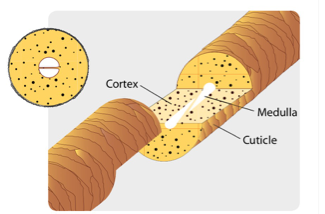
The medulla: This is a tubular
core found in the center of the hair shaft. Medulla is not found in all
hair and has no known function.
The services you perform are not
concerned with the medulla.
The cuticle: This is a colorless, translucent casing over the hair
shaft. It consists of overlapping scales containing no natural color.
The cortex: This part contains the great bulk of melanin (the natural pigment found in hair and skin), lodged between its fibers.
The hair’s structure is made up of:
Color is formed in the cortex of the hair by melanocytes that produce
three types of pigment (melanin):
💫Eumelanin (granular melanin)
Eumelanin (natural black to red)
pigment (sometimes called "granular”) is larger in size than diffused pigment, so fewer actual pigment granules are needed to color a hair shaft. Because there
are fewer of them, eumelanin pigment is more easily and quicklyremoved from the hair shaft.
💫Pheomelanin (diffused melanin)
Pheomelanin (natural red to pale yellow) pigment (sometimes
called “diffused”) is much smallerthan eumelanin pigments. There
are many more yellow and red
than black and brown pigments
in a single hair shaft. This makes
them more difficult to remove.
💫Mixed Melanin (when both types
are present in one melanin granule)
💫💫In addition, canities is the
absence of pigment in hair.
White or grey hair is found on
guests whose hair has stopped
producing melanin due to age
or congenital conditions.
The amount of non pigmented
hair on a guest’s head is usually described in percentages: 25%, 50%, or 75%.
27.A
Downloading Image /
Downloading Image /
Downloading Image /
Downloading Image /
Downloading Image /
Downloading Image /
Downloading Image /
Downloading Image /
Downloading Image /
Downloading Image /
Downloading Image /
Downloading Image /
Downloading Image /
Downloading Image /
Downloading Image /
Downloading Image /
Downloading Image /
Downloading Image /
Downloading Image /
Downloading Image /
Downloading Image /
Downloading Image /
Downloading Image /
Downloading Image /
Downloading Image /
Downloading Image /
Downloading Image /
Downloading Image /
Downloading Image /



FlowVella, Previously Known As Flowboard
© 2026 FlowVella
 FlowVella