Sign up for FlowVella
Sign up with FacebookAlready have an account? Sign in now
By registering you are agreeing to our
Terms of Service
Loading Flow

Downloading Image /
Downloading Image /
Downloading Image /
Downloading Image /
Downloading Image /
Downloading Image /
Downloading Image /
Participant Behaviours

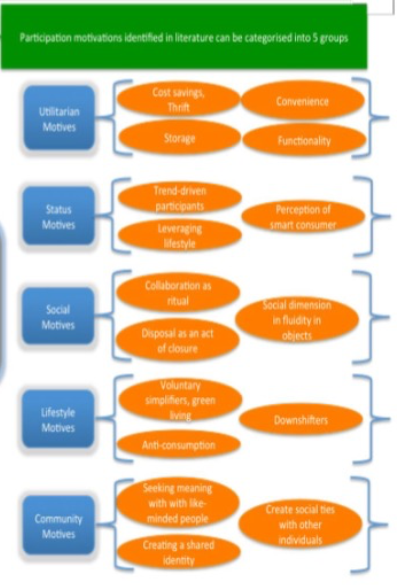
Findings (cont.)
4. Suppliers in peer-to-peer collaboration contexts involving redistribution markets were mostly driven by providing a second life to their belongings or making available belongings to peers who would make good use of them.
5. In collaborative lifestyle contexts self interest was more prevailing among suppliers as with consumers than community, lifestyle or social drivers.
6. The study did not provide useful insights into the relationships between different forms of collaboration and the motivational traits of participants (H3). Is relationship has been usefully shaped around the degrees of reciprocity (negative, generalised, balanced - Sahlins, in Nelson and Rademacher, 2009) underlying the means of exchange used in collaboration contexts. This approach provides a basis for further research on platform designs and matching participant profiles.
Downloading Image /
Downloading Image /



Participant Motivations in Collaborative Consumption Contexts and Their Implications to Marketers
By Chris
This presentation summarises the findings of a dissertation study on participant motivations in collaborative consumption. It is addressed to respondents to a survey launched as part of the study.
FlowVella, Previously Known As Flowboard
© 2026 FlowVella
 FlowVella