Sign up for FlowVella
Sign up with FacebookAlready have an account? Sign in now
By registering you are agreeing to our
Terms of Service
Loading Flow

Downloading Image /
Downloading Image /
Downloading Image /
Airborne Interception Radar played a key part in Britains successful defense during World War Two. The first Radar to be tested in an aircraft was the MK. IV radar. The AI MK. I radar was first fit into into an Avro Anson twin-engined bomber in 1937. The AI MK. I had a range of about one mile for aircrafts and three miles for ships. A problem with it was its minimum range was 1000 feet which was to long for what Britain wanted. In 1939 with the war looming, it was clear they needed new, more advanced technology. By 1940 it was clear Edward Bowen and his team were not getting anywhere and they were disbanded. The breakthrough was found later in 1940 by EMI, music, recording and electronics company who introduced the new radar the AI MK. IV.
The new MK. IV had a minimum range 400 feet. The MK. IV was mass produced in July 1940 and was fit into the fighter plane the Bristol Beaufighter. A new breakthrough was added in December 1941. John Randall and Harry Boot invented the cavity magnetron which was a high frequency vacuum tube, and implemented it into the MK. VIII. The Cavity Magnatron made the MK. VIII have fifteen times shorter wave lengths then the MK. IV at the same size. Because of that they were able to make the device much smaller. Over the rest of the war they continued to produce smaller, more accurate and farther tracking radars MK. XV in 1945 which had a three centimeter wave length and was used in many planes such as the F6F Hellcat, and the F4U Corsair.
How and when was it used during World War II?
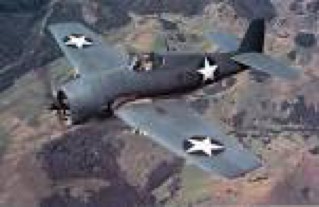
http://upload.wikimedia.org/wikipedia/commons/1/19/F6F-3_over_California_1943.jpg
A F6F Hellcat.
Downloading Image /
Downloading Image /
Downloading Image /
Downloading Image /
Downloading Image /
Downloading Image /



FlowVella, Previously Known As Flowboard
© 2026 FlowVella
 FlowVella