












Inventions
The Native people of the Americas invented hundreds of concepts, processes, and products over many centuries prior to European contact. Some of these inventions are exclusive to the Native people of the Americas. Others were independently invented in two or more parts of the world. Still others have been invented in one place and gradually spread throughout the world.
Transportation
Agricultural Engineering
Title Page - Need Logo
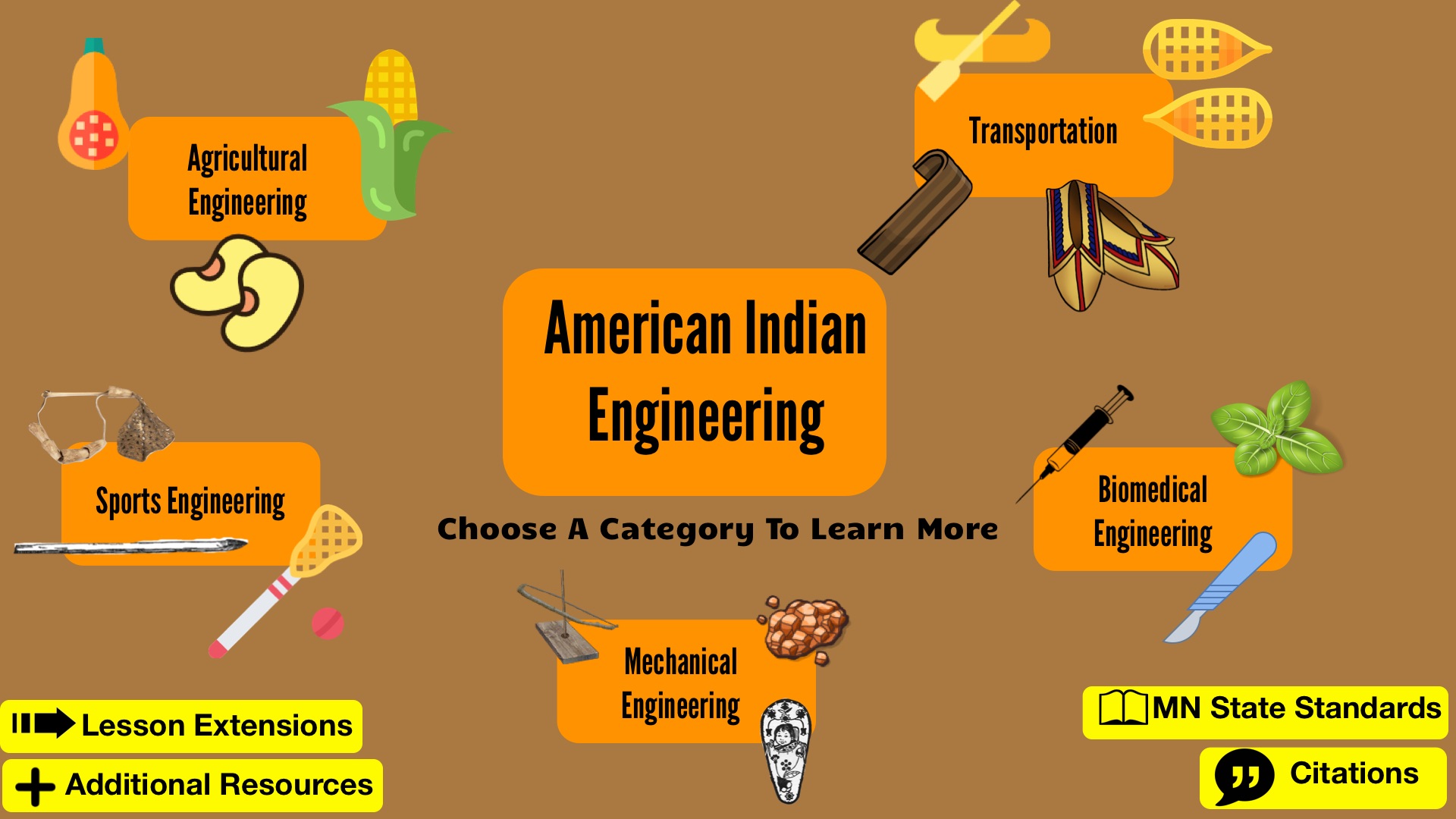
American Indian Engineering
Biomedical Engineering
Sports Engineering
Mechanical Engineering
Click To Advance
Transportation
Agricultural Engineering
American Indian Engineering
Biomedical Engineering
Sports Engineering
Choose A Category To Learn More
Mechanical Engineering
MN State Standards
Lesson Extensions
Citations
Additional Resources
Biomedical Engineering
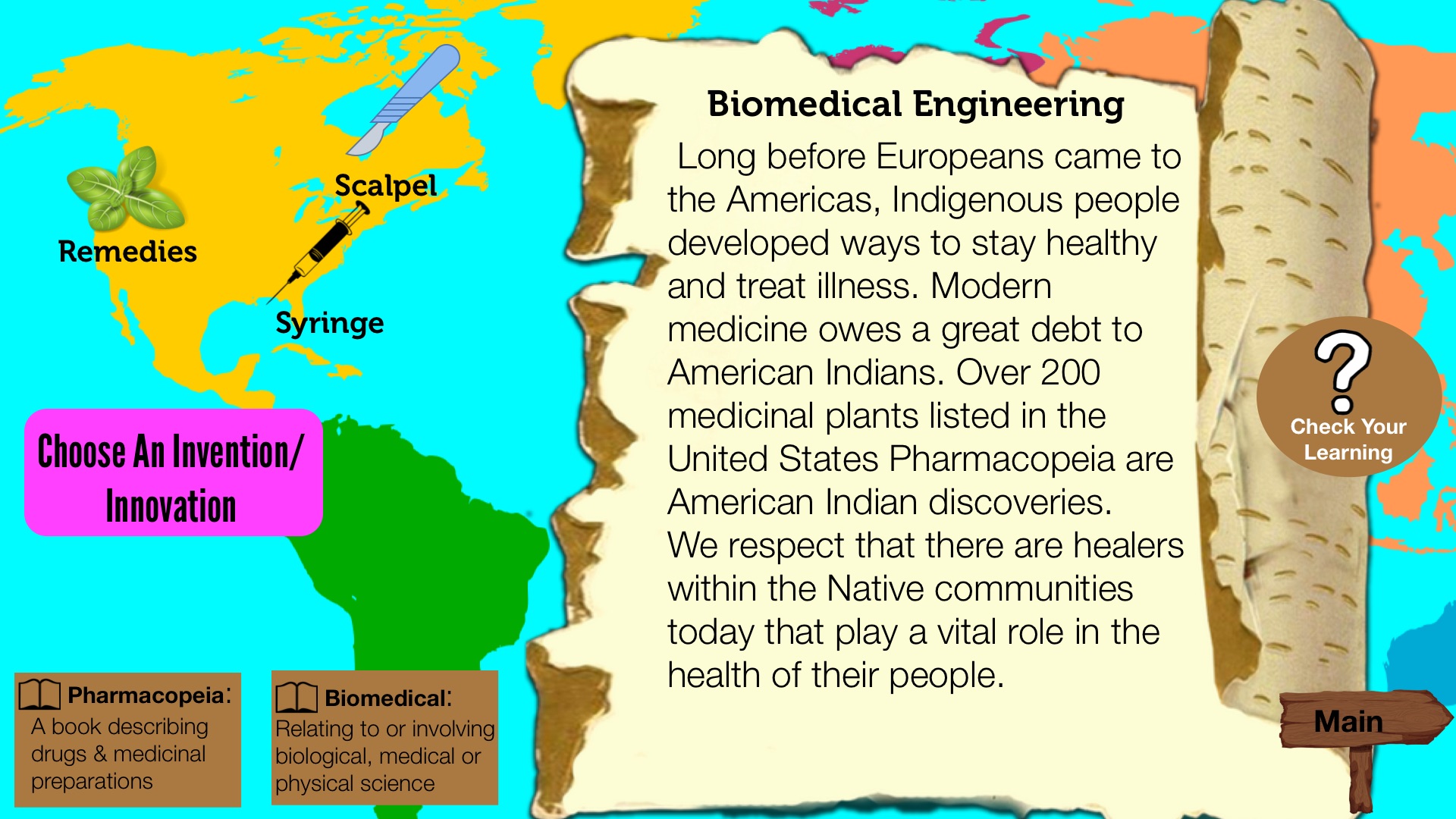
Long before Europeans came to the Americas, Indigenous people developed ways to stay healthy and treat illness. Modern medicine owes a great debt to American Indians. Over 200 medicinal plants listed in the United States Pharmacopeia are American Indian discoveries. We respect that there are healers within the Native communities today that play a vital role in the health of their people.
Scalpel
Remedies
Syringe
Check Your Learning
Choose An Invention/Innovation
Pharmacopeia:
Biomedical:
Main
A book describing drugs & medicinal preparations
Relating to or involving biological, medical or physical science
Medicines/Remedies
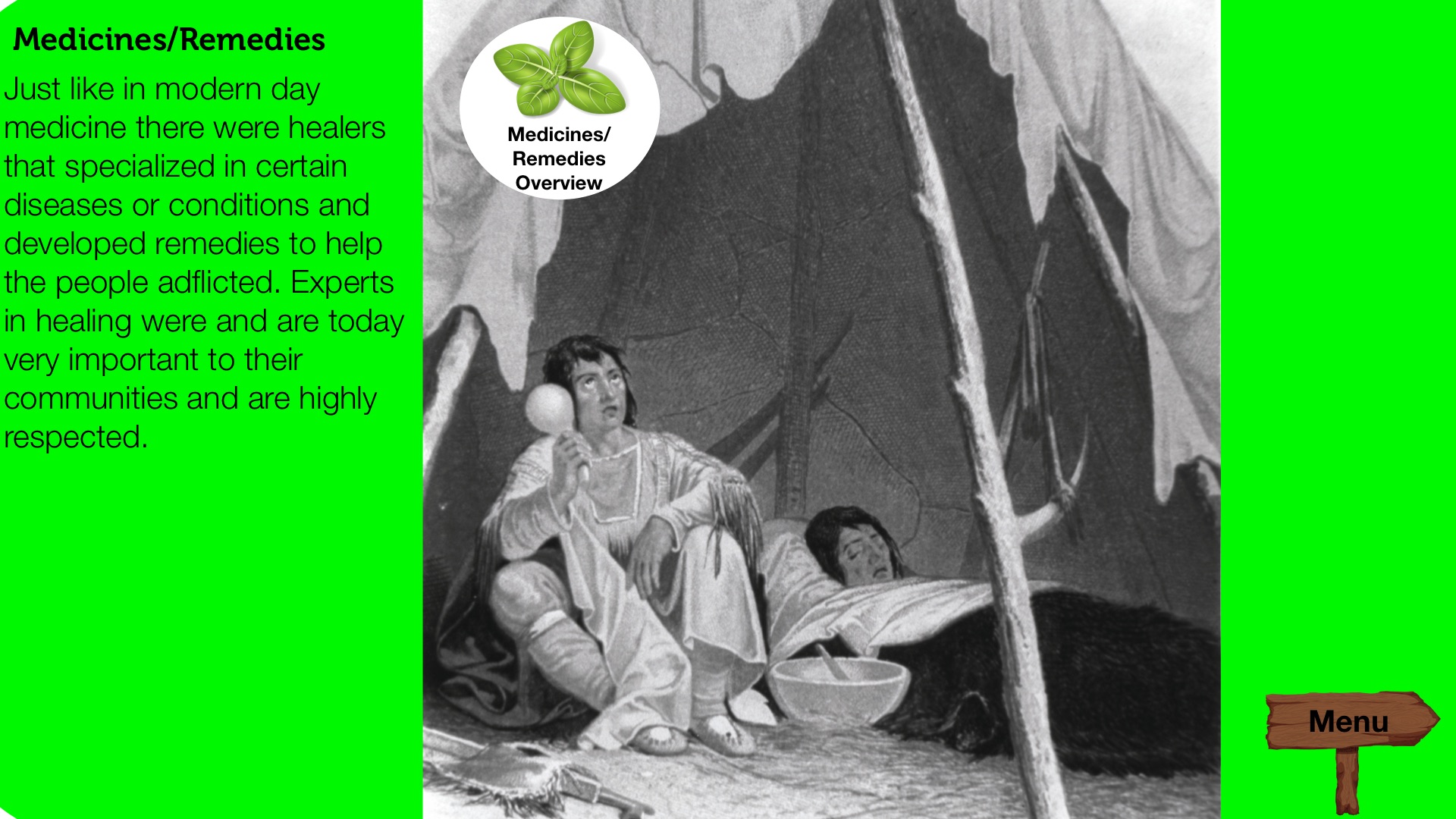
Just like in modern day medicine there were healers that specialized in certain diseases or conditions and developed remedies to help the people afflicted. Experts in healing were and are today very important to their communities and are highly respected.
Medicines/Remedies Overview
Menu
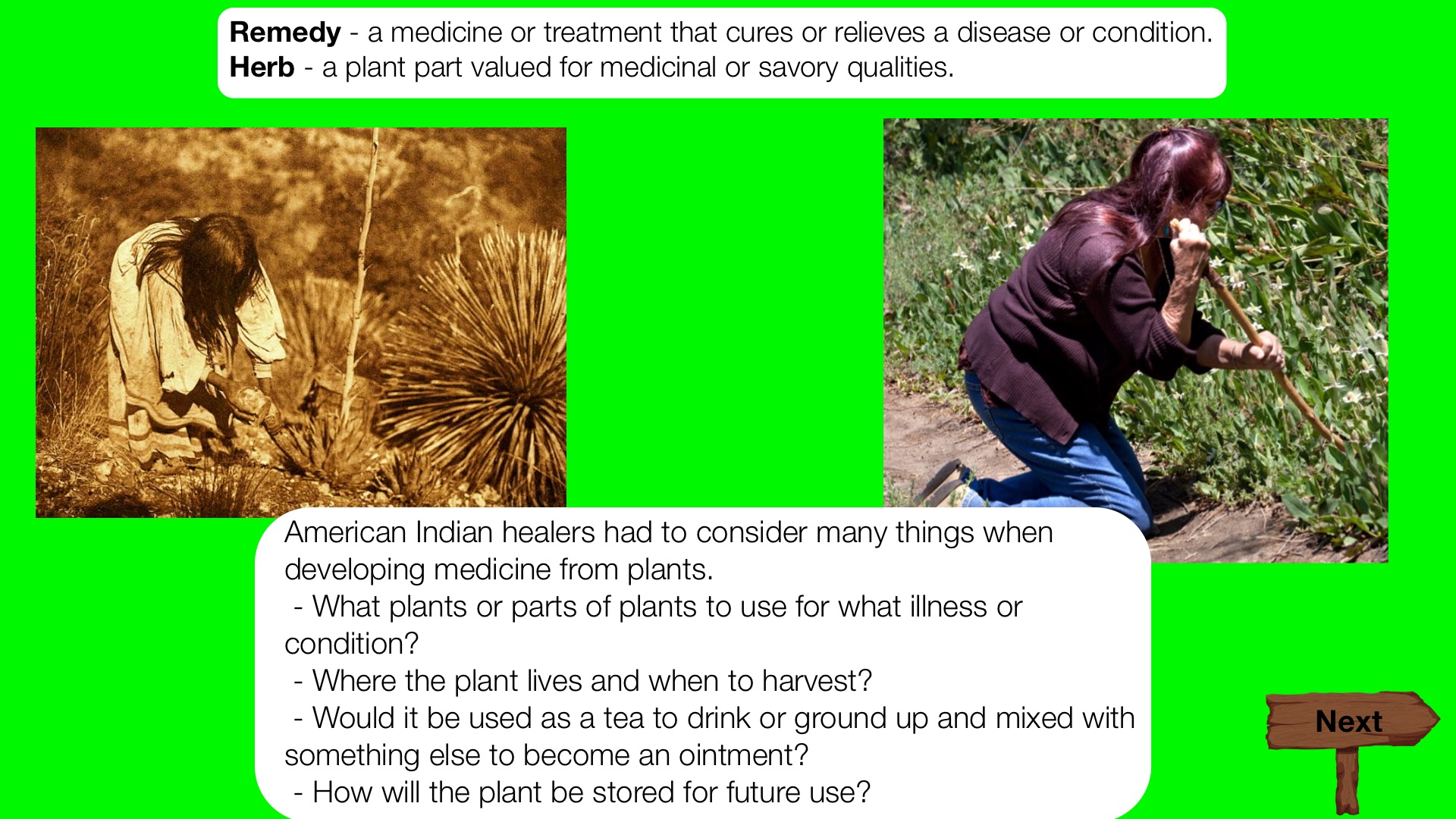
Remedy - a medicine or treatment that cures or relieves a disease or condition. Herb - a plant part valued for medicinal or savory qualities.
American Indian healers had to consider many things when developing medicine from plants. - What plants or parts of plants to use for what illness or condition? - Where the plant lives and when to harvest? - Would it be used as a tea to drink or ground up and mixed with something else to become an ointment? - How will the plant be stored for future use?
Next
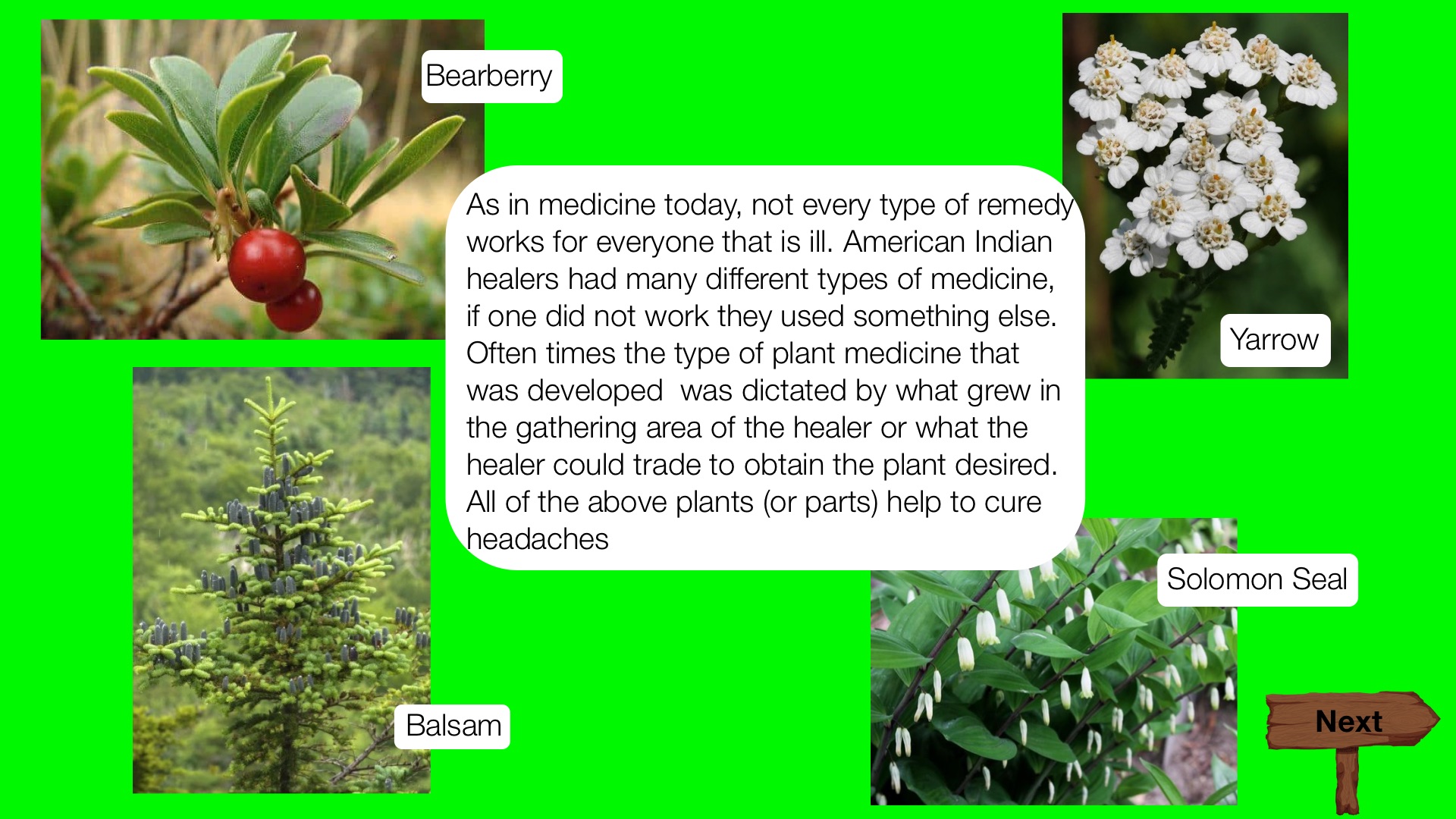
Bearberry
As in medicine today, not every type of remedy works for everyone that is ill. American Indian healers had many different types of medicine, if one did not work they used something else. Often times the type of plant medicine that was developed was dictated by what grew in the gathering area of the healer or what the healer could trade to obtain the plant desired. All of the above plants (or parts) help to cure headaches
Yarrow
Solomon Seal
Balsam
Next
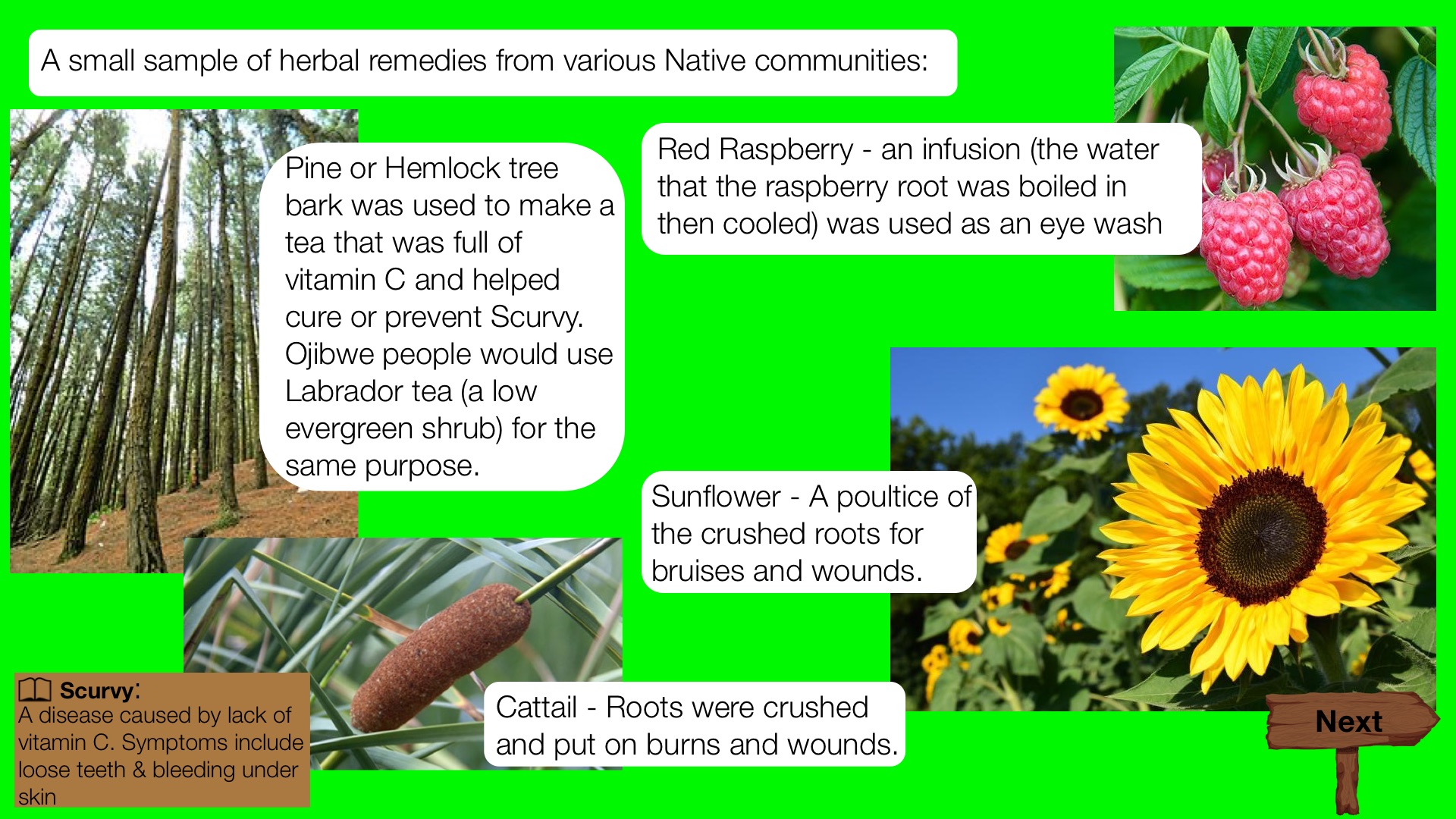
A small sample of herbal remedies from various Native communities:
Red Raspberry - an infusion (the water that the raspberry root was boiled in then cooled) was used as an eye wash
Pine or Hemlock tree bark was used to make a tea that was full of vitamin C and helped cure or prevent Scurvy. Ojibwe people would use Labrador tea (a low evergreen shrub) for the same purpose.
Sunflower - A poultice of the crushed roots for bruises and wounds.
Scurvy:
Cattail - Roots were crushed and put on burns and wounds.
A disease caused by lack of vitamin C. Symptoms include loose teeth & bleeding under skin
Next
Many useful drug/ remedies that were invented by indigenous peoples of the Americas are still being used today. In some cases modern medicine is looking in the past for remedies to treat diseases of the present.
Holistic:
***Please note that medicine is only one part of the traditional holistic healing process used by some American Indian people.
Menu
Relating or concerned with complete systems (the whole person) rather than treatment of separate parts
Syringe
A device consisting of a tube with a rubber piston at one end for drawing in medicine and then injecting it into the body. An irrigation syringe can be used to hydrate, cleanse, or flush a wound.
Syringe Overview
Menu
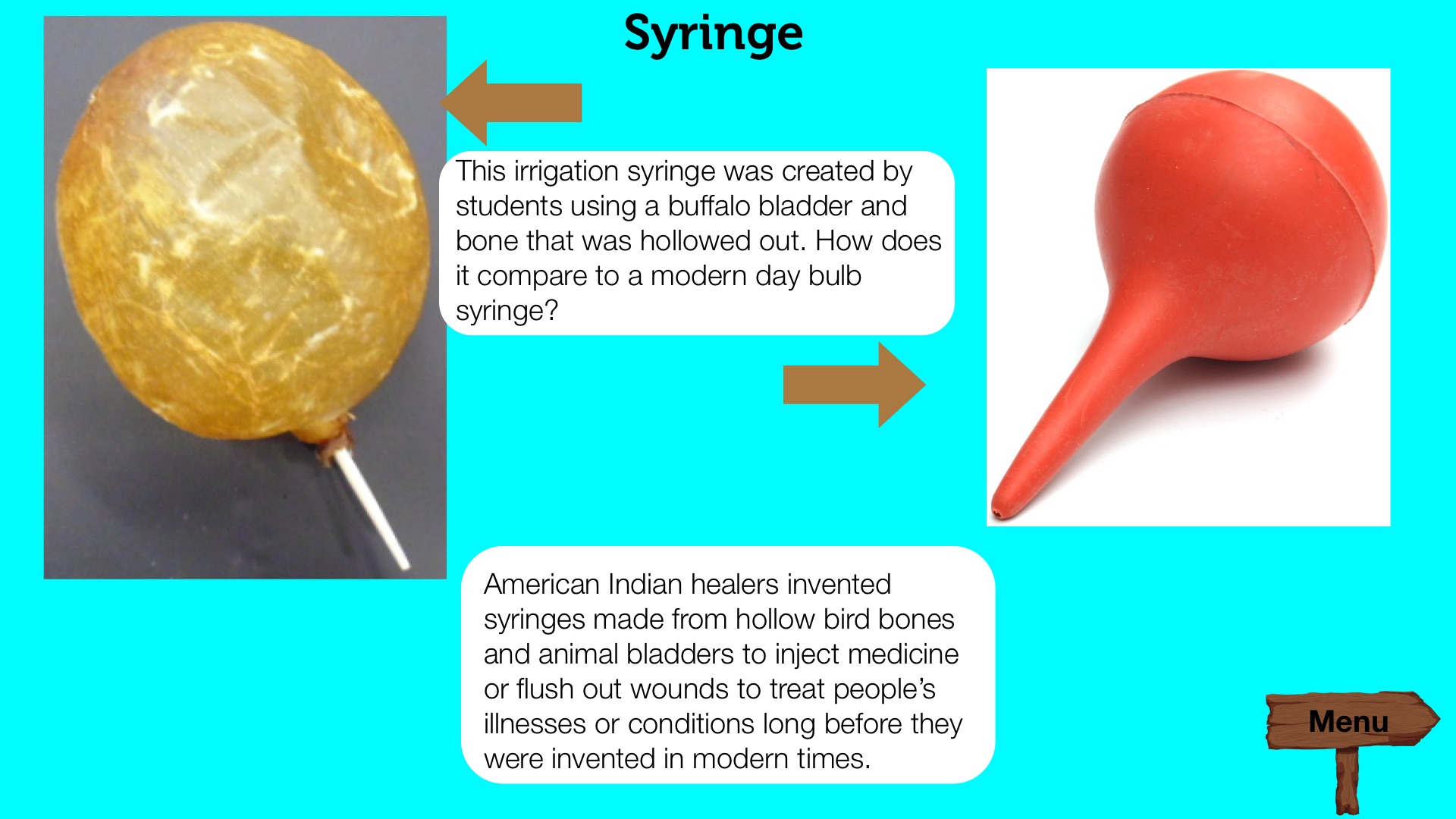
Syringe
This irrigation syringe was created by students using a buffalo bladder and bone that was hollowed out. How does it compare to a modern day bulb syringe?
American Indian healers invented syringes made from hollow bird bones and animal bladders to inject medicine or flush out wounds to treat people’s illnesses or conditions long before they were invented in modern times.
Menu
Obsidian
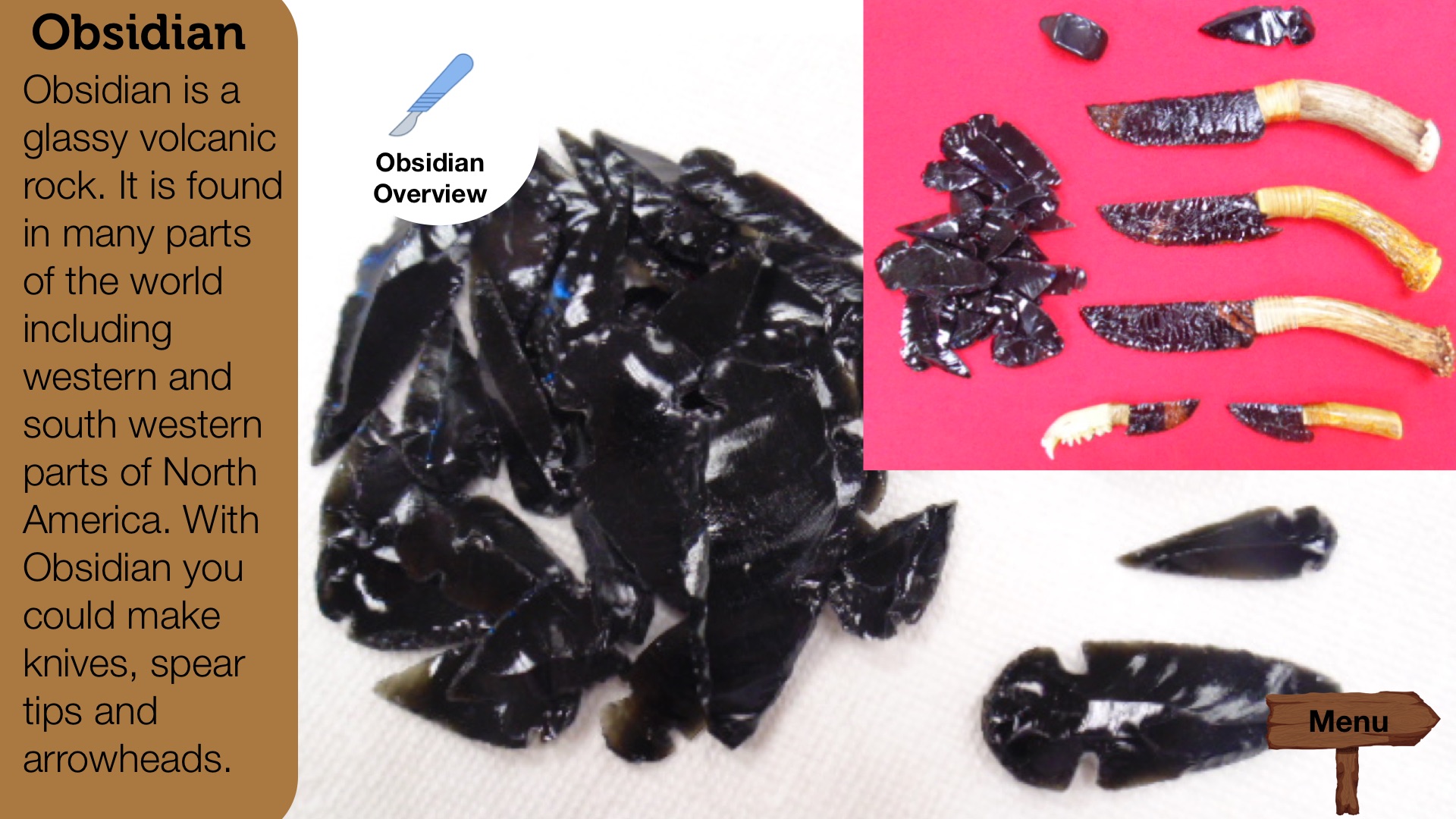
Obsidian is a glassy volcanic rock. It is found in many parts of the world including western and south western parts of North America. With Obsidian you could make knives, spear tips and arrowheads.
Obsidian Overview
Menu
Obsidian Scalpel
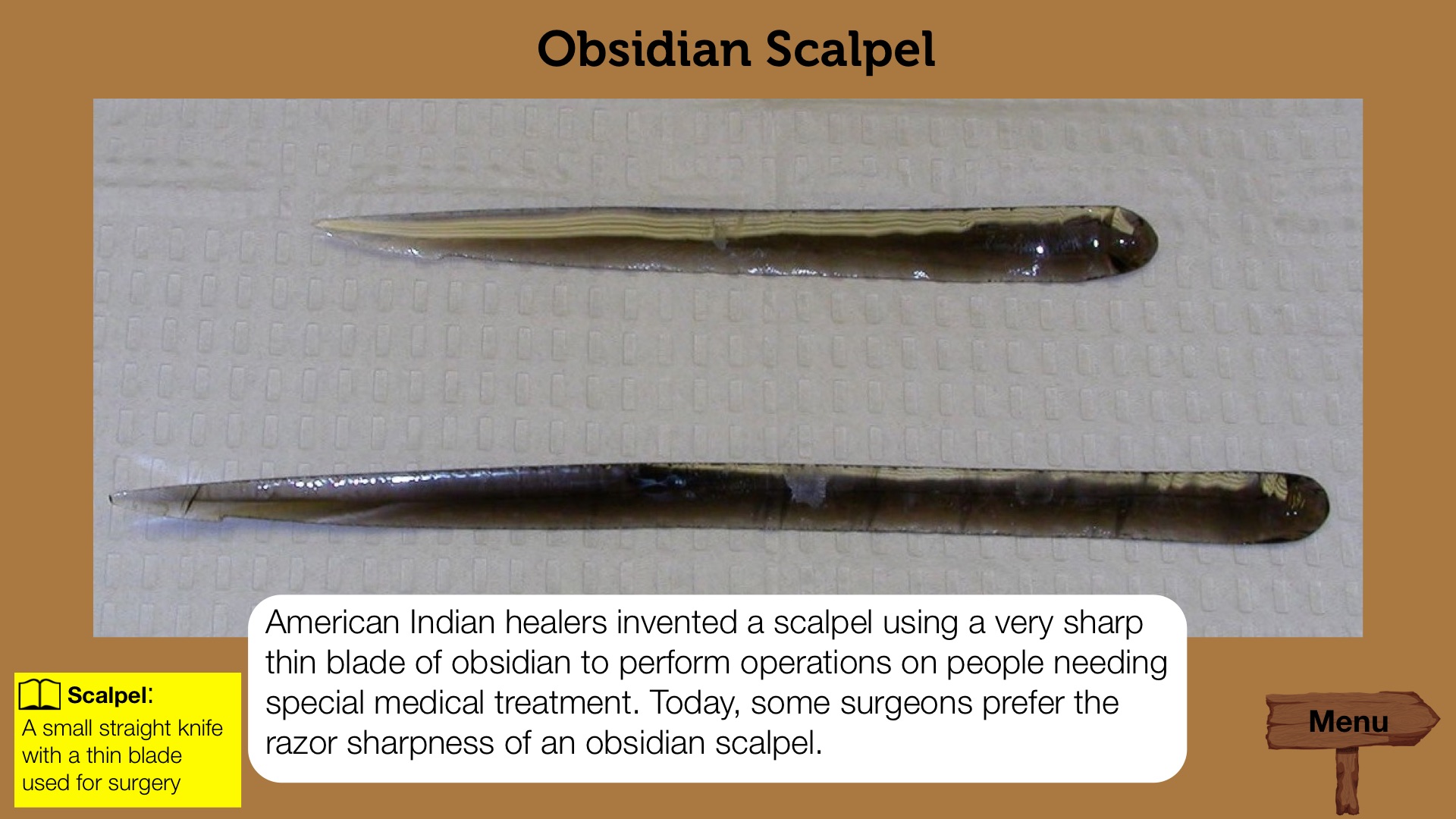
American Indian healers invented a scalpel using a very sharp thin blade of obsidian to perform operations on people needing special medical treatment. Today, some surgeons prefer the razor sharpness of an obsidian scalpel.
Scalpel:
Menu
A small straight knife with a thin blade used for surgery
Mechanical/Manufacturing Engineering
Cradleboard
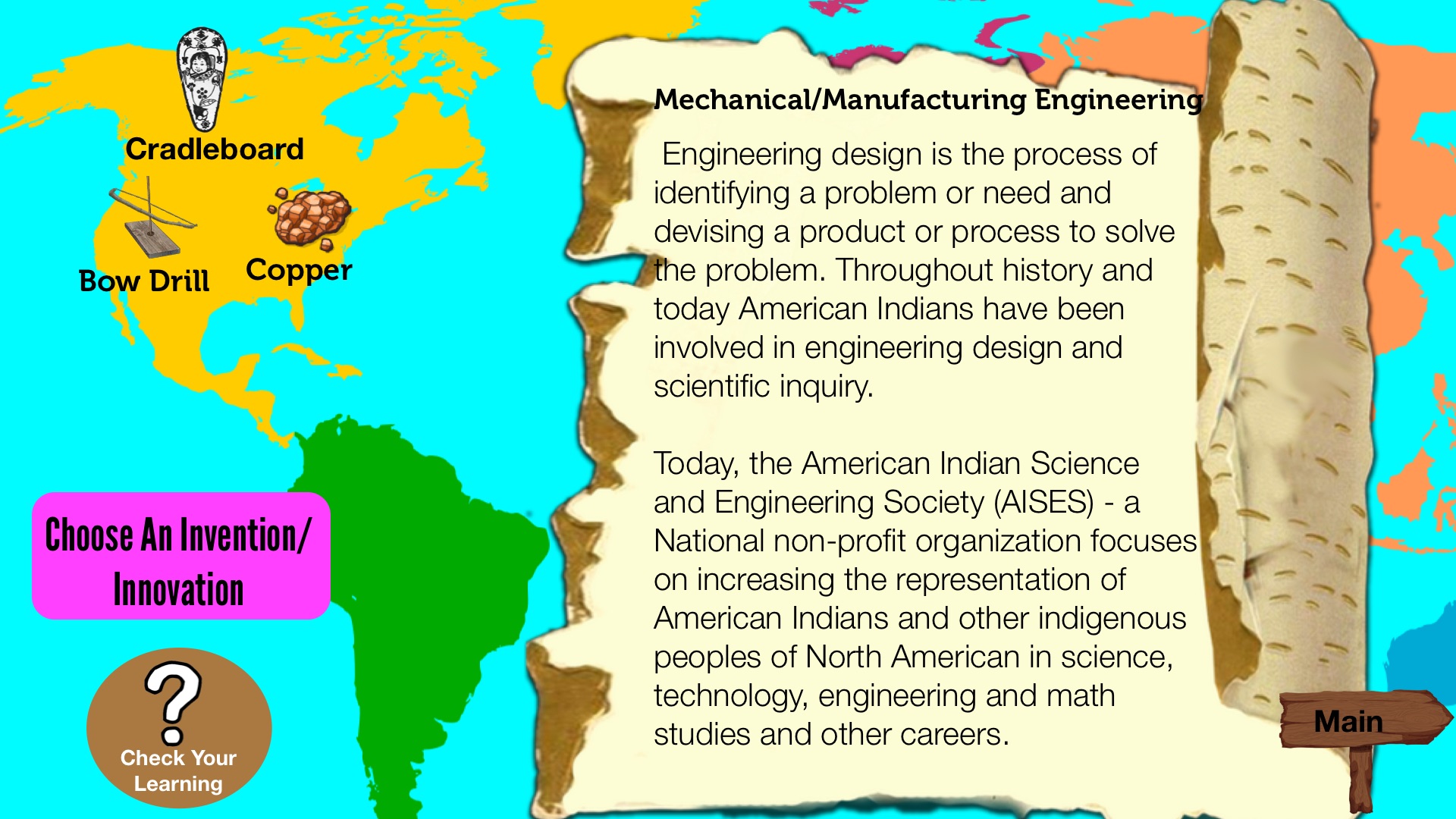
Engineering design is the process of identifying a problem or need and devising a product or process to solve the problem. Throughout history and today American Indians have been involved in engineering design and scientific inquiry. Today, the American Indian Science and Engineering Society (AISES) - a National non-profit organization focuses on increasing the representation of American Indians and other indigenous peoples of North American in science, technology, engineering and math studies and other careers.
Copper
Bow Drill
Choose An Invention/Innovation
Main
Check Your Learning
Bow Drill
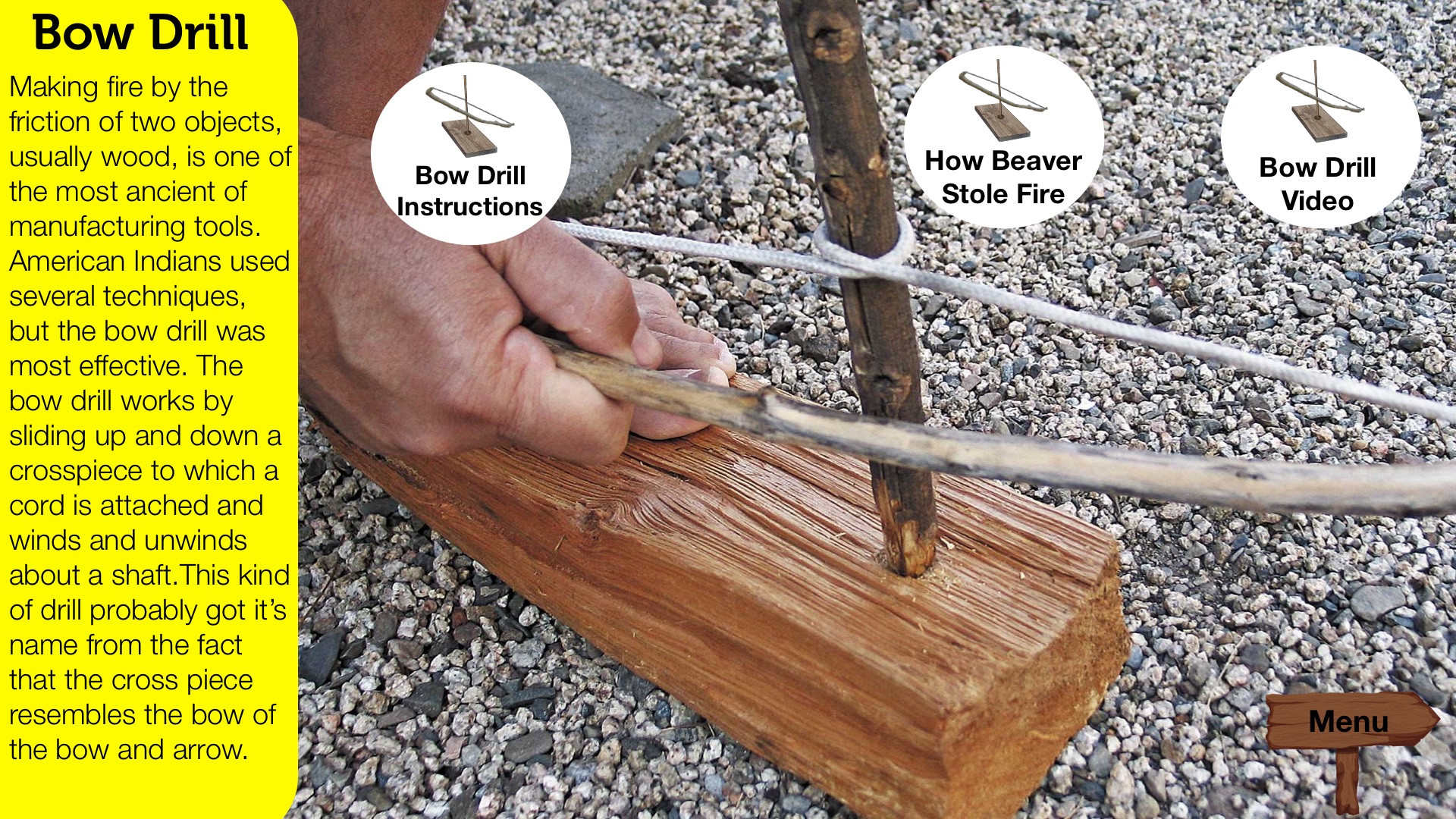
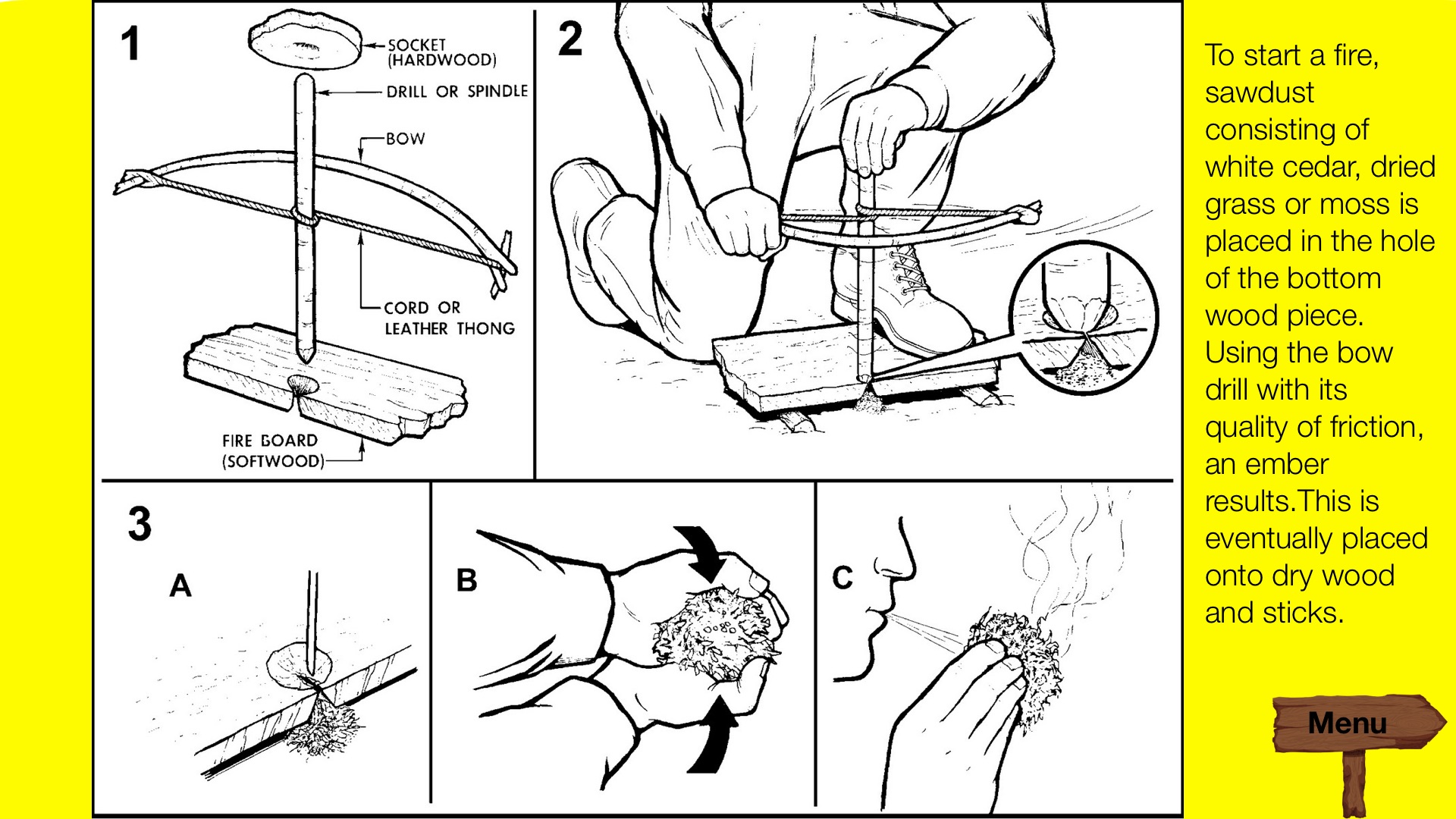
Making fire by the friction of two objects, usually wood, is one of the most ancient of manufacturing tools. American Indians used several techniques, but the bow drill was most effective. The bow drill works by sliding up and down a crosspiece to which a cord is attached and winds and unwinds about a shaft.This kind of drill probably got it’s name from the fact that the cross piece resembles the bow of the bow and arrow.
How Beaver Stole Fire
Bow Drill Instructions
Bow Drill Video
Menu
To start a fire, sawdust consisting of white cedar, dried grass or moss is placed in the hole of the bottom wood piece. Using the bow drill with its quality of friction, an ember results.This is eventually placed onto dry wood and sticks.
Menu
Copper
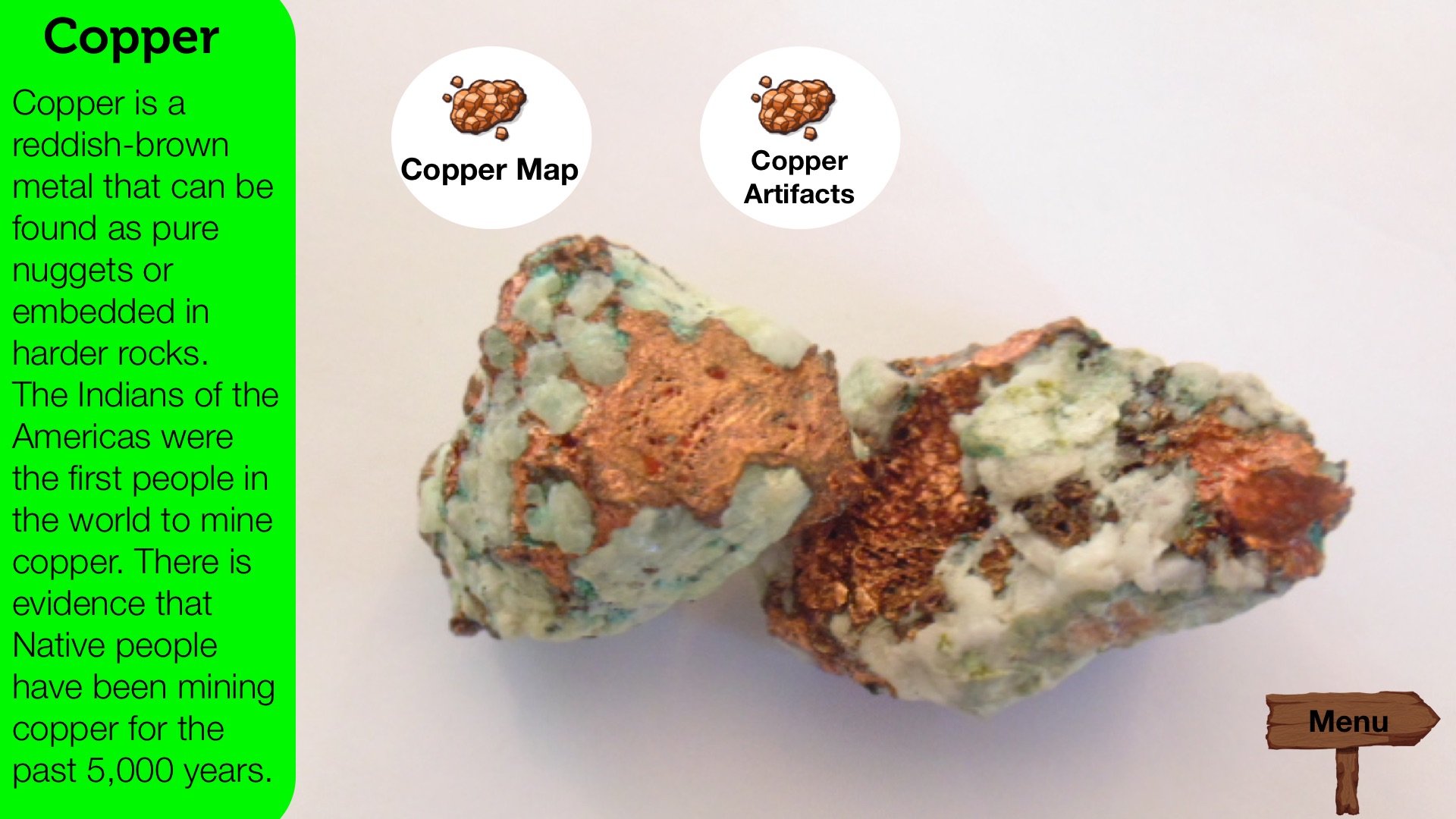
Copper is a reddish-brown metal that can be found as pure nuggets or embedded in harder rocks. The Indians of the Americas were the first people in the world to mine copper. There is evidence that Native people have been mining copper for the past 5,000 years.
Copper Map
Copper Artifacts
Menu
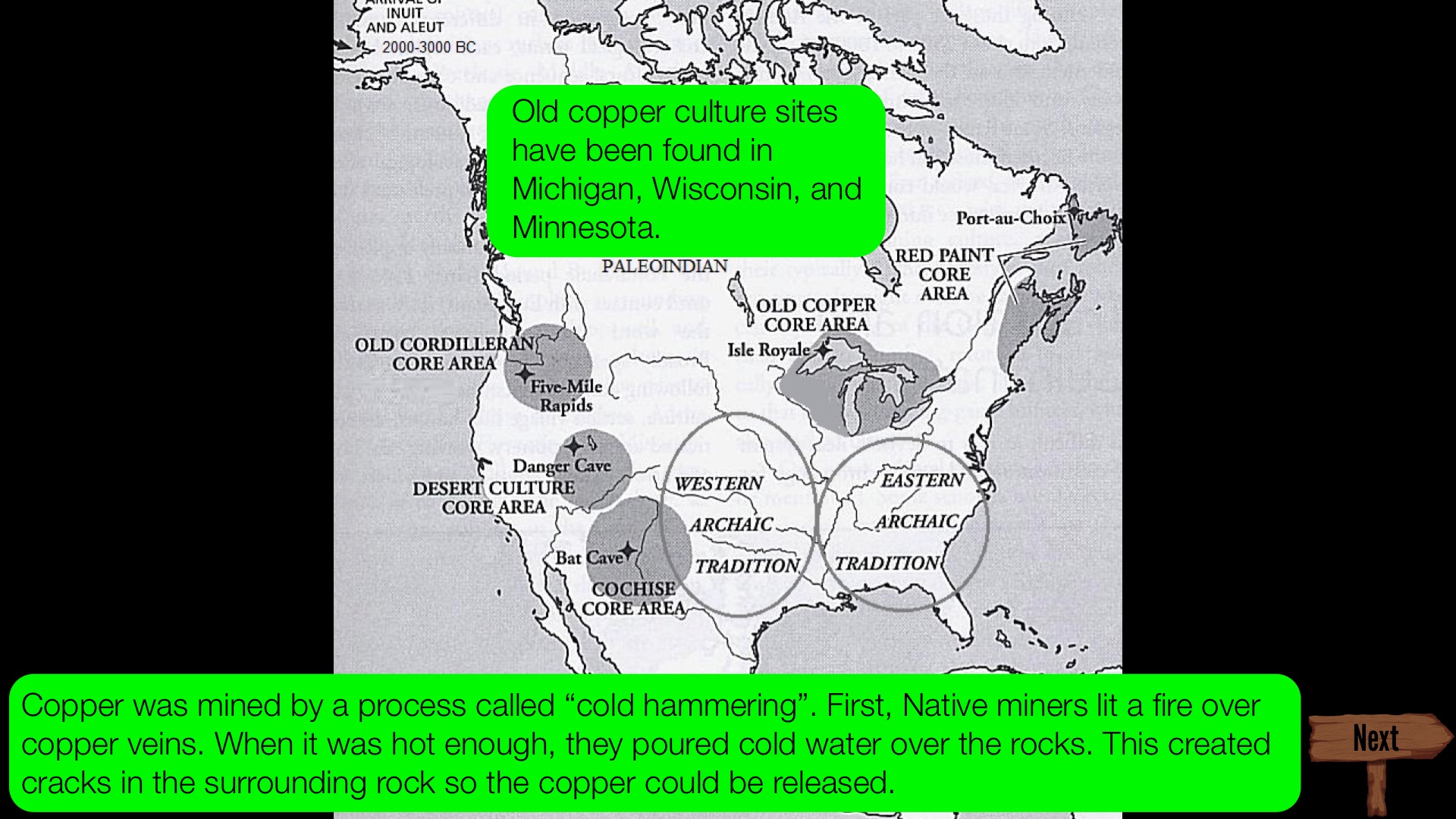
Old copper culture sites have been found in Michigan, Wisconsin, and Minnesota.
Copper was mined by a process called “cold hammering”. First, Native miners lit a fire over copper veins. When it was hot enough, they poured cold water over the rocks. This created cracks in the surrounding rock so the copper could be released.
Next
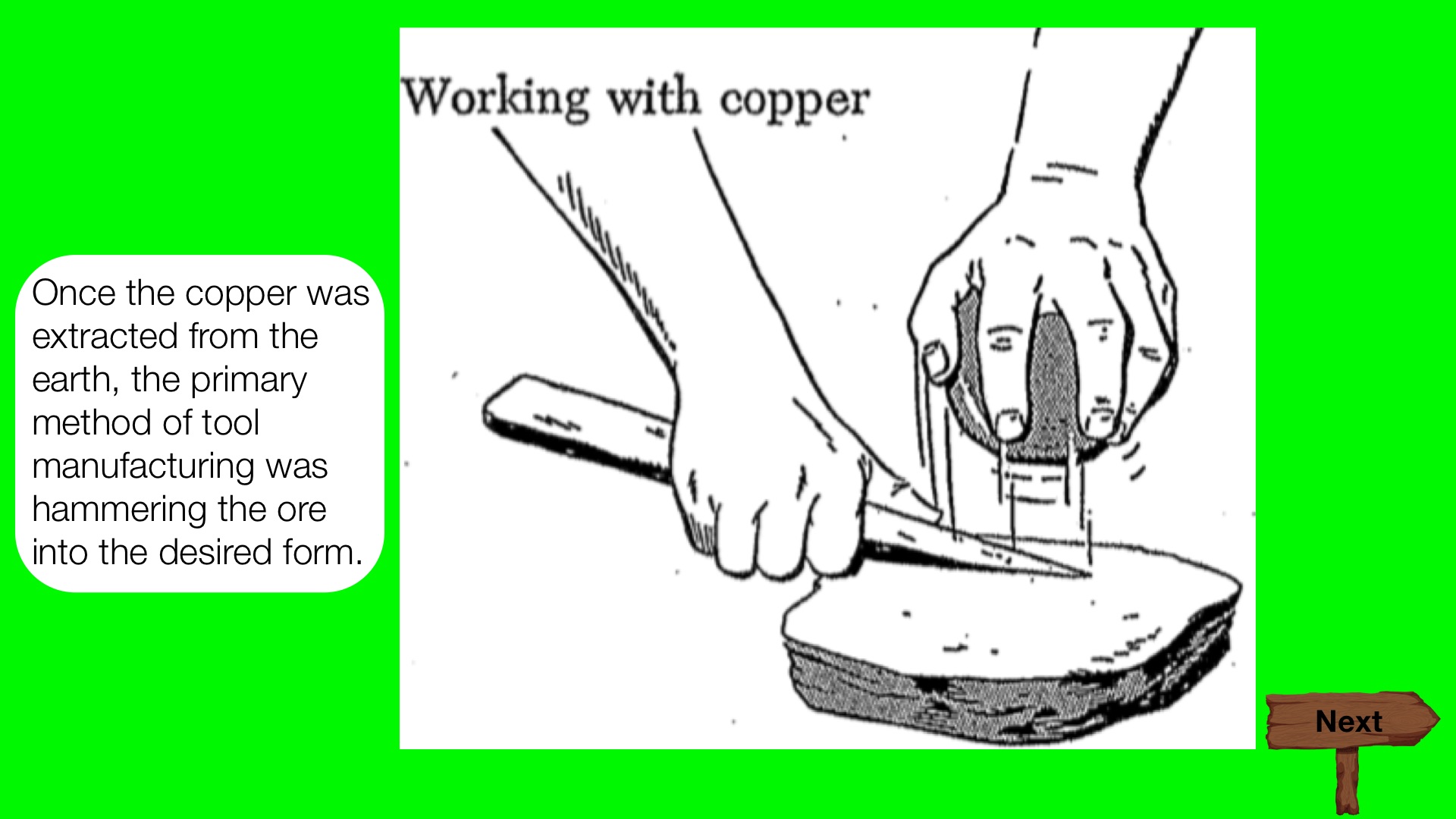
Once the copper was extracted from the earth, the primary method of tool manufacturing was hammering the ore into the desired form.
Next
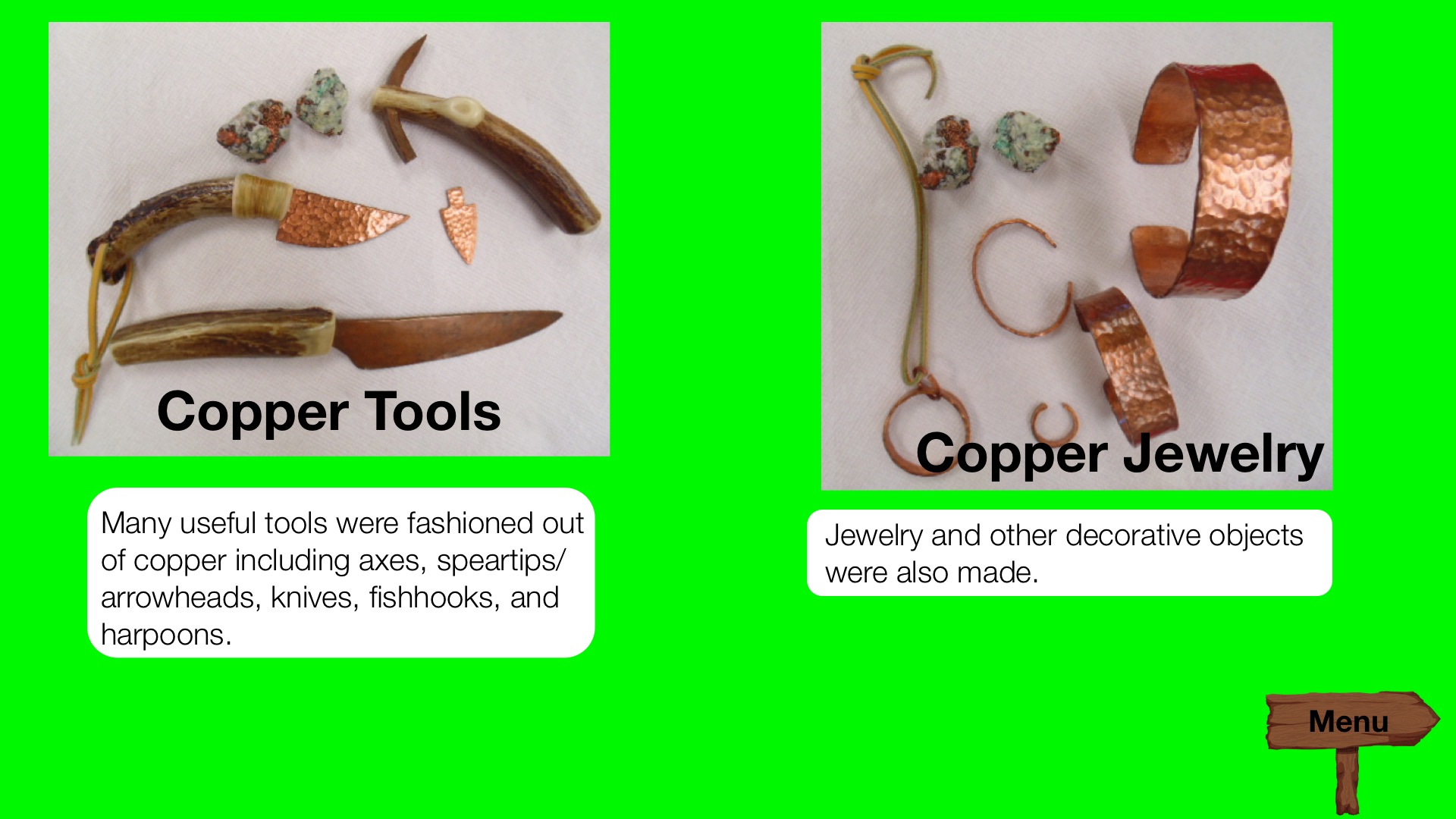
Copper Tools
Copper Jewelry
Many useful tools were fashioned out of copper including axes, speartips/arrowheads, knives, fishhooks, and harpoons.
Jewelry and other decorative objects were also made.
Menu
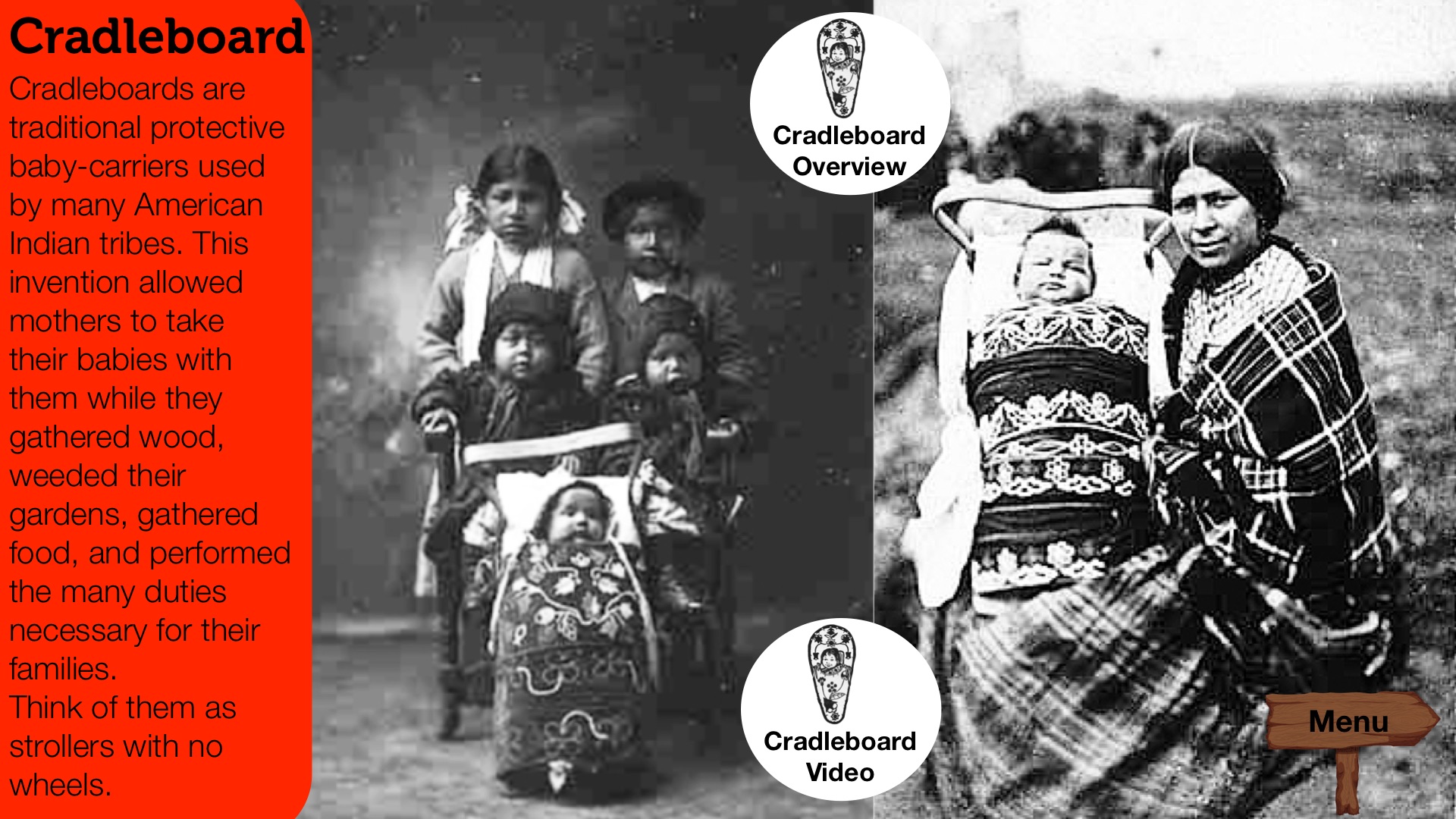
Cradleboard
Cradleboards are traditional protective baby-carriers used by many American Indian tribes. This invention allowed mothers to take their babies with them while they gathered wood, weeded their gardens, gathered food, and performed the many duties necessary for their families. Think of them as strollers with no wheels.
Cradleboard Overview
Menu
Cradleboard Video
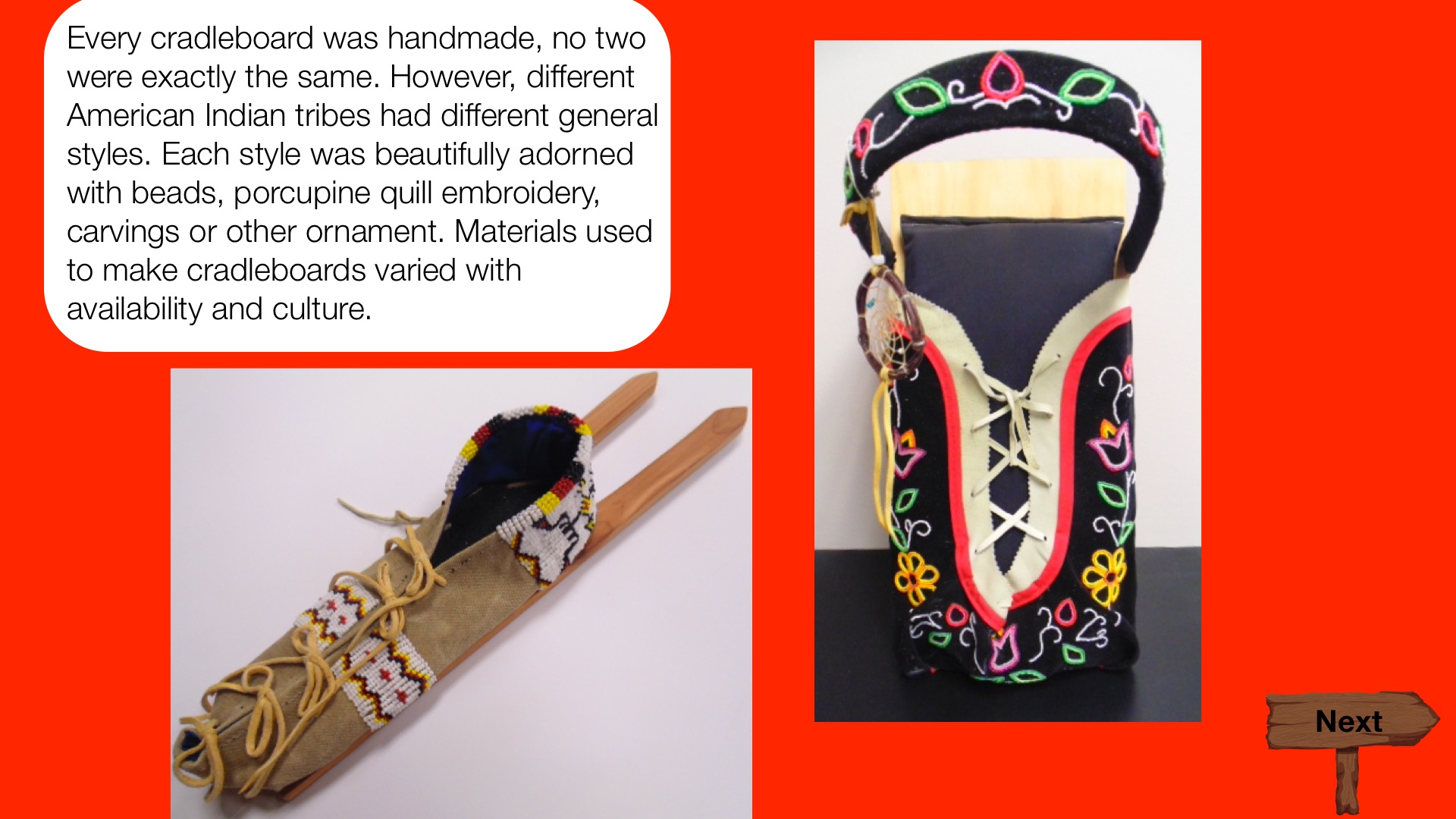
Every cradleboard was handmade, no two were exactly the same. However, different American Indian tribes had different general styles. Each style was beautifully adorned with beads, porcupine quill embroidery, carvings or other ornament. Materials used to make cradleboards varied with availability and culture.
Next
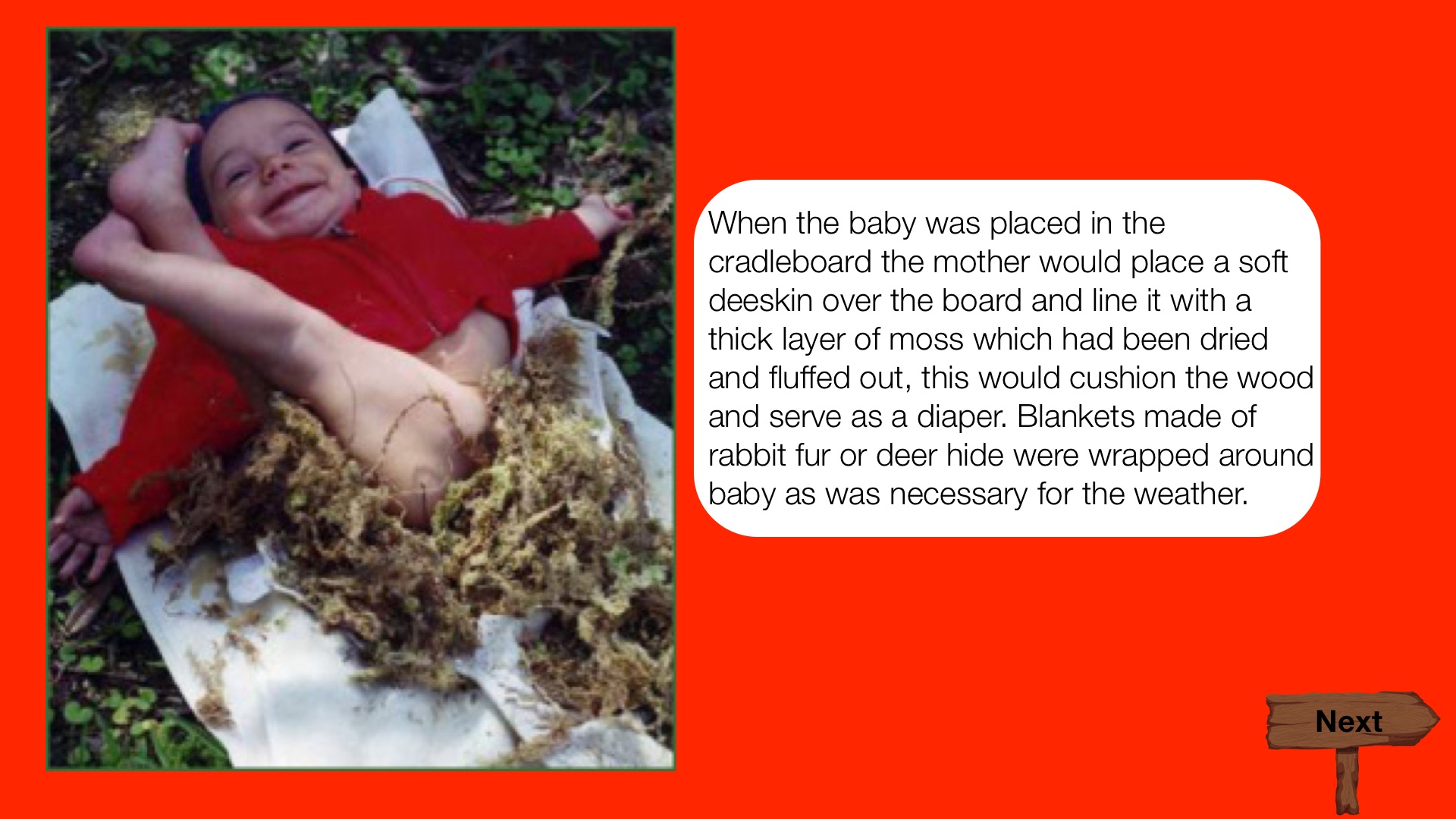
When the baby was placed in the cradleboard the mother would place a soft deeskin over the board and line it with a thick layer of moss which had been dried and fluffed out, this would cushion the wood and serve as a diaper. Blankets made of rabbit fur or deer hide were wrapped around baby as was necessary for the weather.
Next
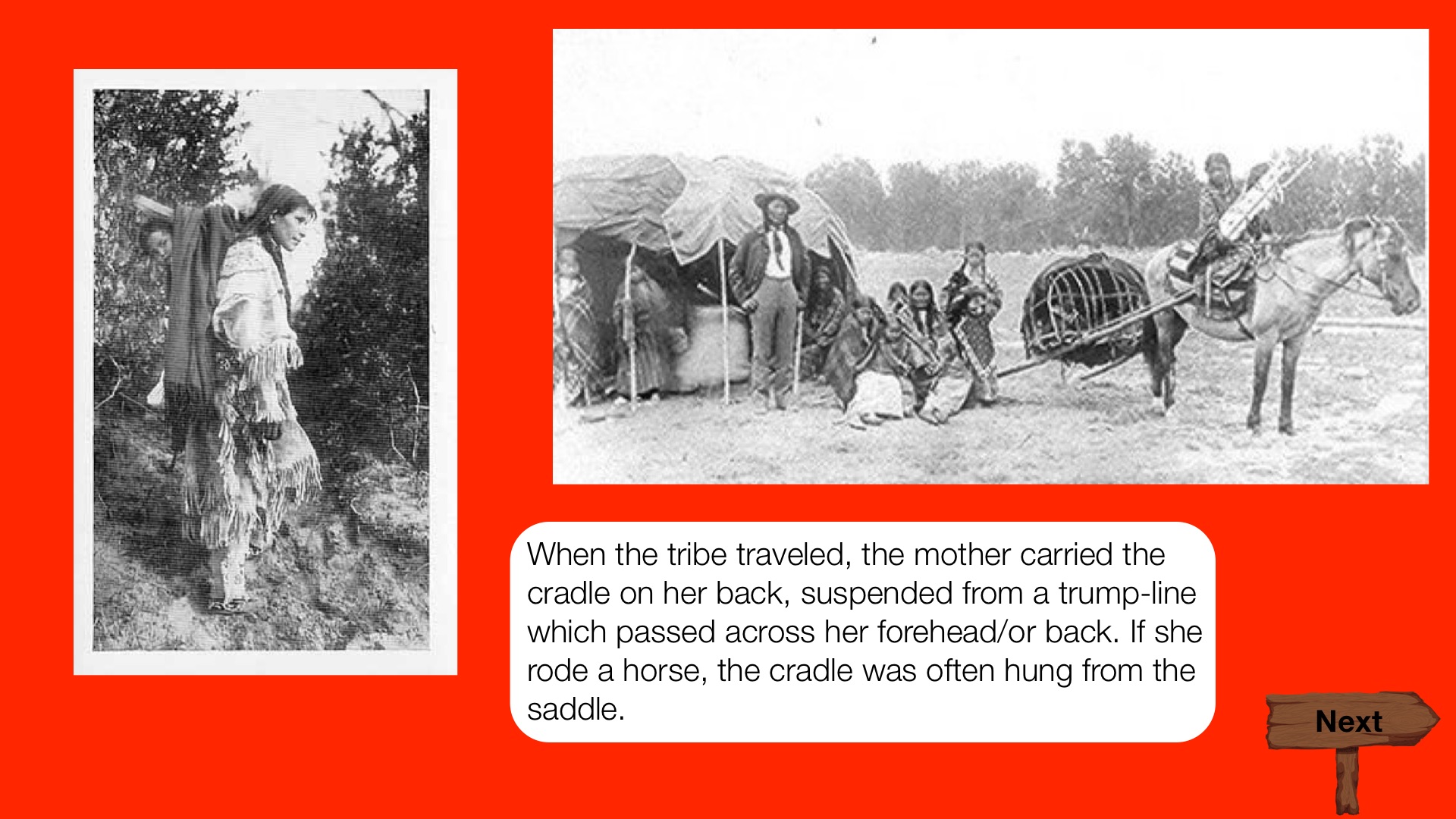
When the tribe traveled, the mother carried the cradle on her back, suspended from a trump-line which passed across her forehead/or back. If she rode a horse, the cradle was often hung from the saddle.
Next
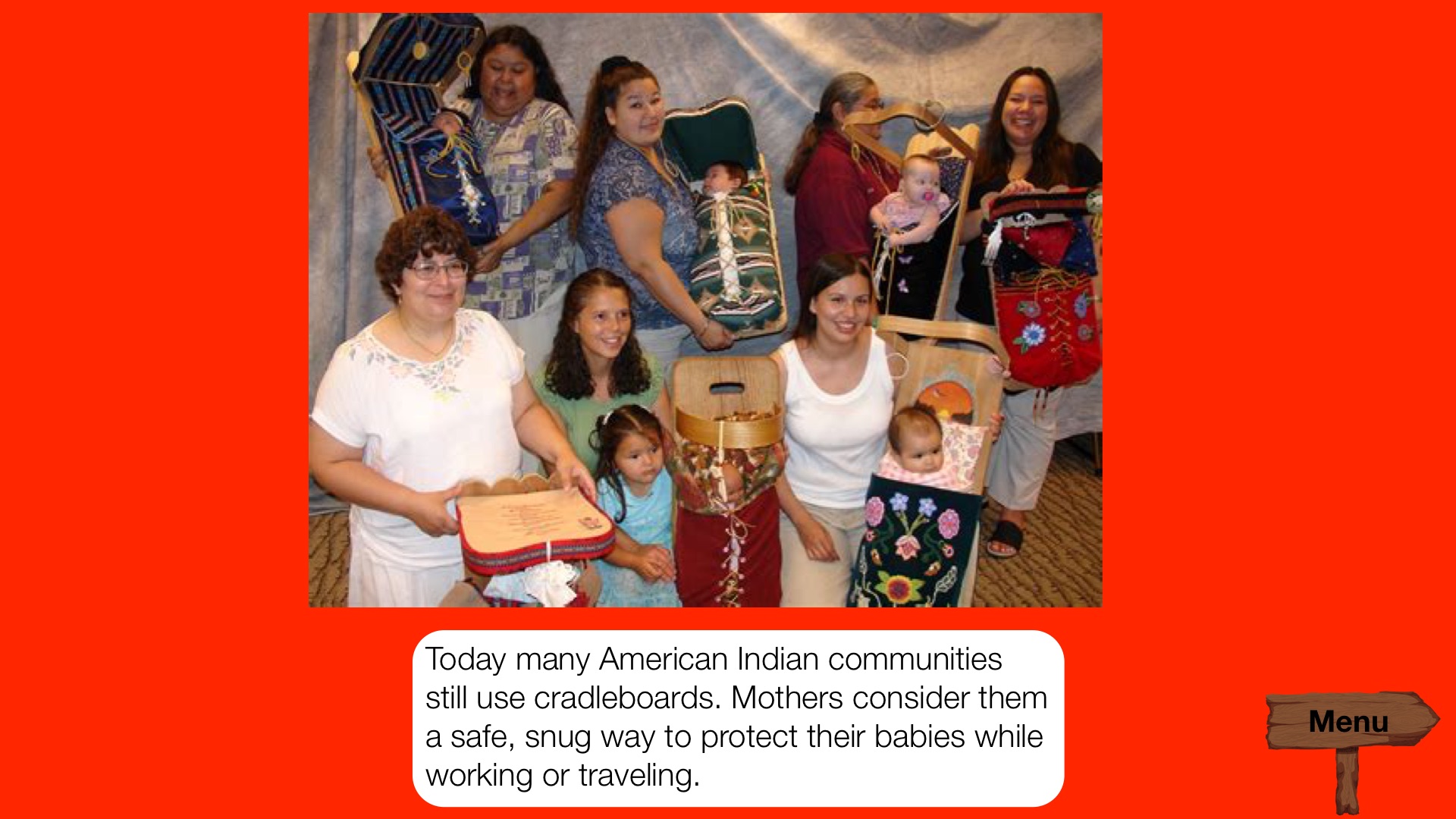
Today many American Indian communities still use cradleboards. Mothers consider them a safe, snug way to protect their babies while working or traveling.
Menu
Sports Engineering
Snow Snakes
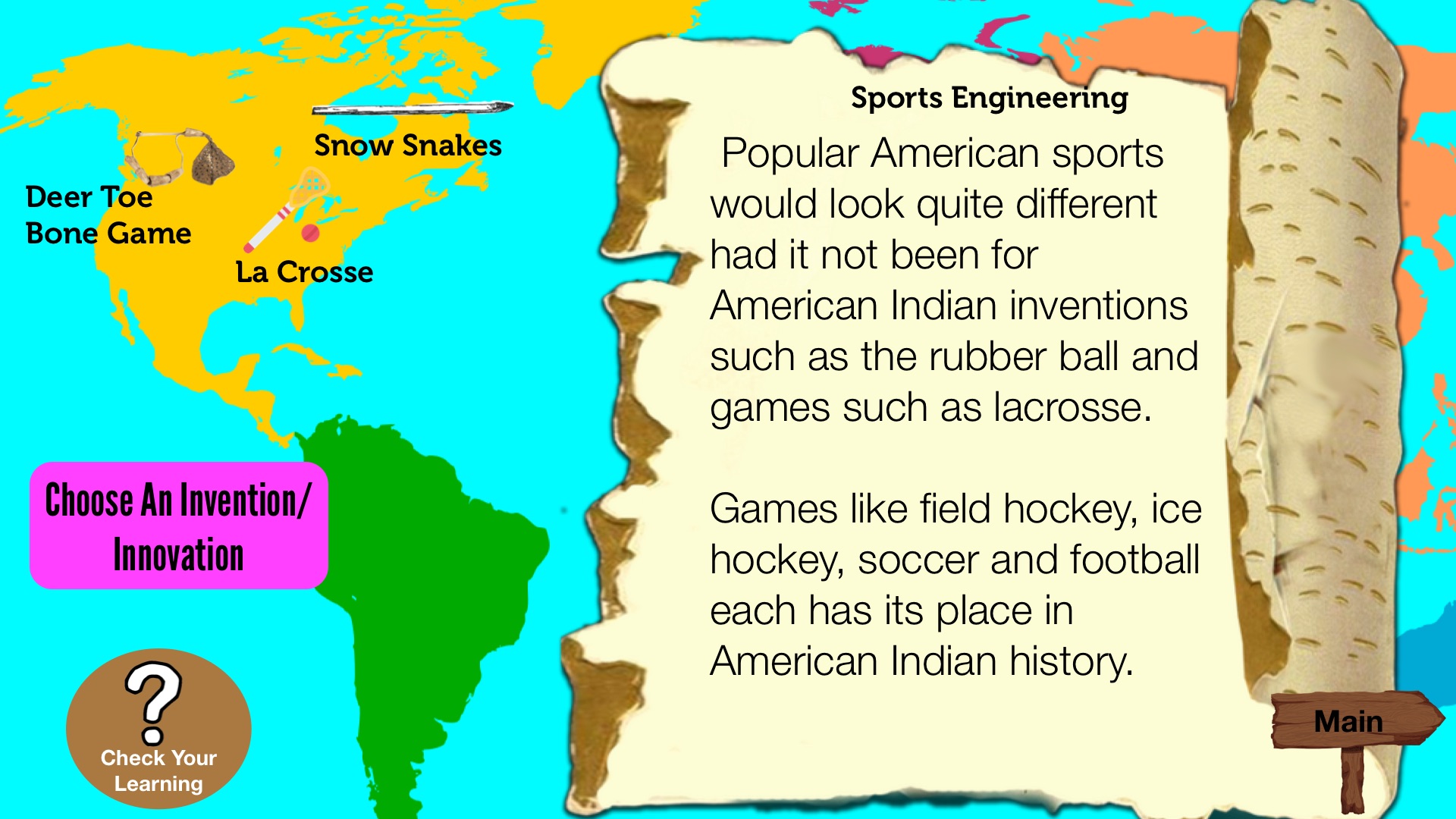
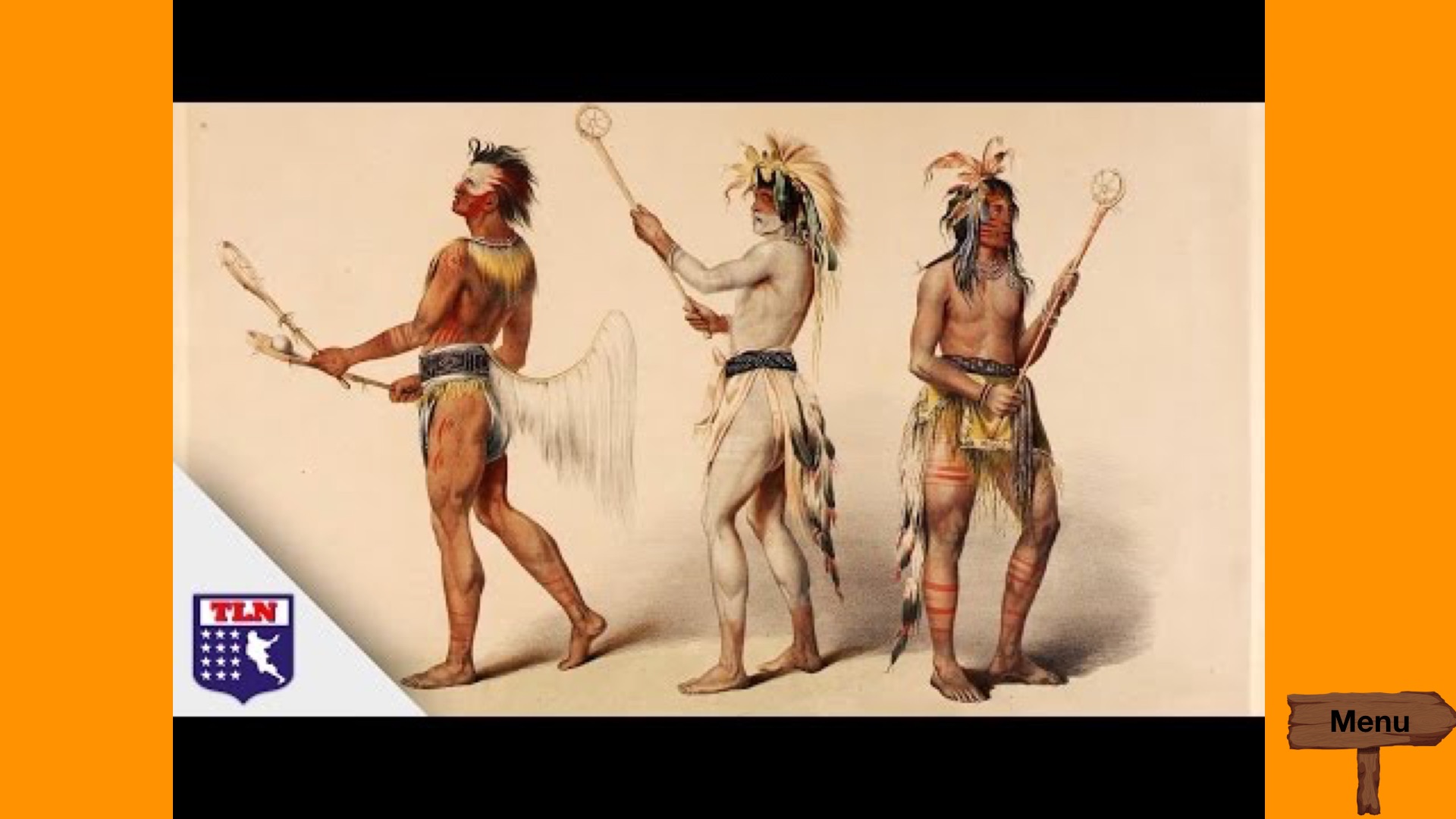
Popular American sports would look quite different had it not been for American Indian inventions such as the rubber ball and games such as lacrosse. Games like field hockey, ice hockey, soccer and football each has its place in American Indian history.
Deer Toe Bone Game
La Crosse
Choose An Invention/Innovation
Main
Check Your Learning
La Crosse
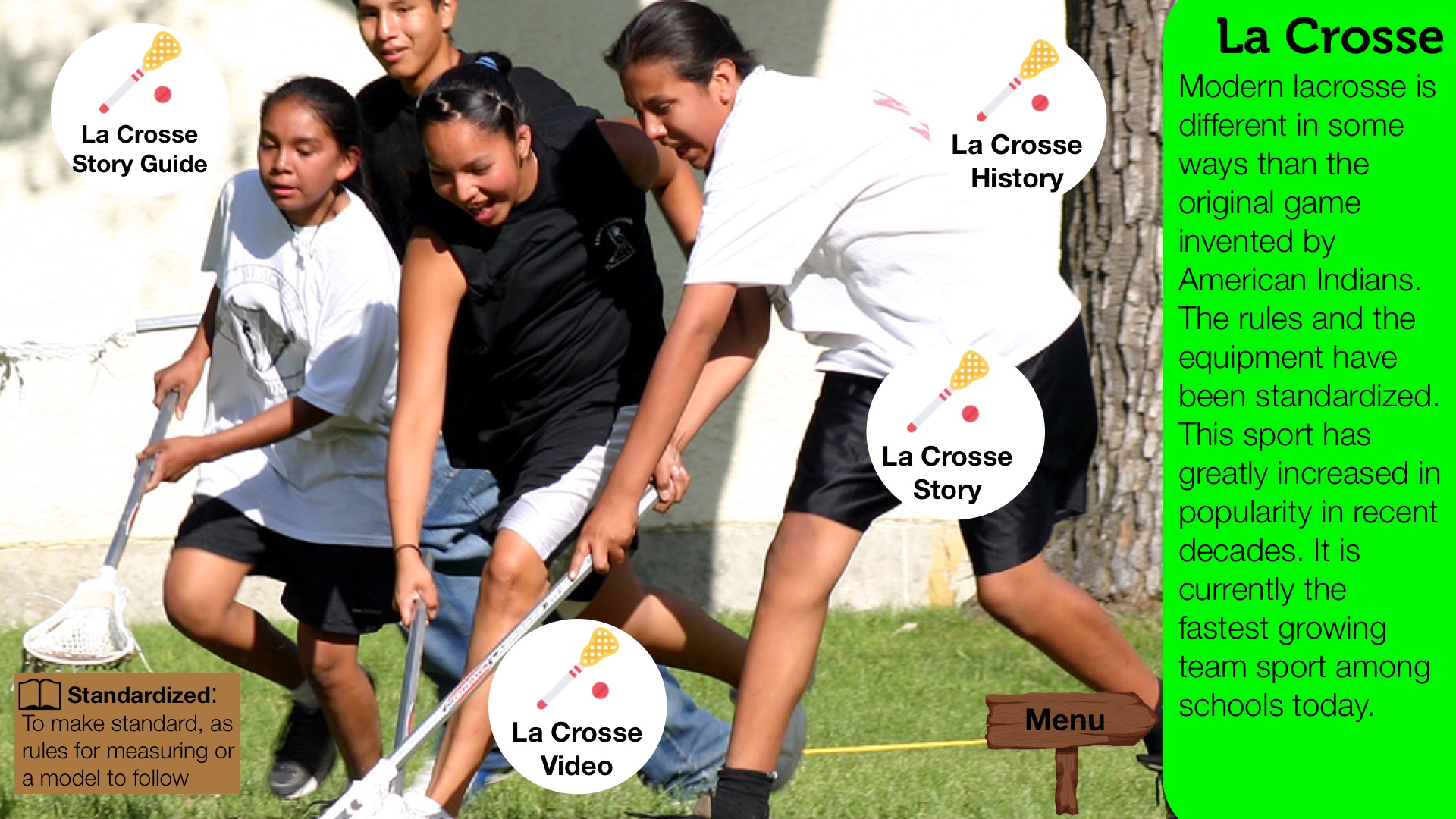
Modern lacrosse is different in some ways than the original game invented by American Indians. The rules and the equipment have been standardized. This sport has greatly increased in popularity in recent decades. It is currently the fastest growing team sport among schools today.
La Crosse Story Guide
La Crosse History
La Crosse Story
Standardized:
To make standard, as rules for measuring or a model to follow
Menu
La Crosse Video
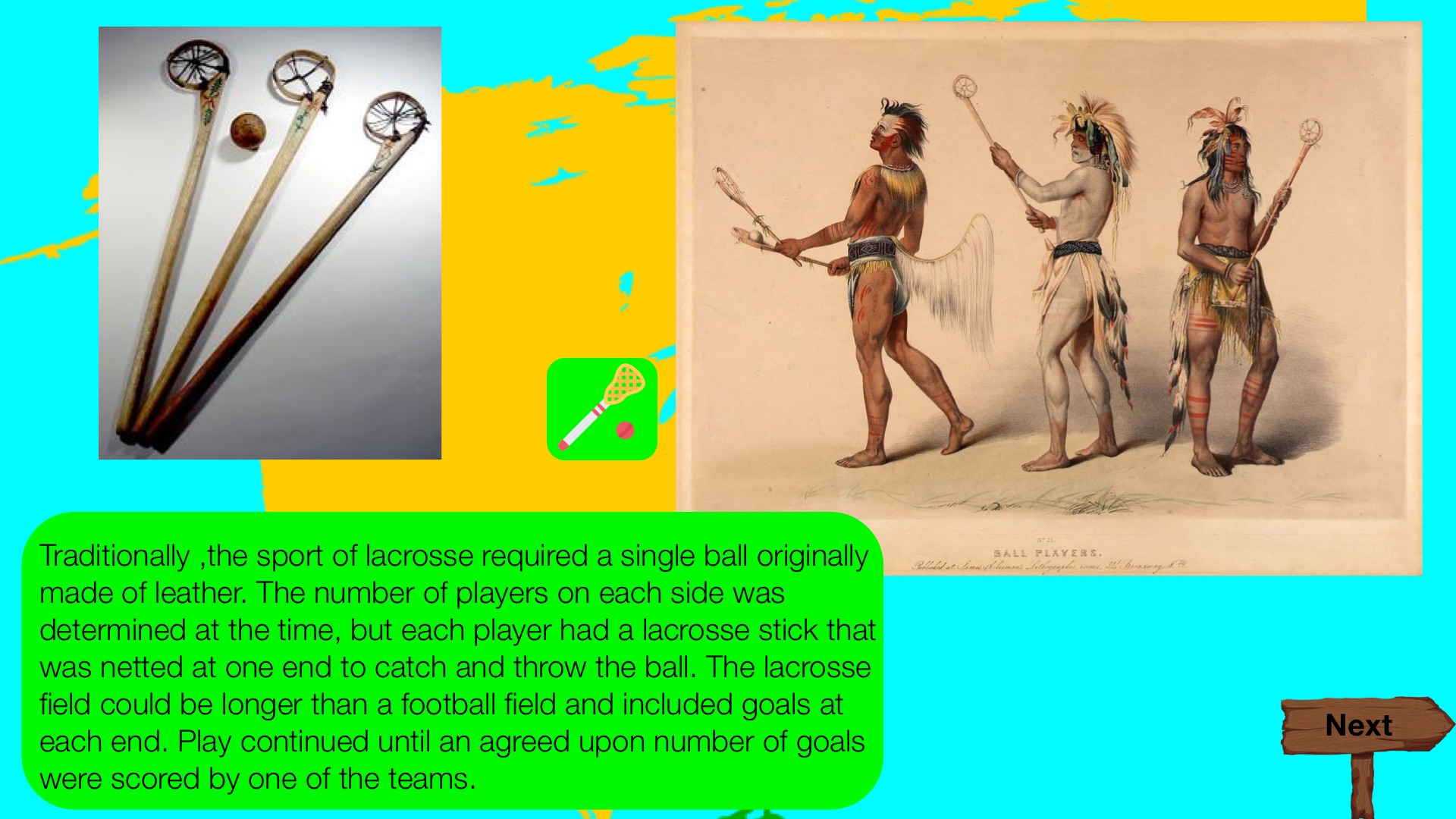
Traditionally ,the sport of lacrosse required a single ball originally made of leather. The number of players on each side was determined at the time, but each player had a lacrosse stick that was netted at one end to catch and throw the ball. The lacrosse field could be longer than a football field and included goals at each end. Play continued until an agreed upon number of goals were scored by one of the teams.
Next
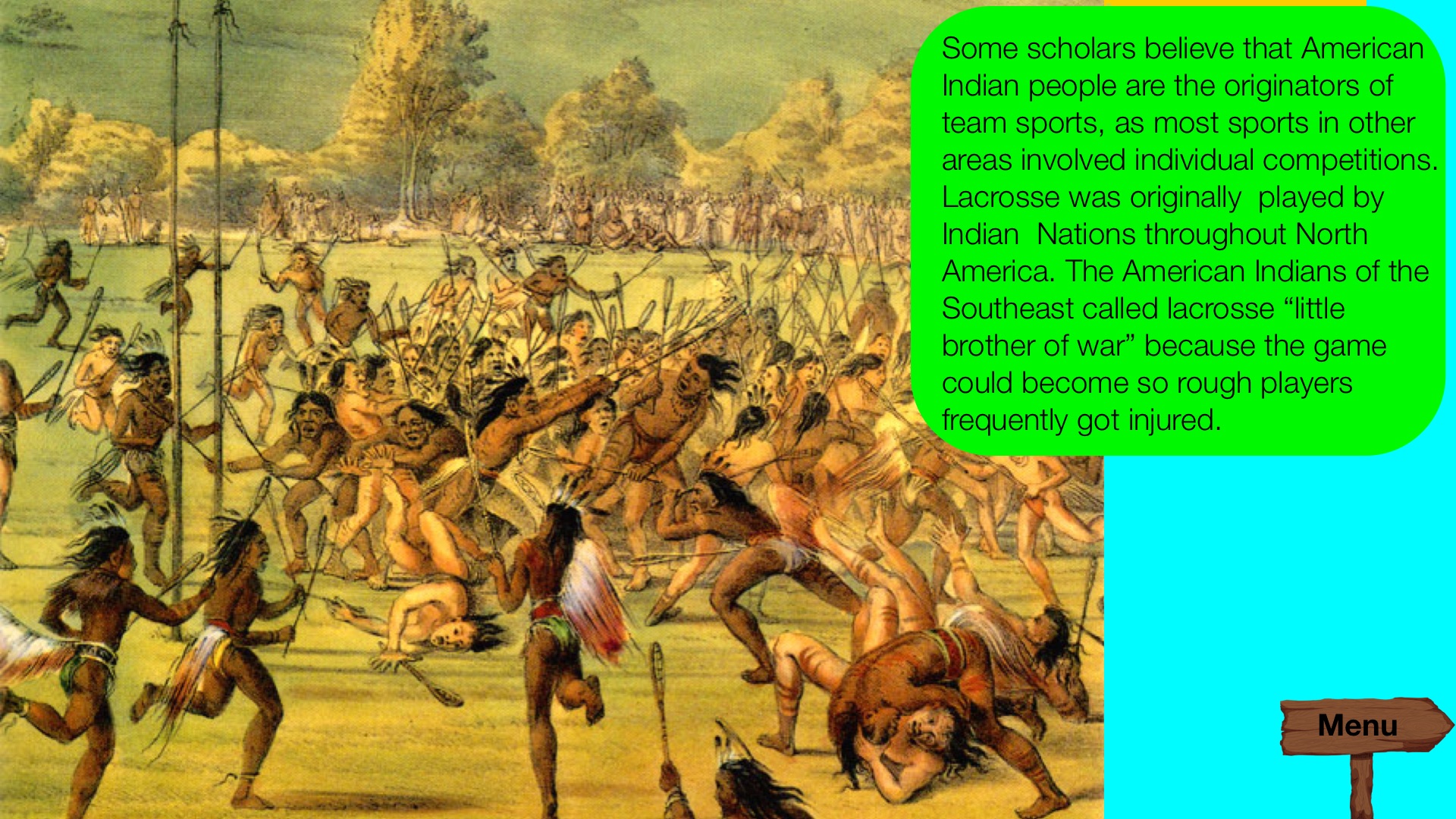
Some scholars believe that American Indian people are the originators of team sports, as most sports in other areas involved individual competitions. Lacrosse was originally played by Indian Nations throughout North America. The American Indians of the Southeast called lacrosse “little brother of war” because the game could become so rough players frequently got injured.
Menu
Deer Toe Bone Game
Deer Toe Bone Game Video
Similar Games
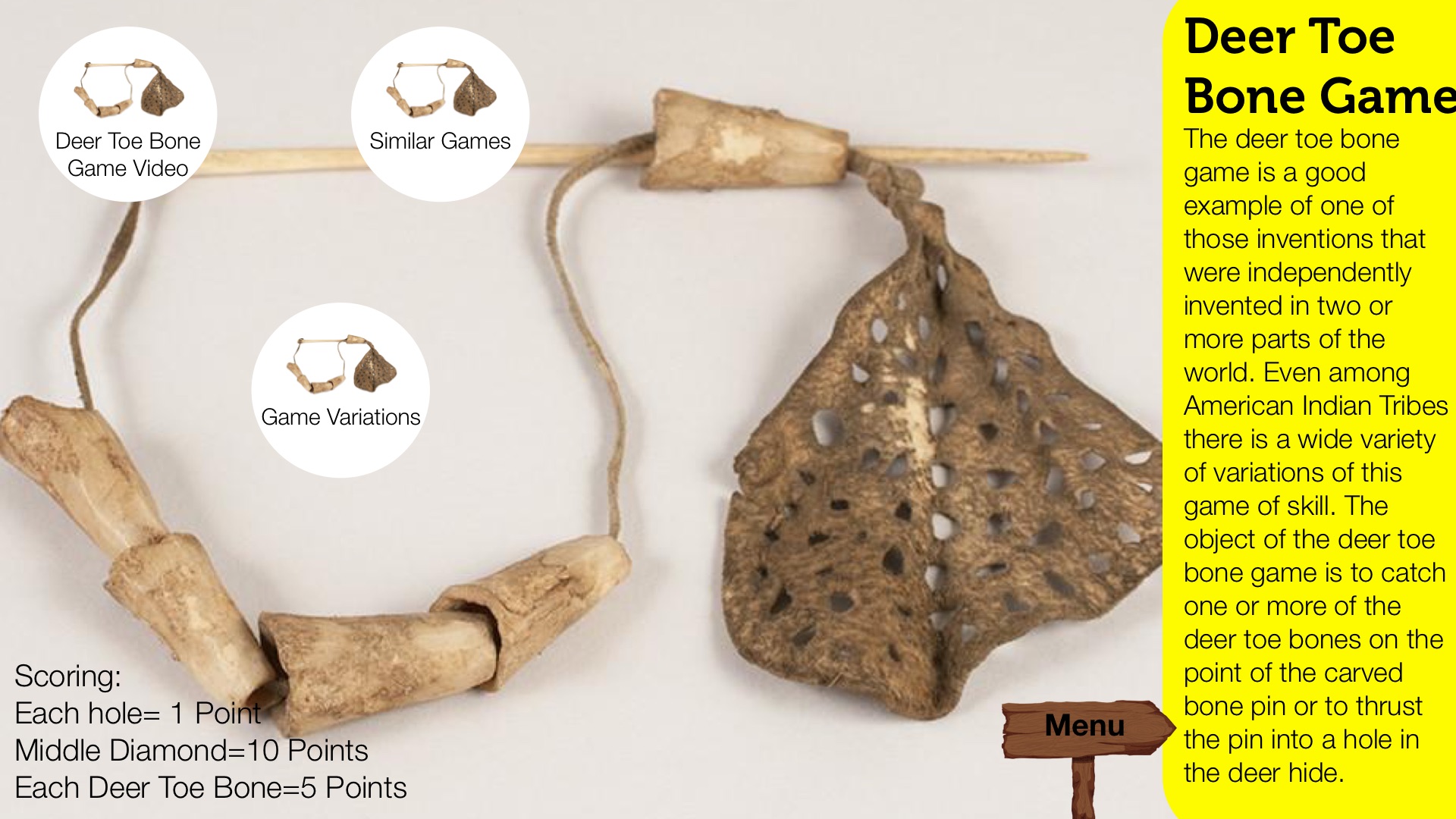
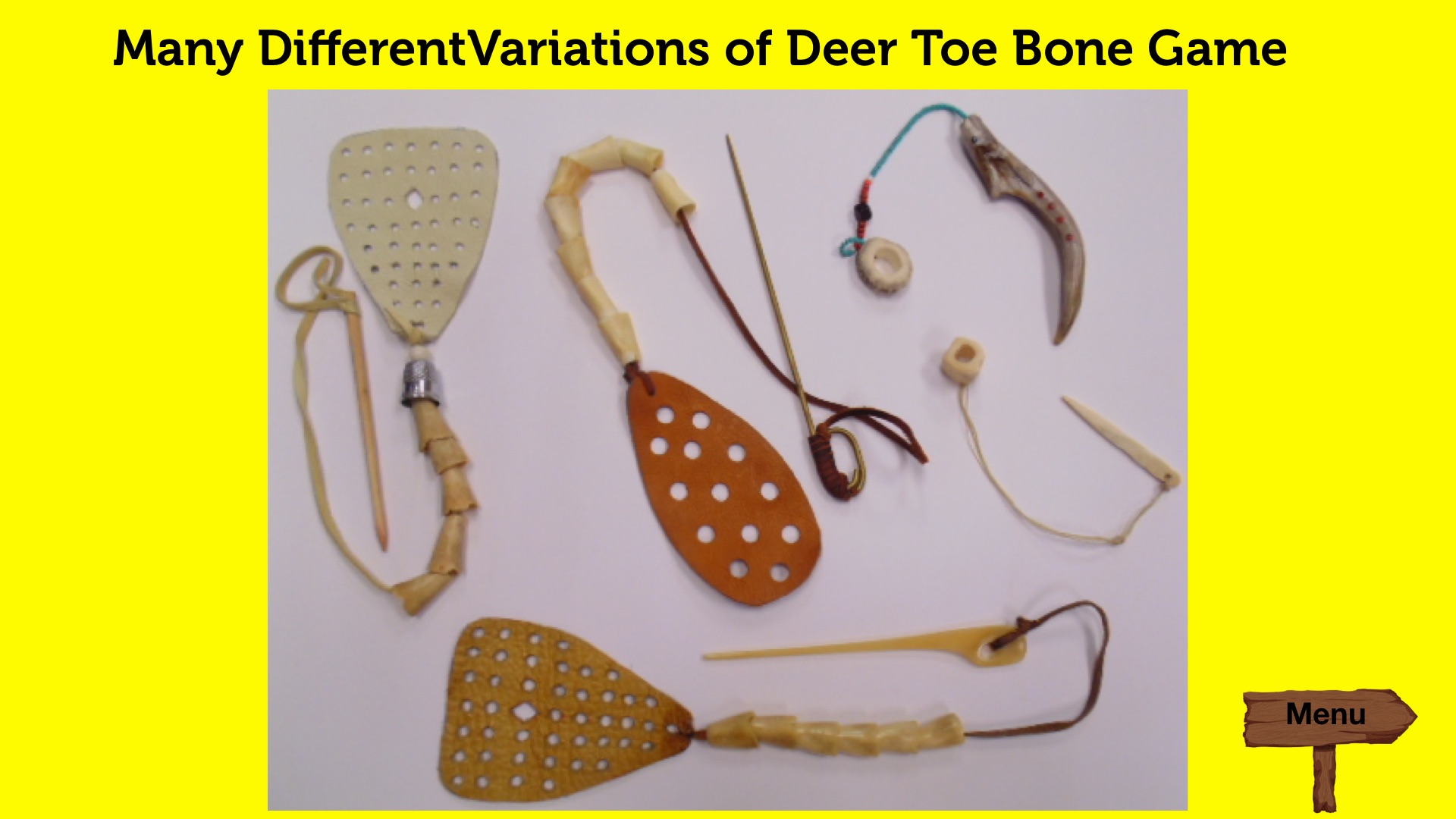
The deer toe bone game is a good example of one of those inventions that were independently invented in two or more parts of the world. Even among American Indian Tribes there is a wide variety of variations of this game of skill. The object of the deer toe bone game is to catch one or more of the deer toe bones on the point of the carved bone pin or to thrust the pin into a hole in the deer hide.
Game Variations
Scoring: Each hole= 1 Point Middle Diamond=10 Points Each Deer Toe Bone=5 Points
Menu
Many DifferentVariations of Deer Toe Bone Game
Menu
Ball and Cup Game
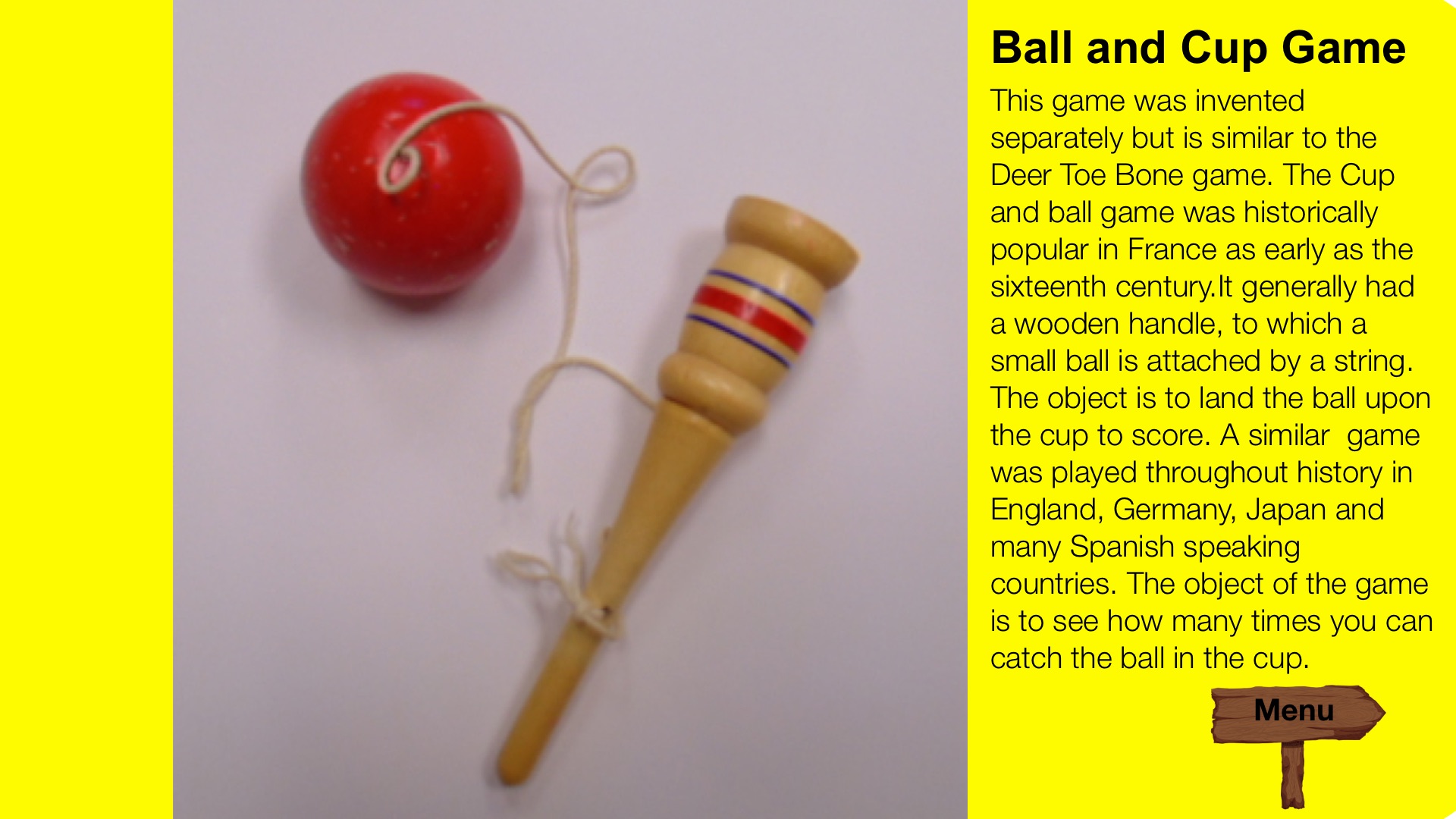
This game was invented separately but is similar to the Deer Toe Bone game. The Cup and ball game was historically popular in France as early as the sixteenth century.It generally had a wooden handle, to which a small ball is attached by a string. The object is to land the ball upon the cup to score. A similar game was played throughout history in England, Germany, Japan and many Spanish speaking countries. The object of the game is to see how many times you can catch the ball in the cup.
Menu
Snow Snakes
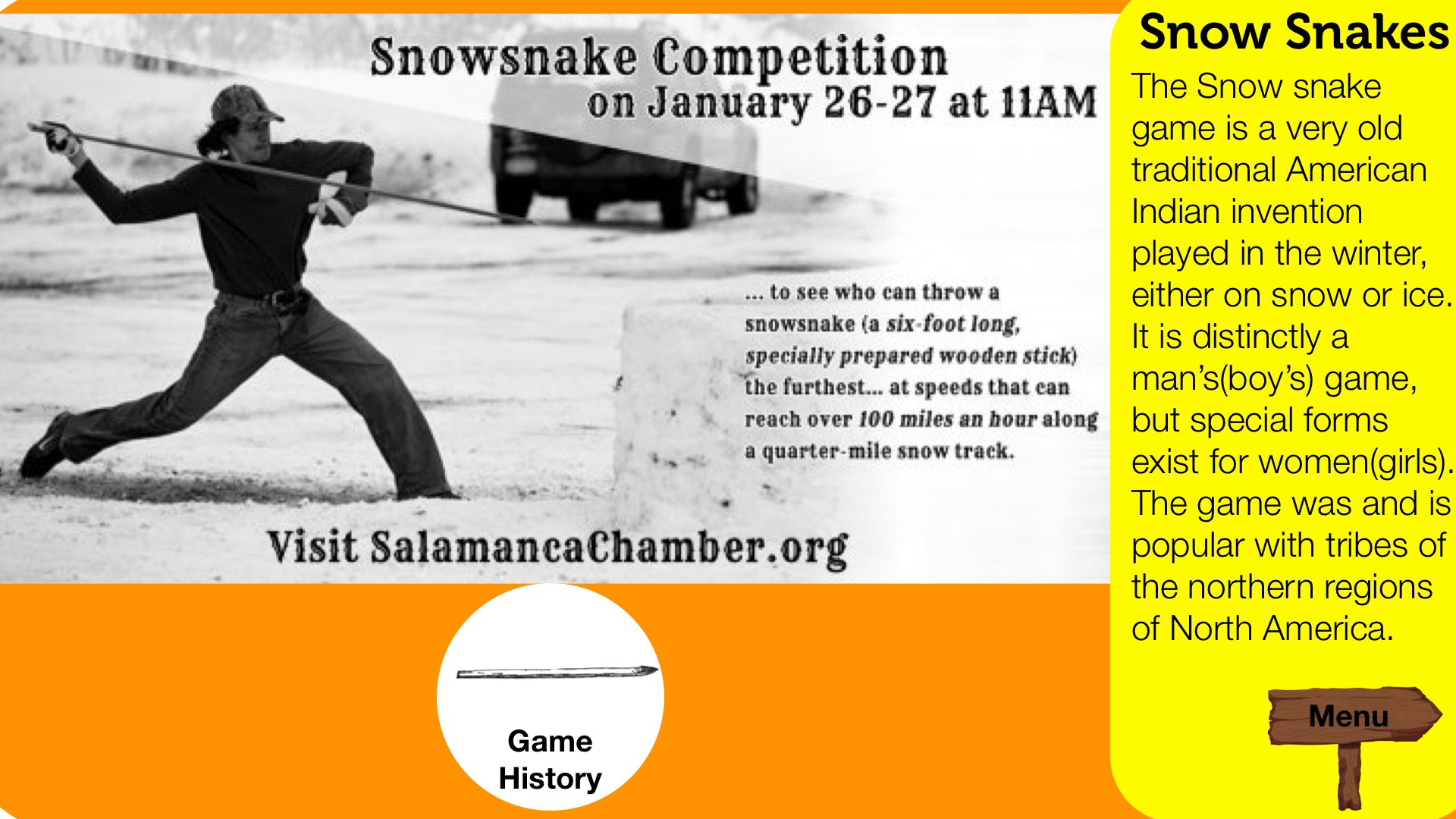
The Snow snake game is a very old traditional American Indian invention played in the winter, either on snow or ice. It is distinctly a man’s(boy’s) game, but special forms exist for women(girls). The game was and is popular with tribes of the northern regions of North America.
Menu
Game History
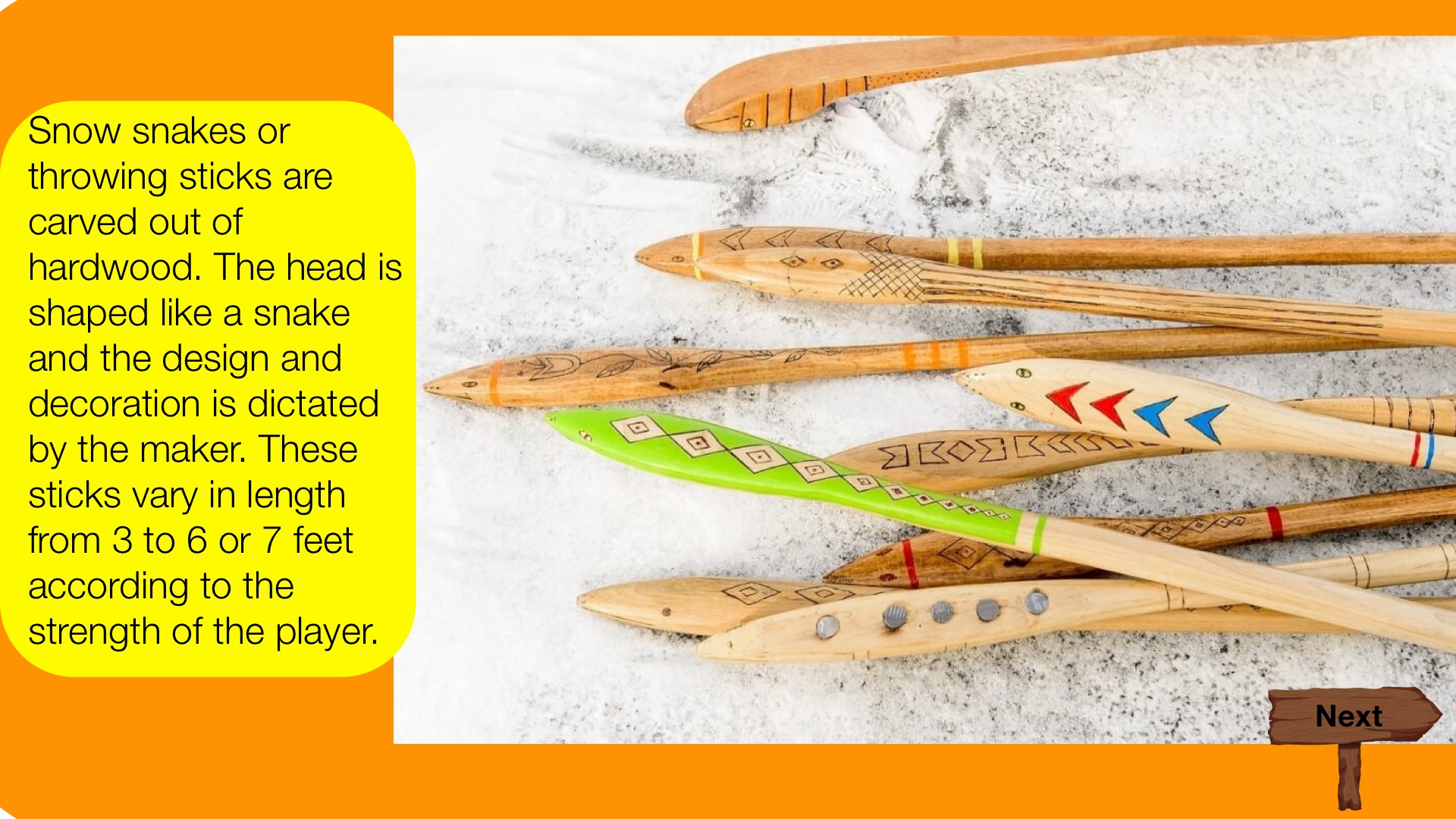
Snow snakes or throwing sticks are carved out of hardwood. The head is shaped like a snake and the design and decoration is dictated by the maker. These sticks vary in length from 3 to 6 or 7 feet according to the strength of the player.
Next
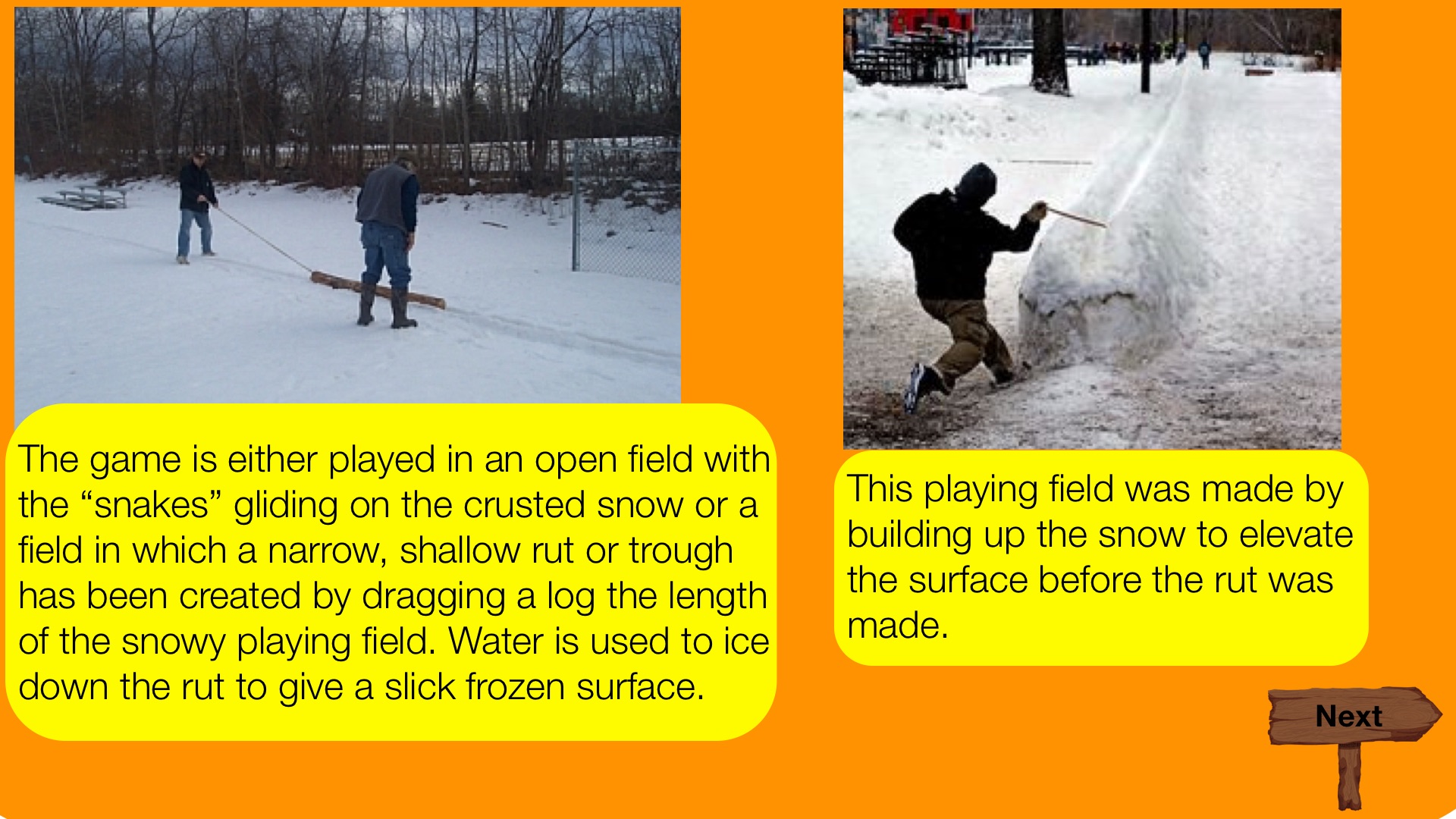
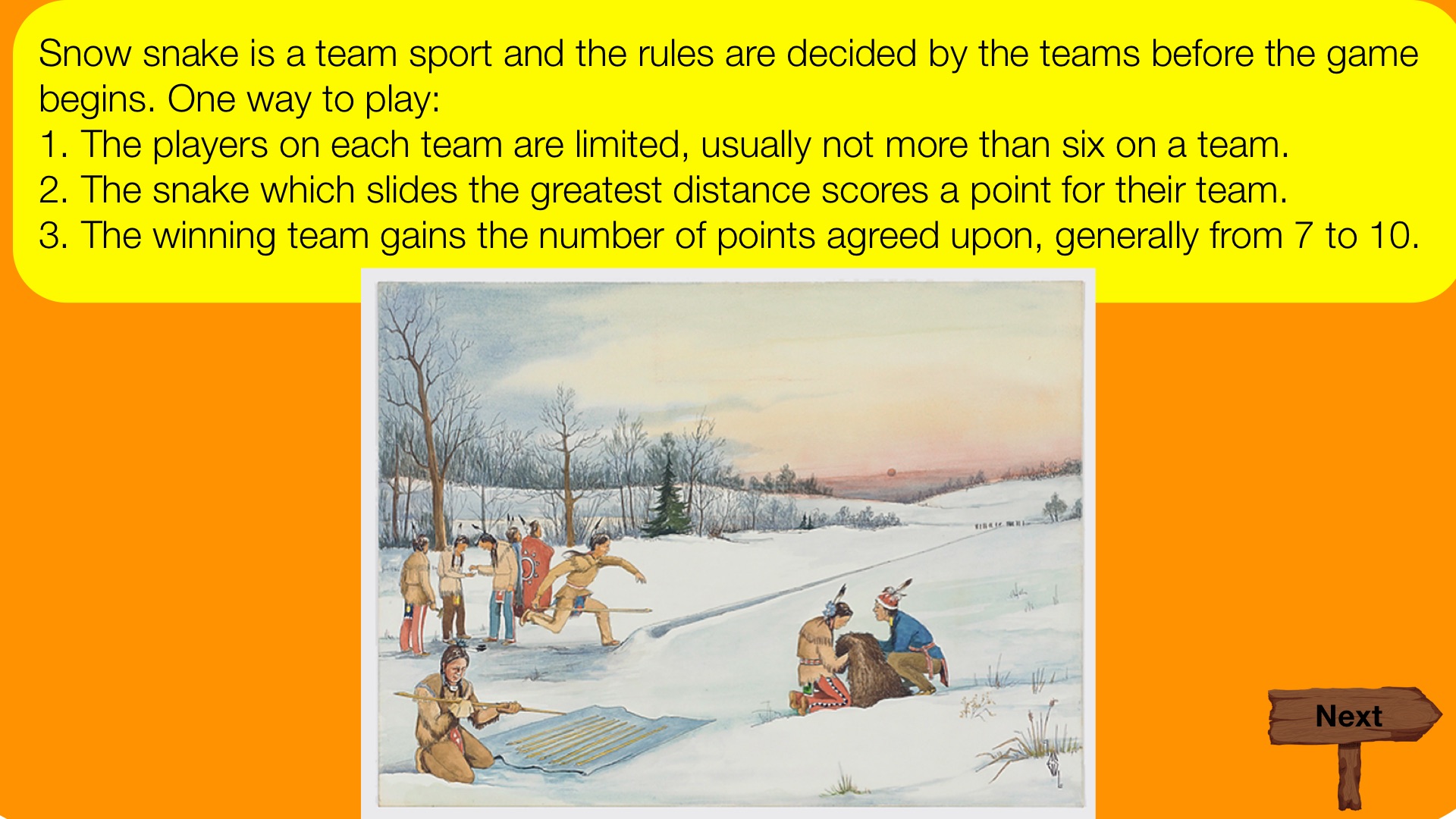
The game is either played in an open field with the “snakes” gliding on the crusted snow or a field in which a narrow, shallow rut or trough has been created by dragging a log the length of the snowy playing field. Water is used to ice down the rut to give a slick frozen surface.
This playing field was made by building up the snow to elevate the surface before the rut was made.
Next
Snow snake is a team sport and the rules are decided by the teams before the game begins. One way to play: 1. The players on each team are limited, usually not more than six on a team. 2. The snake which slides the greatest distance scores a point for their team. 3. The winning team gains the number of points agreed upon, generally from 7 to 10.
Next
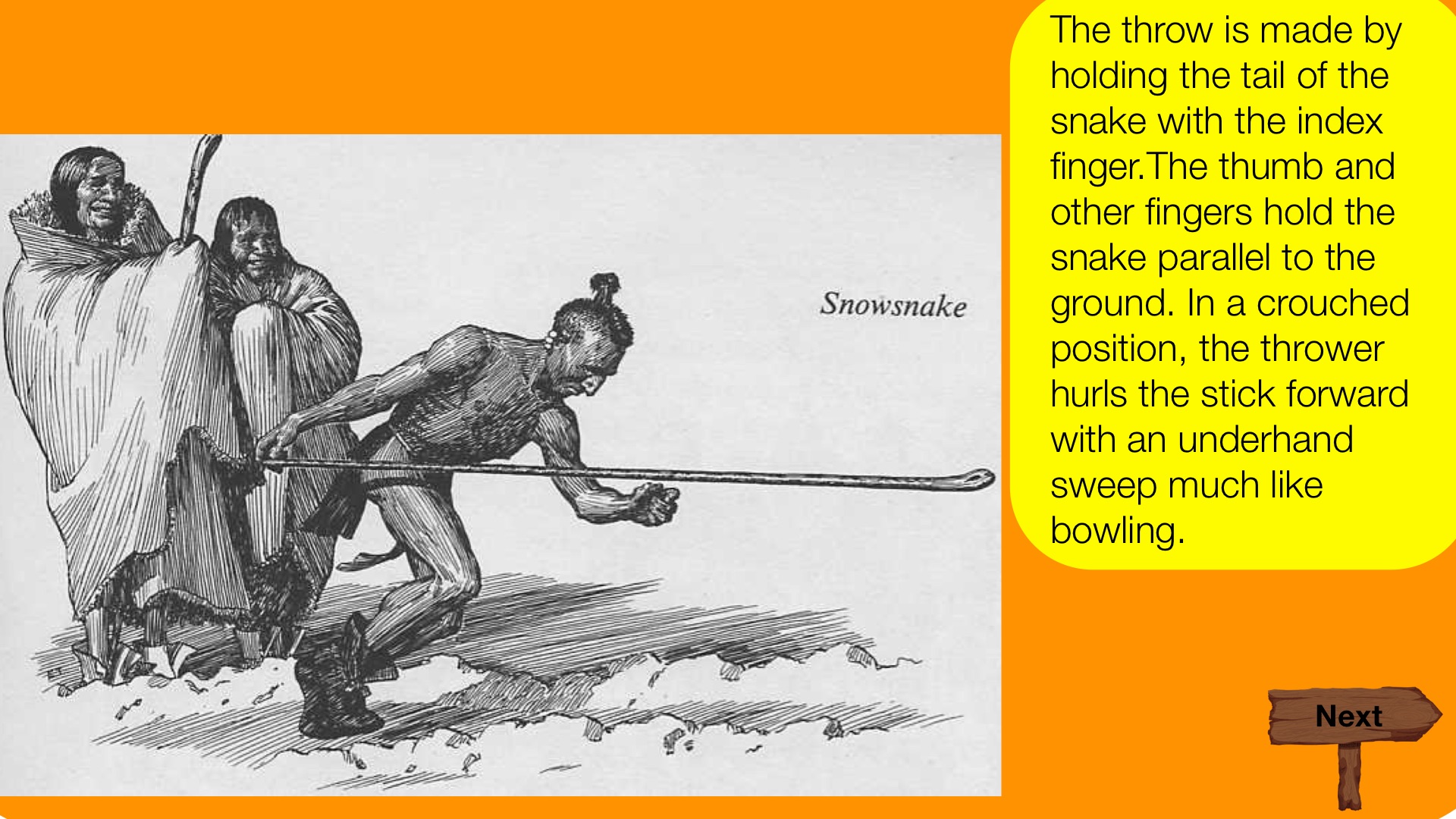
The throw is made by holding the tail of the snake with the index finger.The thumb and other fingers hold the snake parallel to the ground. In a crouched position, the thrower hurls the stick forward with an underhand sweep much like bowling.
Next
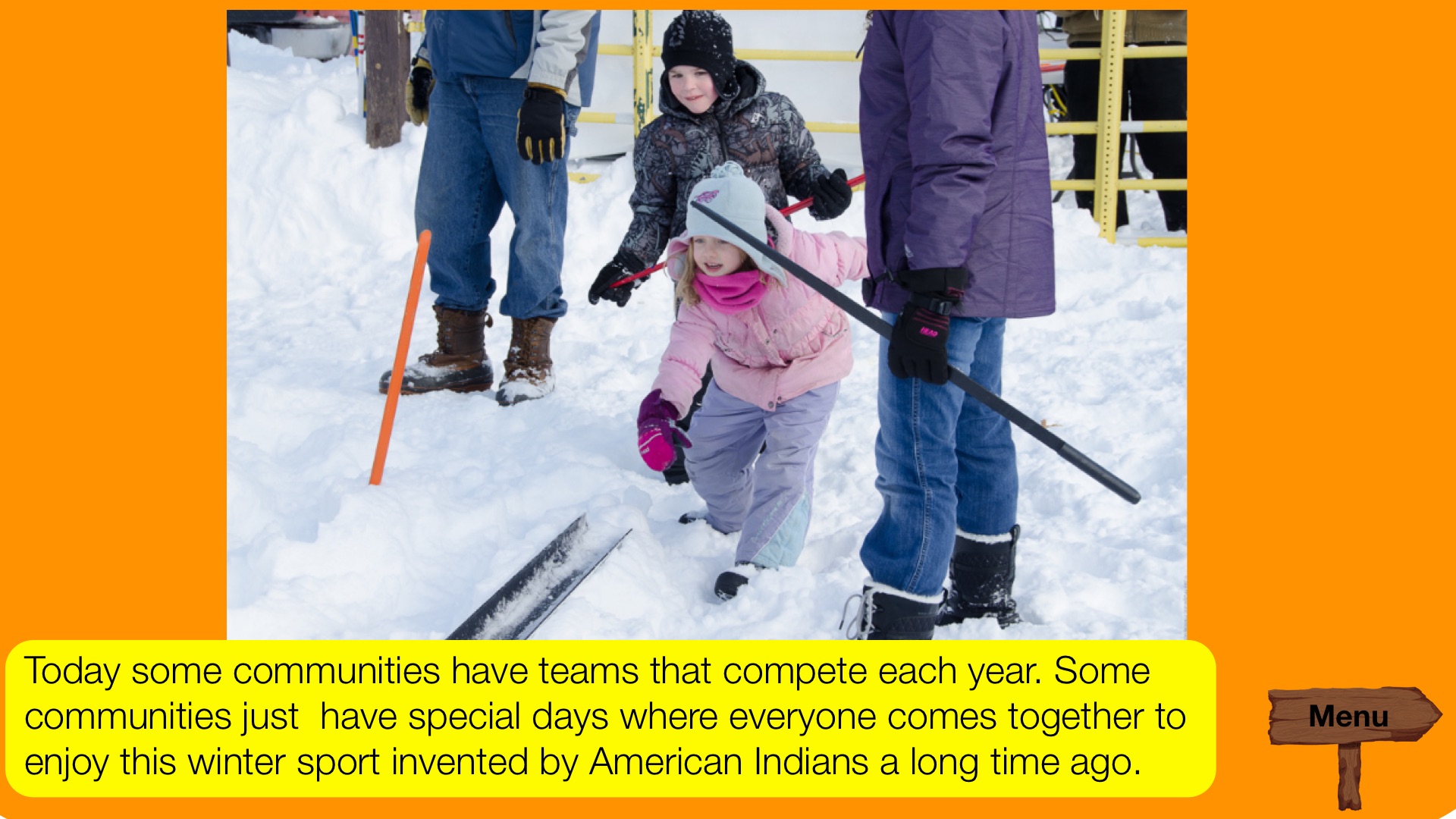
Today some communities have teams that compete each year. Some communities just have special days where everyone comes together to enjoy this winter sport invented by American Indians a long time ago.
Menu
Tobaggan
Transportaion Engineering
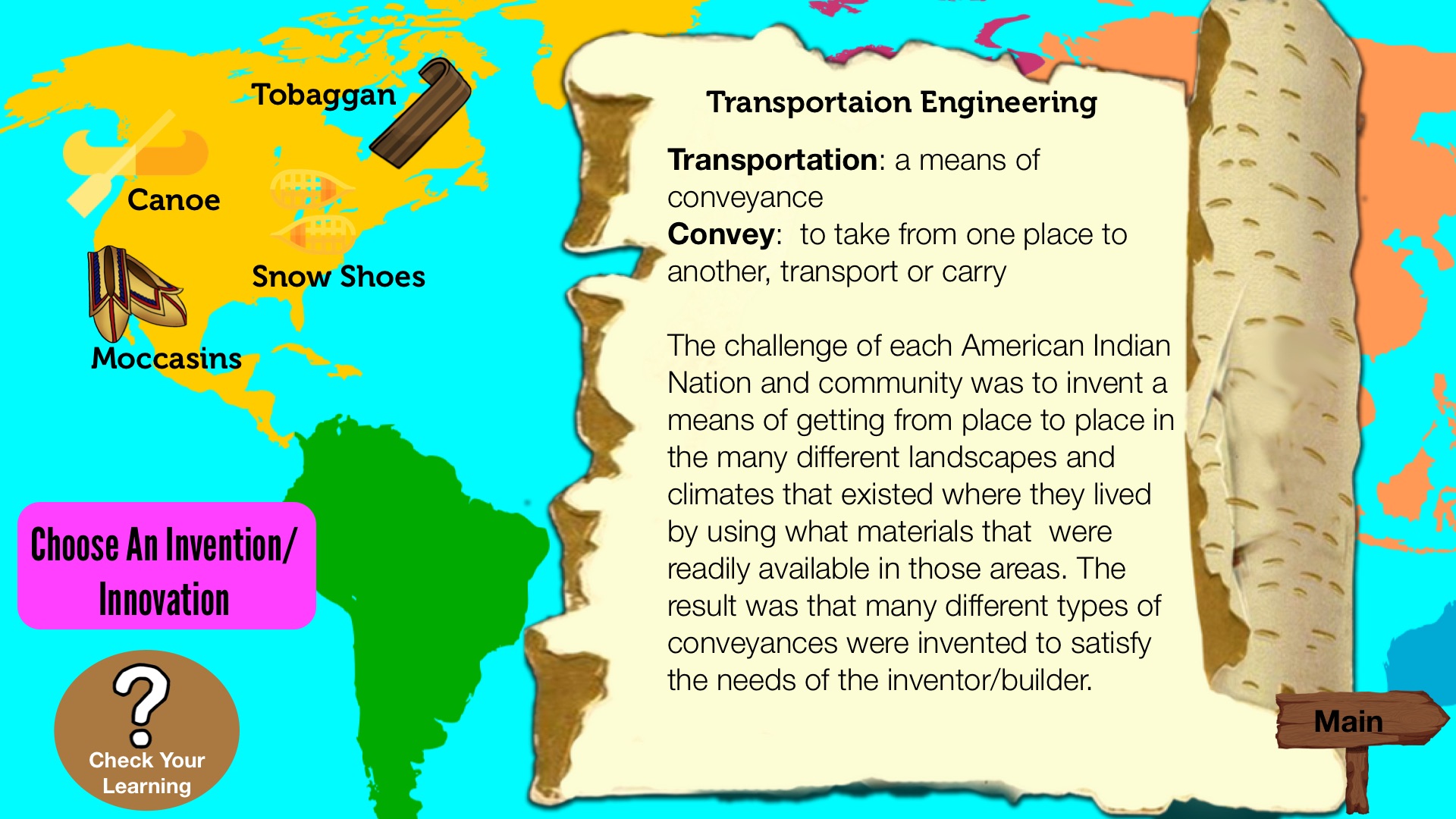
Transportation: a means of conveyance Convey: to take from one place to another, transport or carry The challenge of each American Indian Nation and community was to invent a means of getting from place to place in the many different landscapes and climates that existed where they lived by using what materials that were readily available in those areas. The result was that many different types of conveyances were invented to satisfy the needs of the inventor/builder.
Canoe
Snow Shoes
Moccasins
Choose An Invention/Innovation
Main
Check Your Learning
Snow Shoes
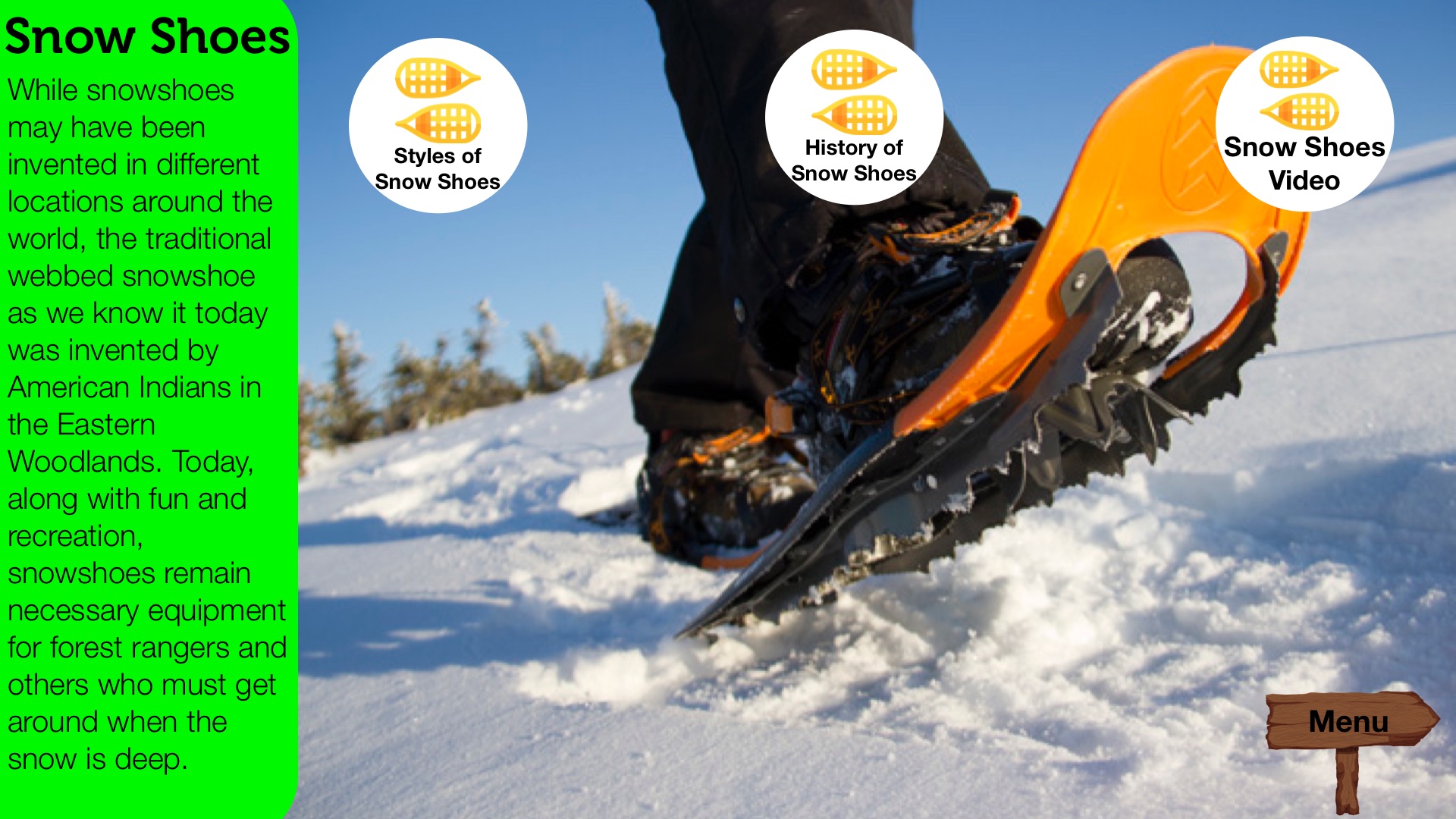
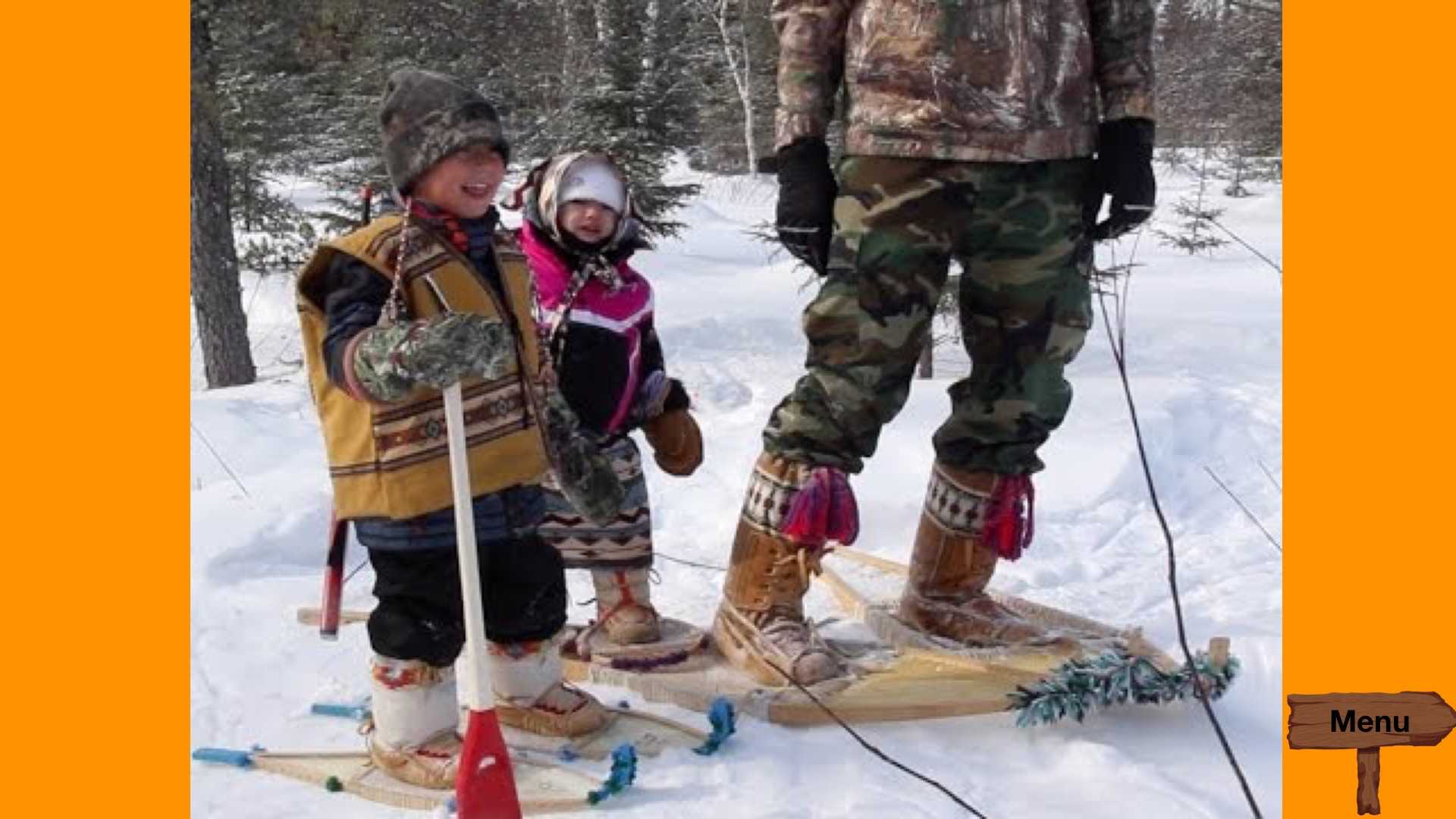
While snowshoes may have been invented in different locations around the world, the traditional webbed snowshoe as we know it today was invented by American Indians in the Eastern Woodlands. Today, along with fun and recreation, snowshoes remain necessary equipment for forest rangers and others who must get around when the snow is deep.
History of Snow Shoes
Snow Shoes Video
Styles of Snow Shoes
Menu
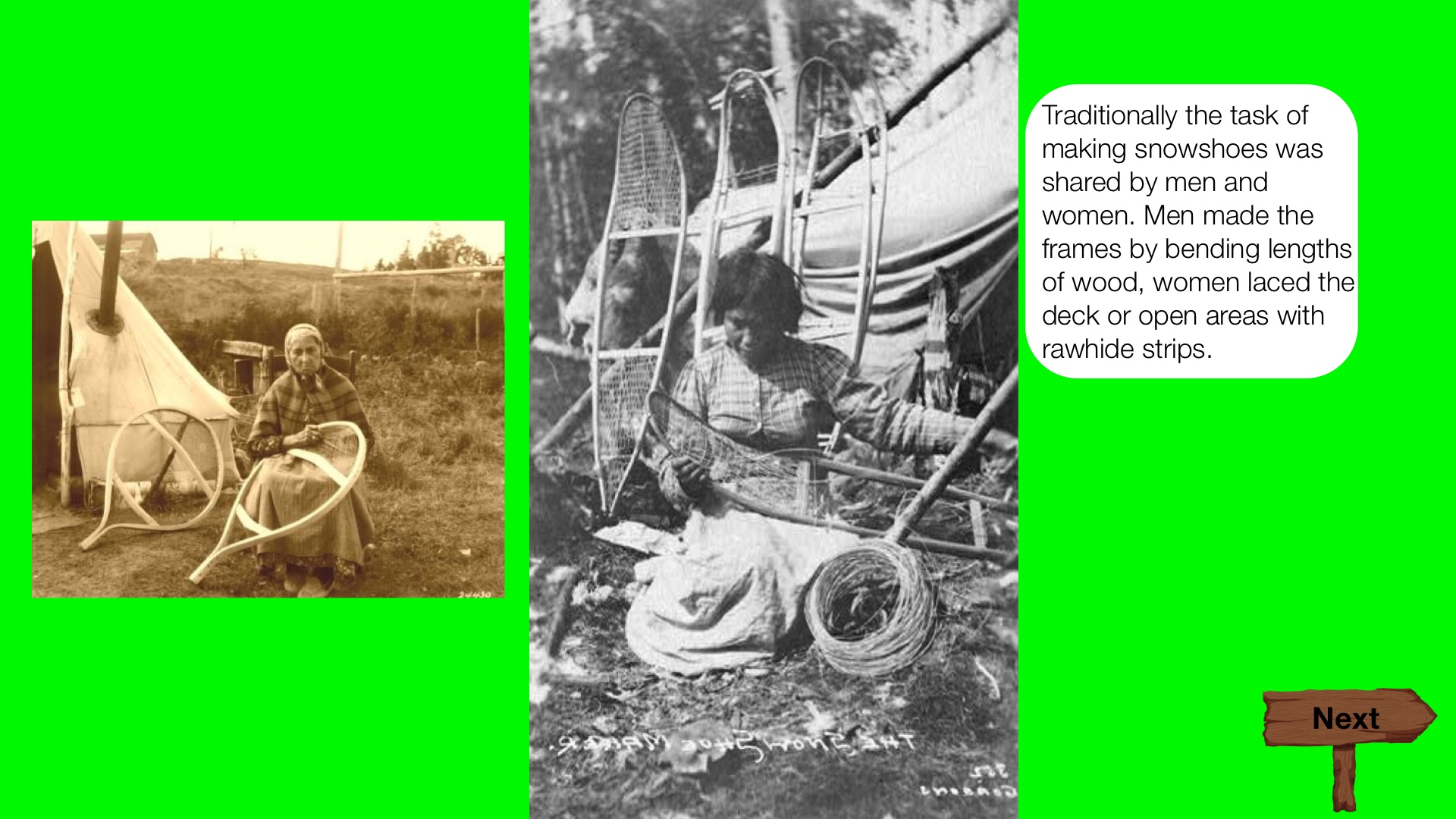
Traditionally the task of making snowshoes was shared by men and women. Men made the frames by bending lengths of wood, women laced the deck or open areas with rawhide strips.
Next
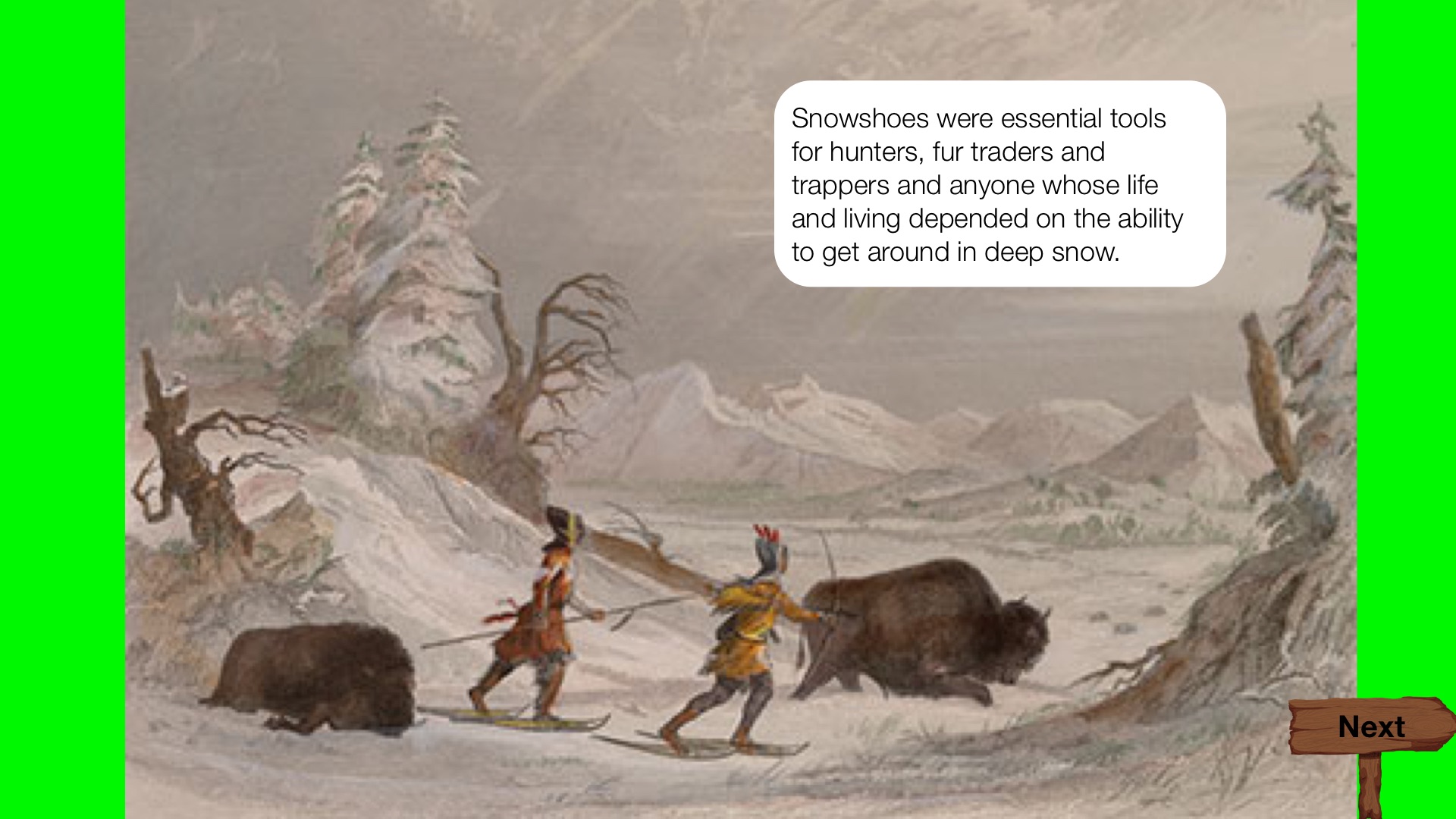
Snowshoes were essential tools for hunters, fur traders and trappers and anyone whose life and living depended on the ability to get around in deep snow.
Next
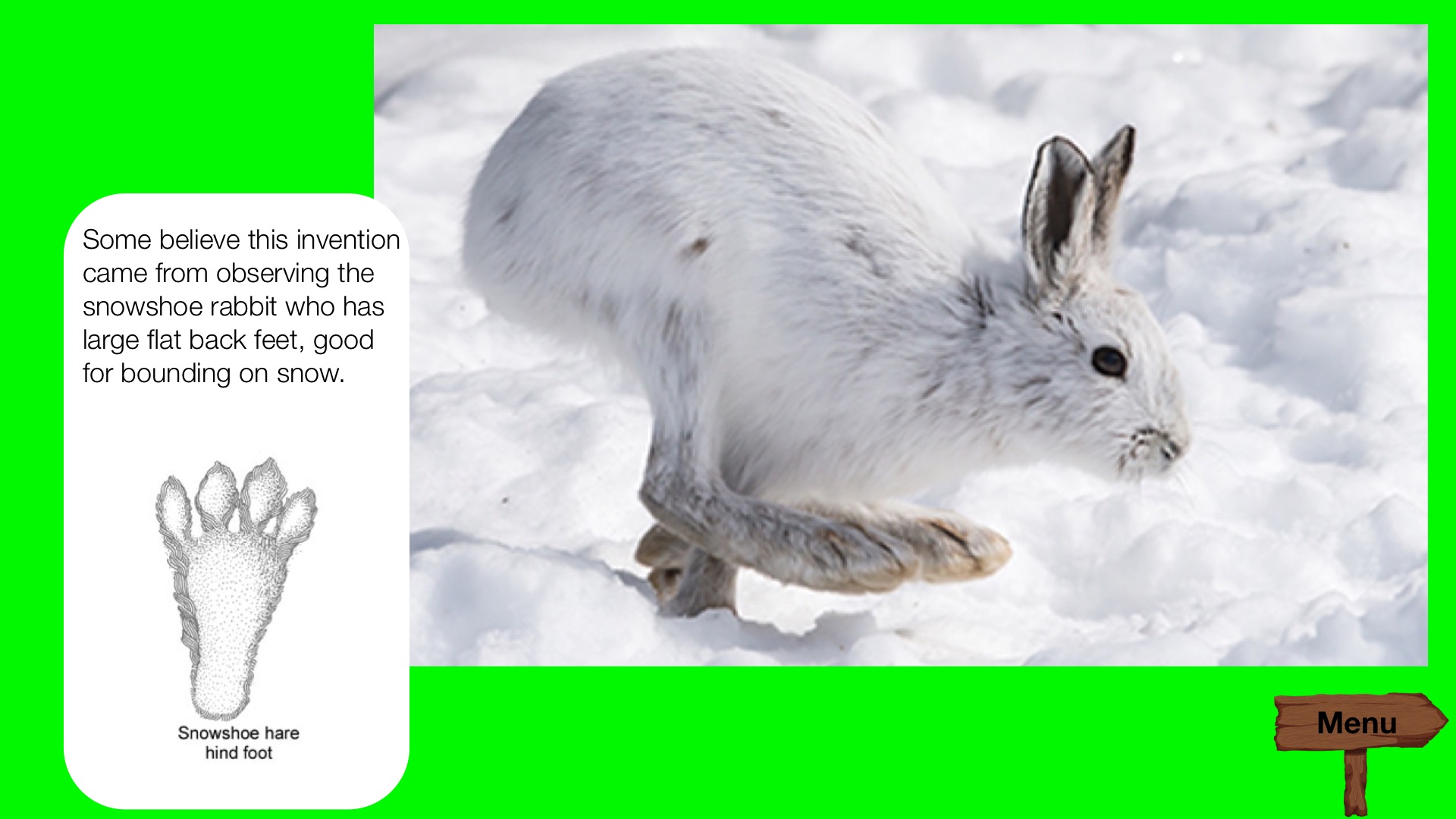
Some believe this invention came from observing the snowshoe rabbit who has large flat back feet, good for bounding on snow.
Menu
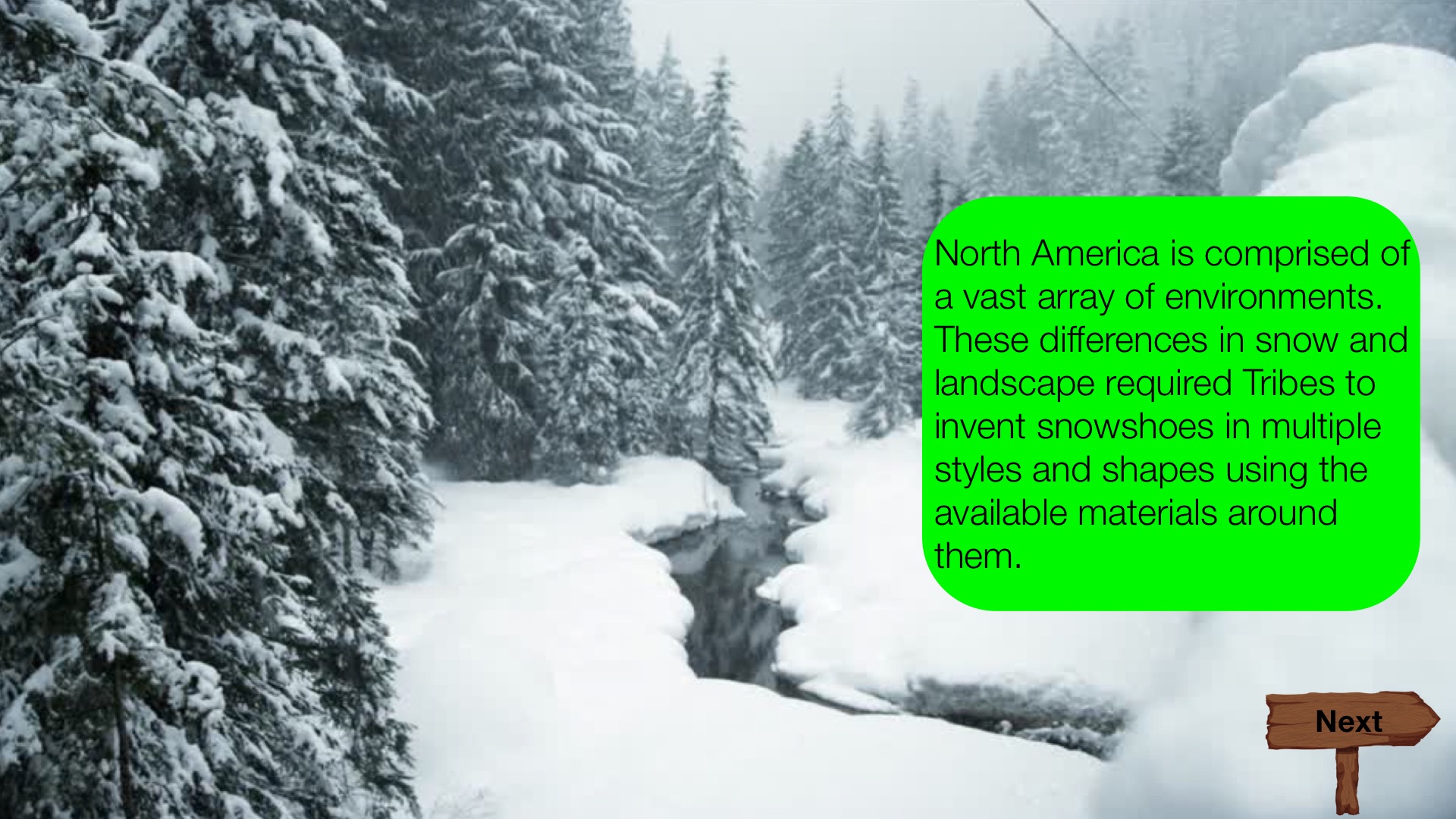
North America is comprised of a vast array of environments. These differences in snow and landscape required Tribes to invent snowshoes in multiple styles and shapes using the available materials around them.
Next
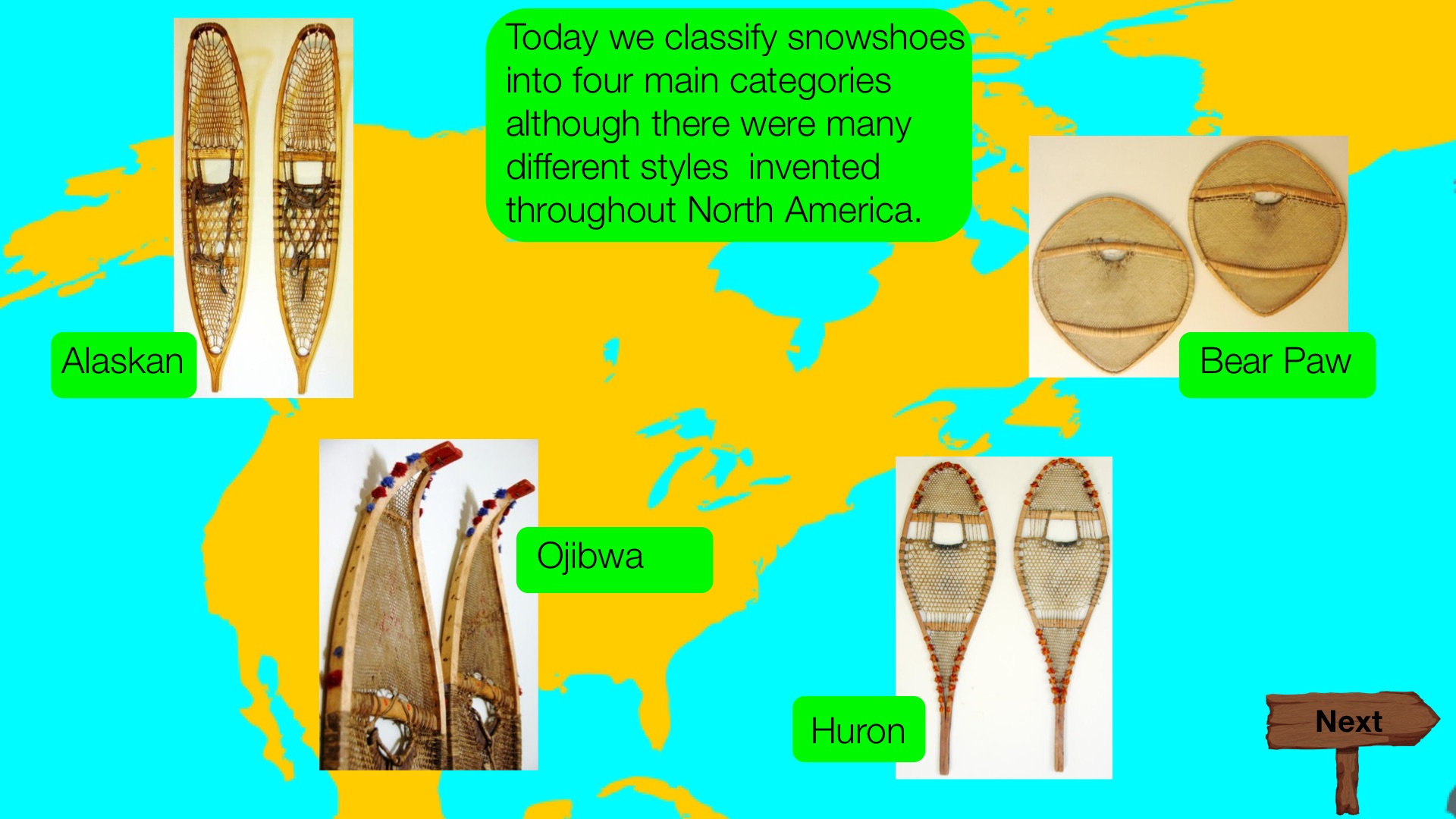
Today we classify snowshoes into four main categories although there were many different styles invented throughout North America.
Alaskan
Bear Paw
Ojibwa
Huron
Next
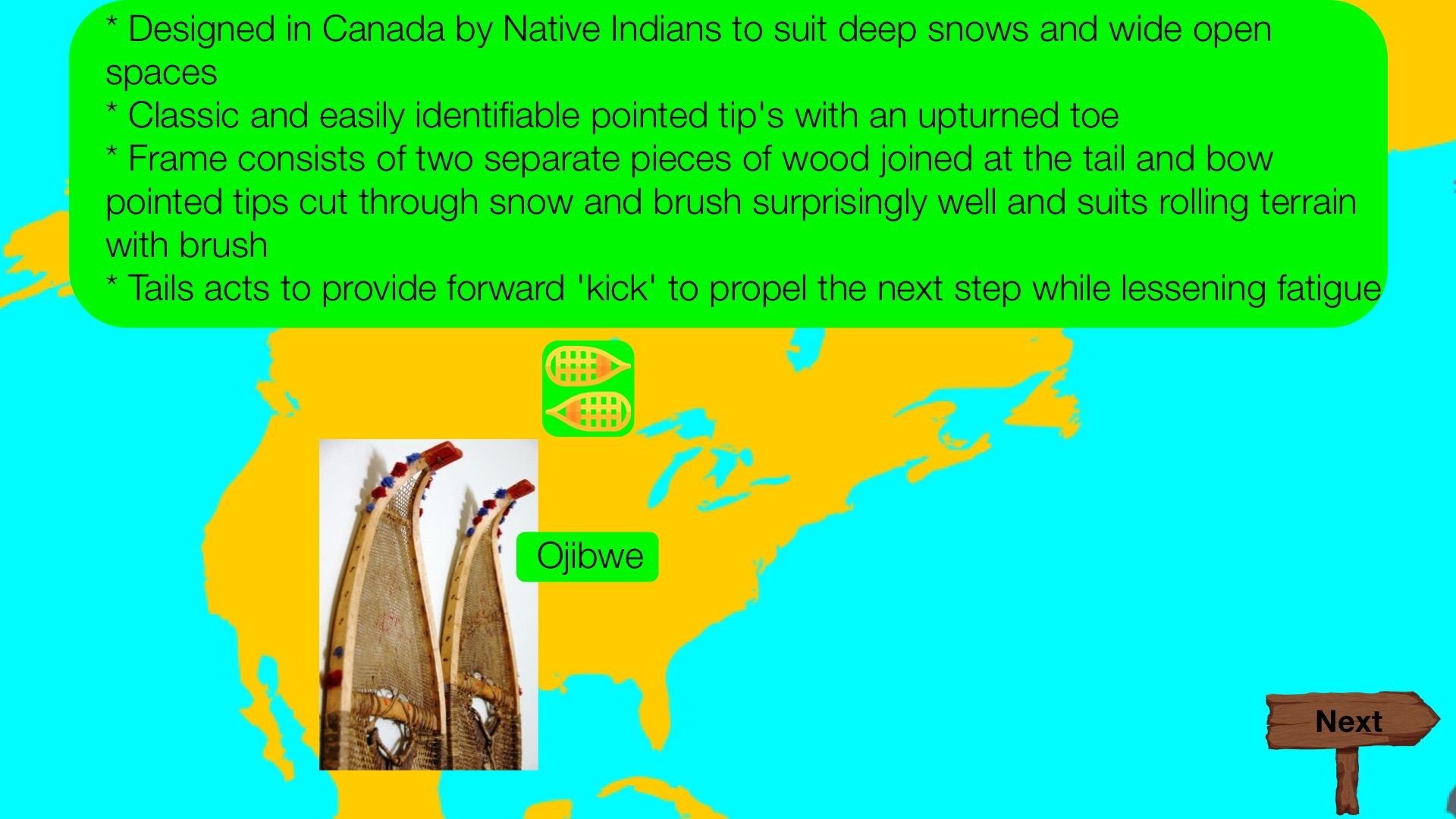
* Designed in Canada by Native Indians to suit deep snows and wide open spaces * Classic and easily identifiable pointed tip's with an upturned toe * Frame consists of two separate pieces of wood joined at the tail and bow pointed tips cut through snow and brush surprisingly well and suits rolling terrain with brush * Tails acts to provide forward 'kick' to propel the next step while lessening fatigue
Ojibwe
Next
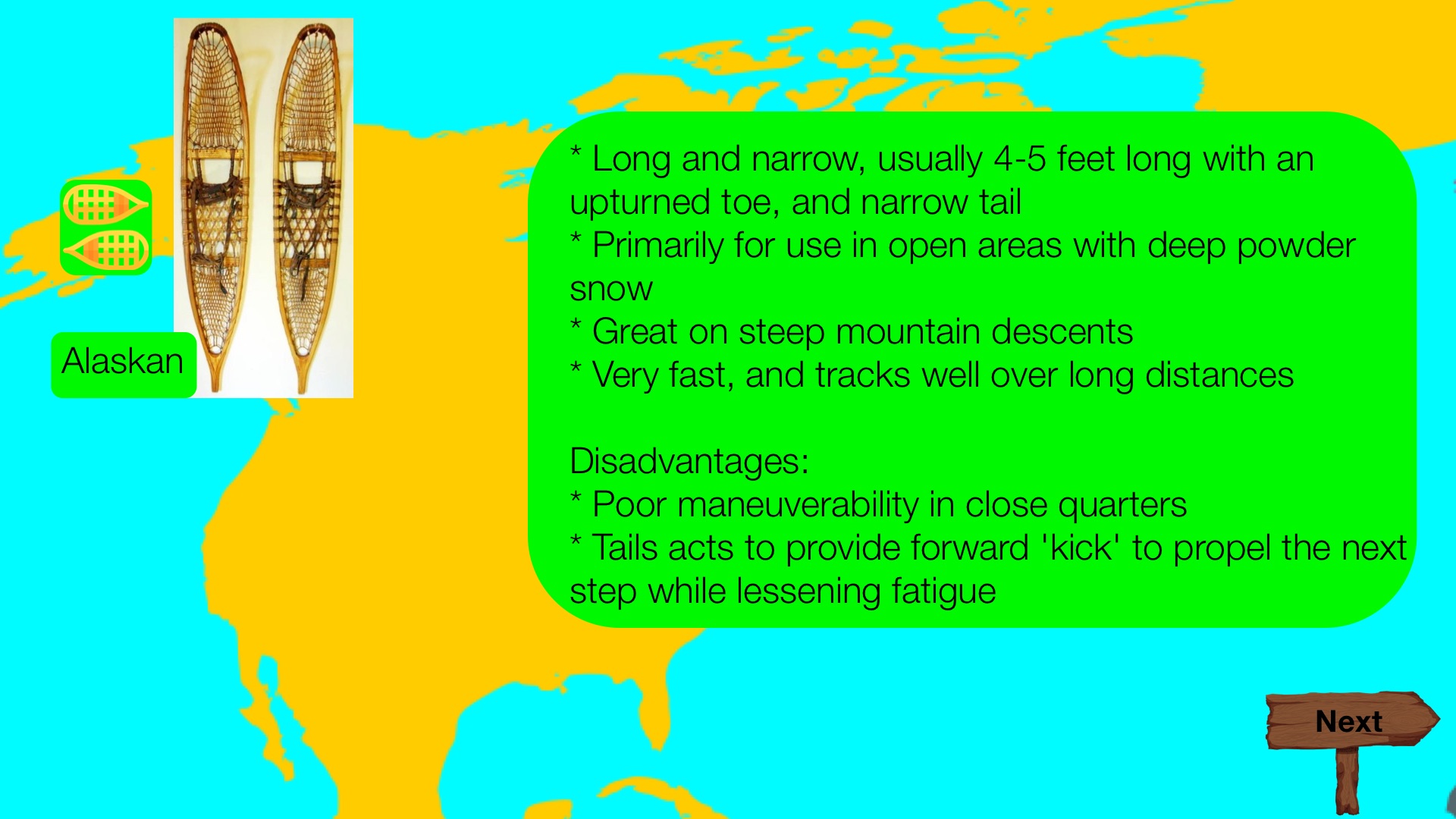
* Long and narrow, usually 4-5 feet long with an upturned toe, and narrow tail * Primarily for use in open areas with deep powder snow * Great on steep mountain descents * Very fast, and tracks well over long distances Disadvantages: * Poor maneuverability in close quarters * Tails acts to provide forward 'kick' to propel the next step while lessening fatigue
Alaskan
Next
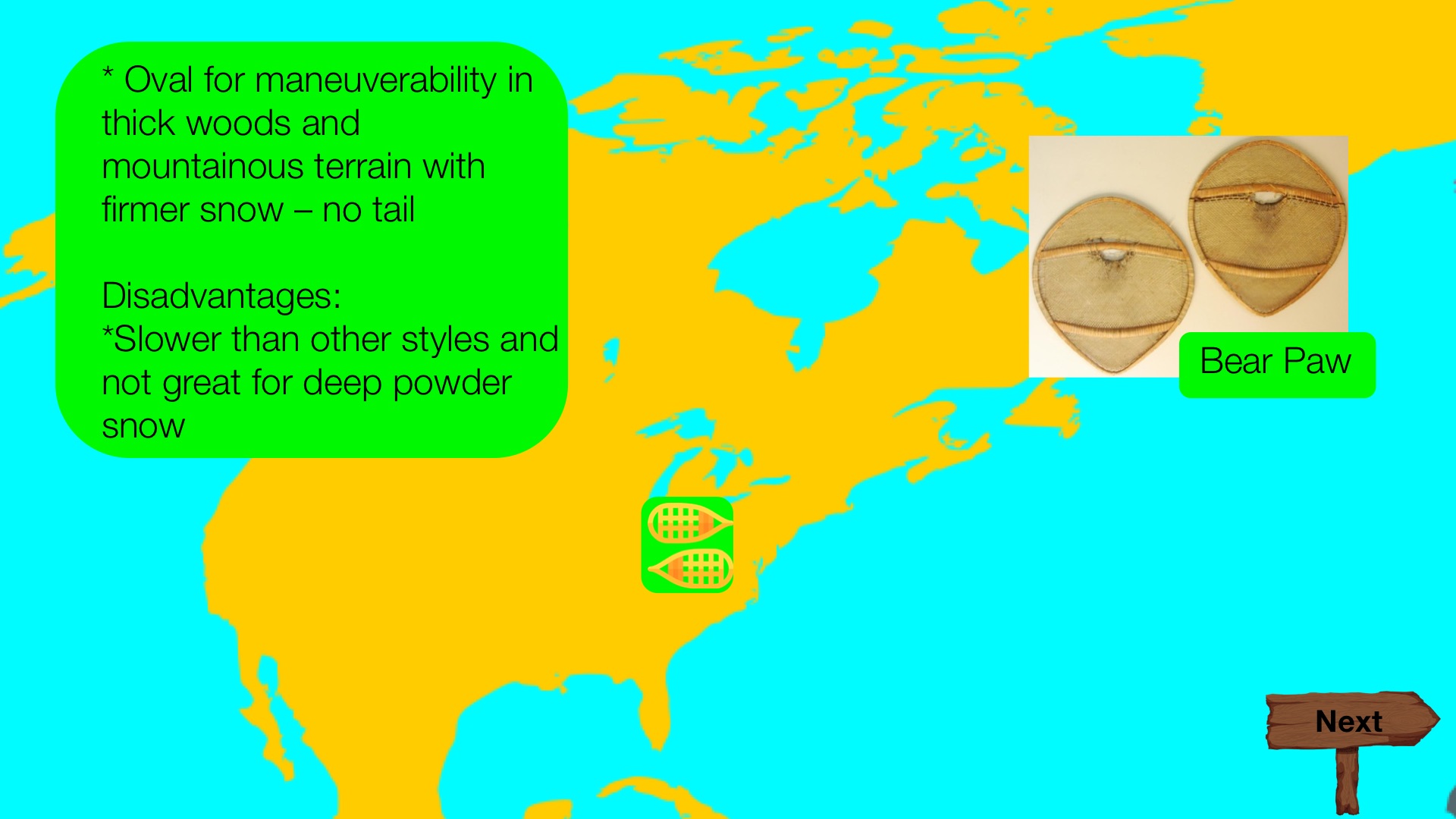
* Oval for maneuverability in thick woods and mountainous terrain with firmer snow – no tail Disadvantages: *Slower than other styles and not great for deep powder snow
Bear Paw
Next
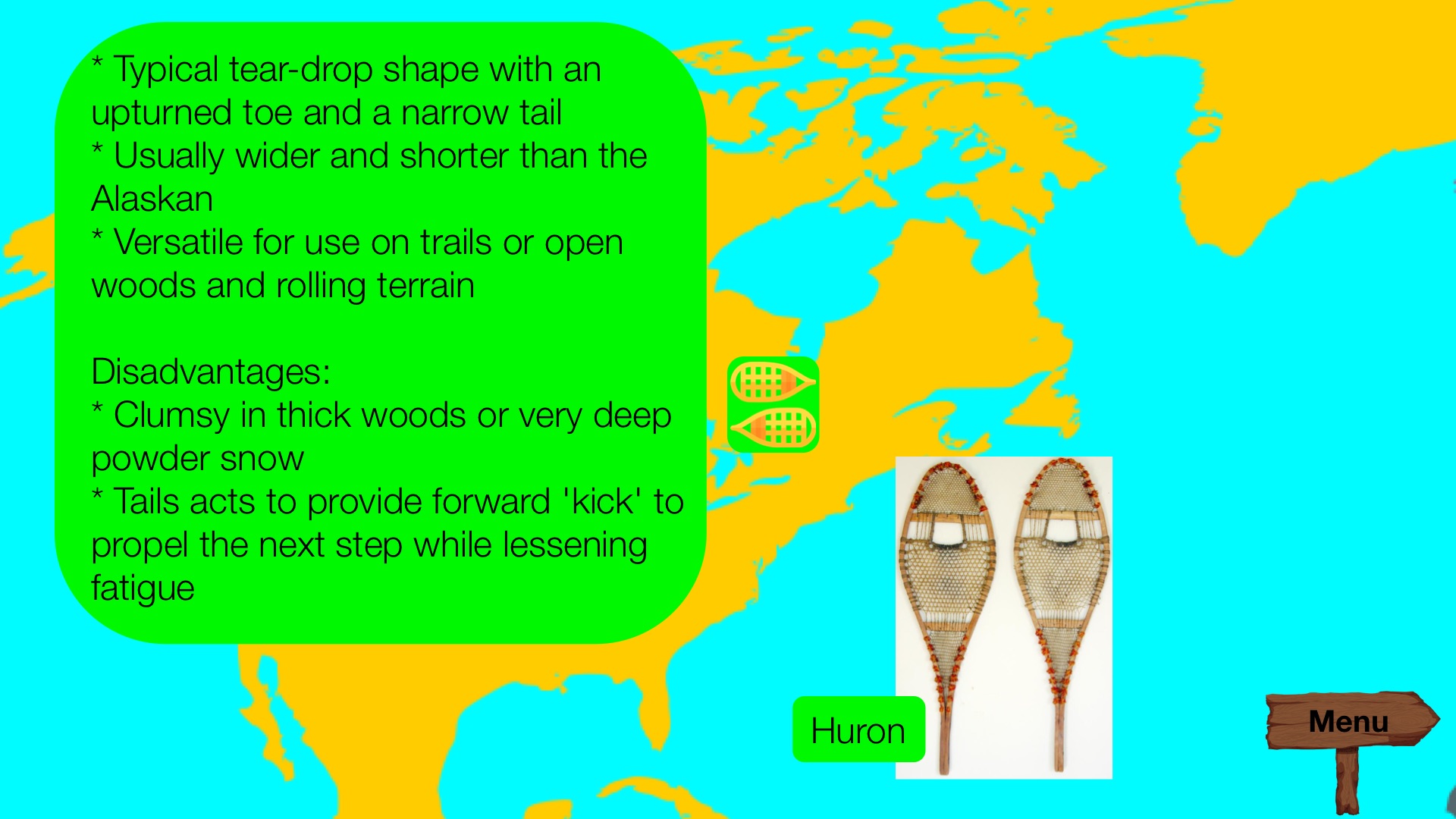
* Typical tear-drop shape with an upturned toe and a narrow tail * Usually wider and shorter than the Alaskan * Versatile for use on trails or open woods and rolling terrain Disadvantages: * Clumsy in thick woods or very deep powder snow * Tails acts to provide forward 'kick' to propel the next step while lessening fatigue
Huron
Menu
Moccasins
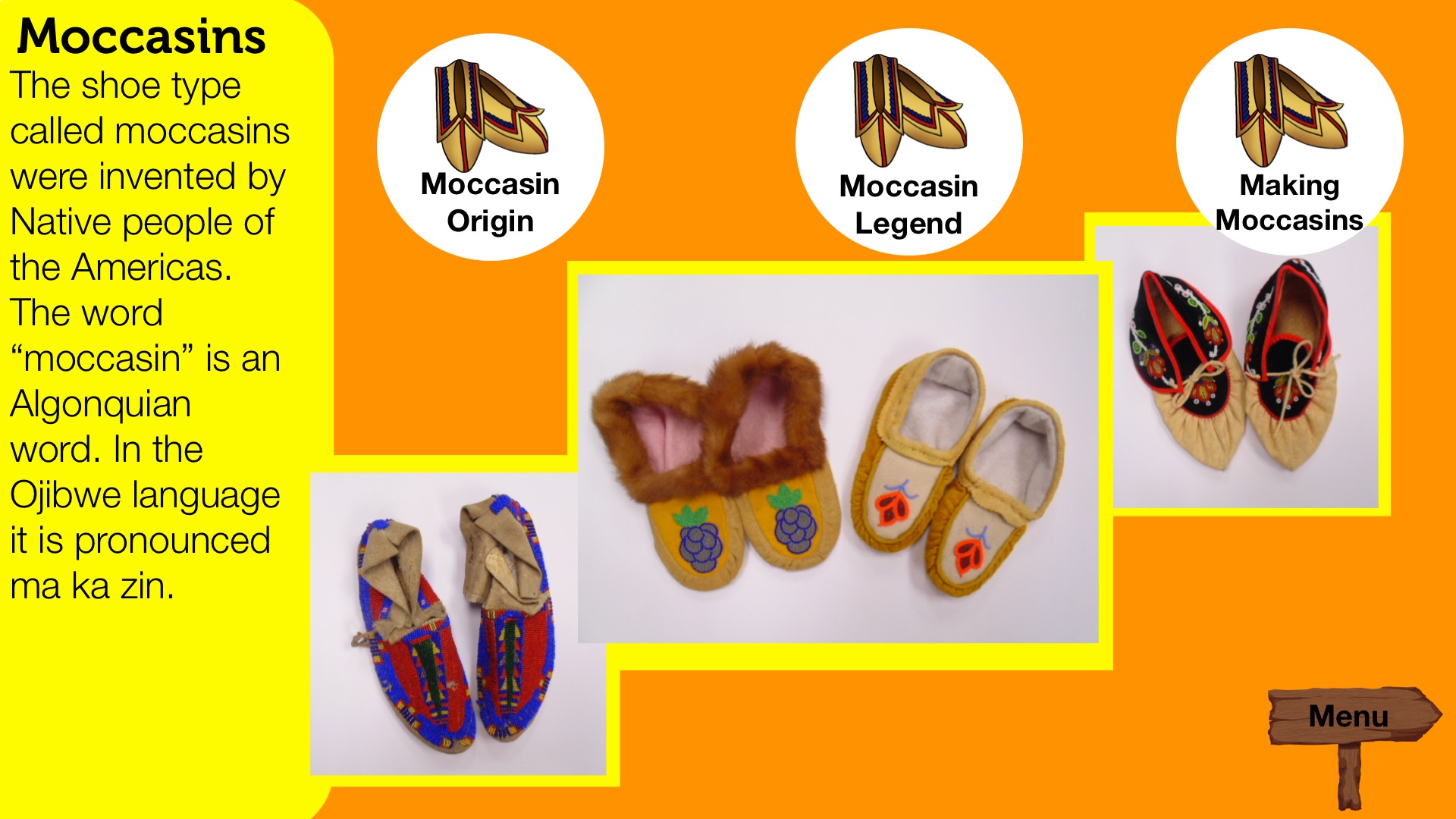
The shoe type called moccasins were invented by Native people of the Americas. The word “moccasin” is an Algonquian word. In the Ojibwe language it is pronounced ma ka zin.
Moccasin Origin
Moccasin Legend
Making Moccasins
Menu
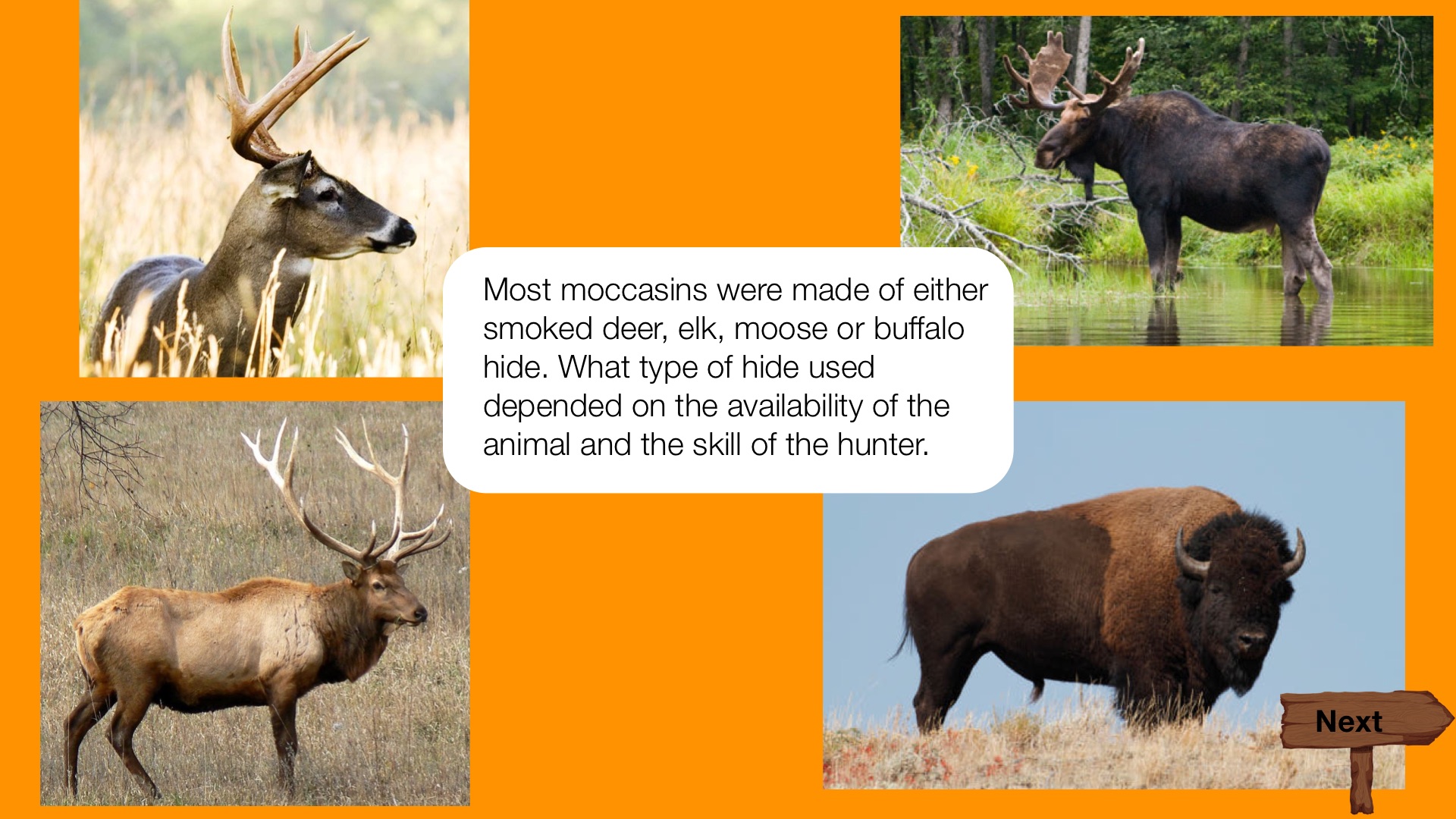
Most moccasins were made of either smoked deer, elk, moose or buffalo hide. What type of hide used depended on the availability of the animal and the skill of the hunter.
Next
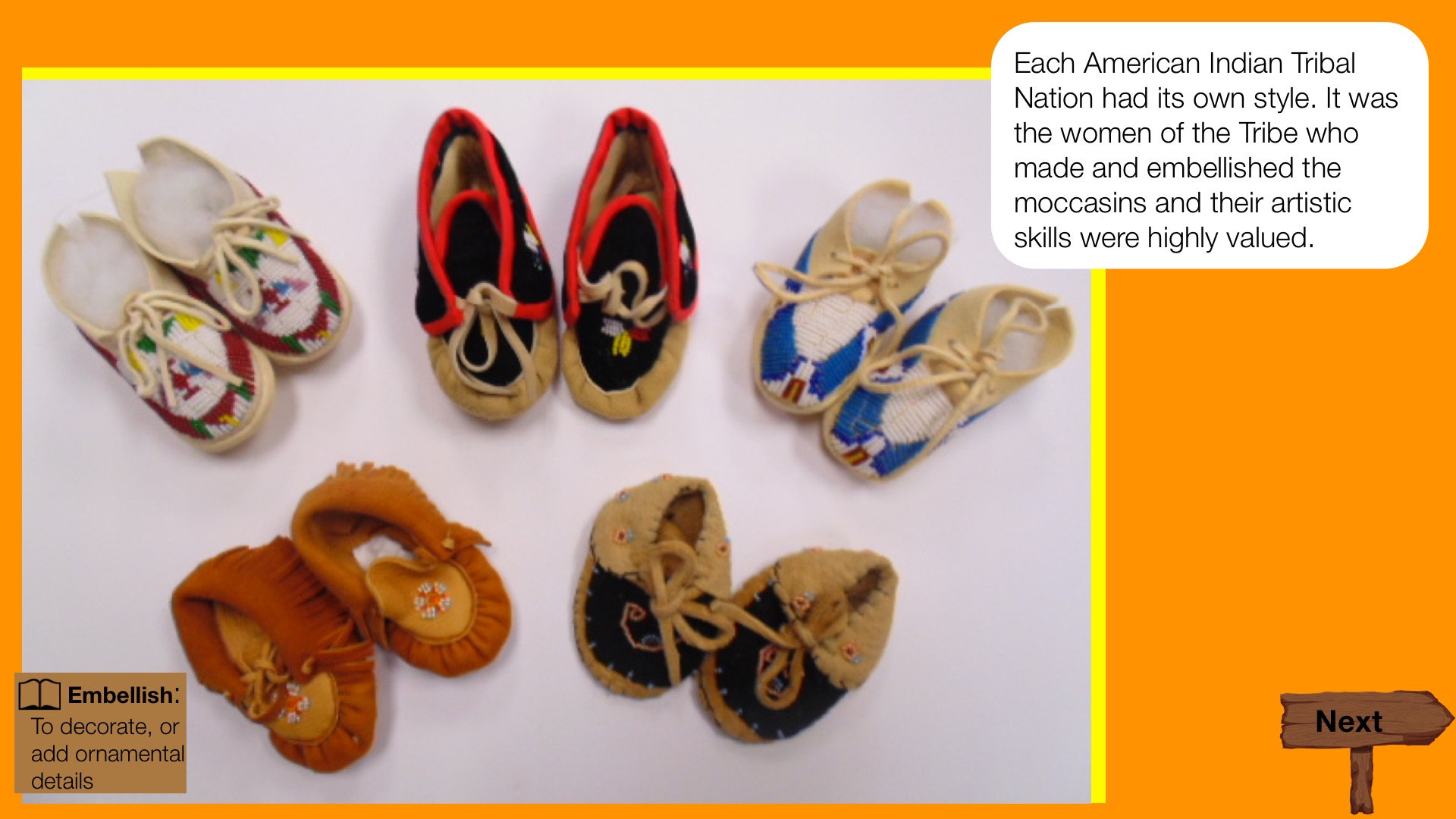
Each American Indian Tribal Nation had its own style. It was the women of the Tribe who made and embellished the moccasins and their artistic skills were highly valued.
Embellish:
Next
To decorate, or add ornamental details
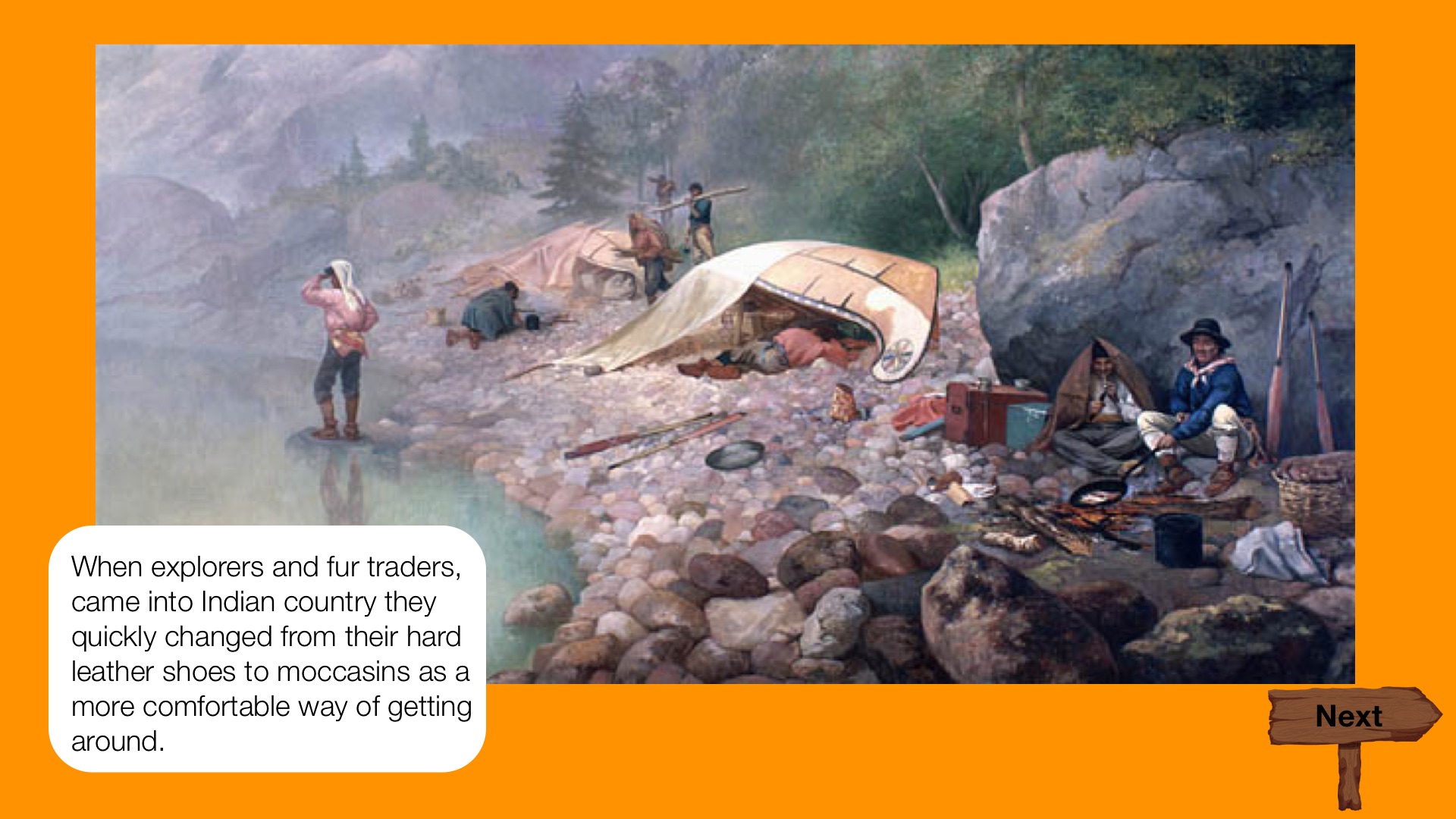
When explorers and fur traders, came into Indian country they quickly changed from their hard leather shoes to moccasins as a more comfortable way of getting around.
Next
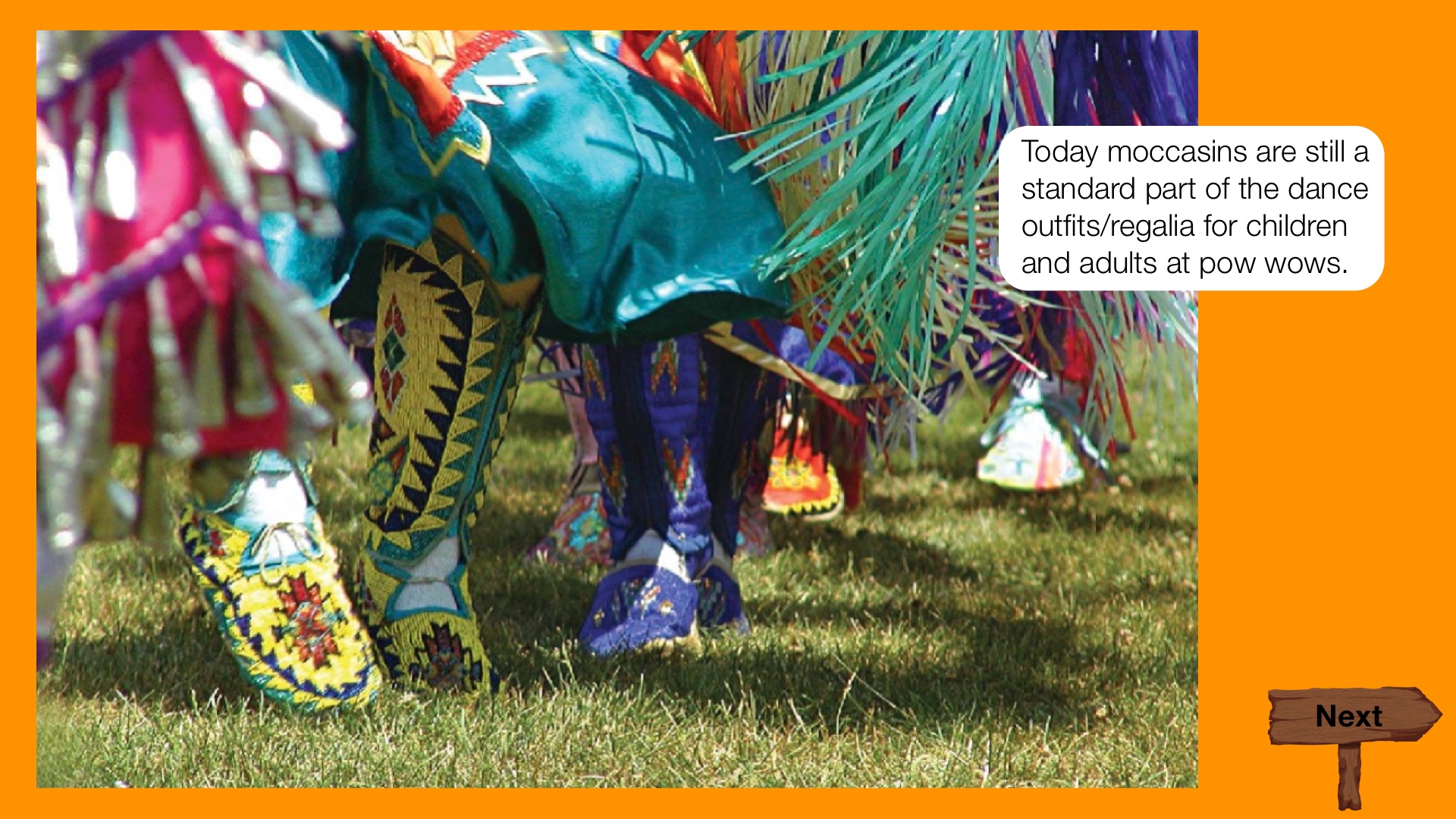
Today moccasins are still a standard part of the dance outfits/regalia for children and adults at pow wows.
Next
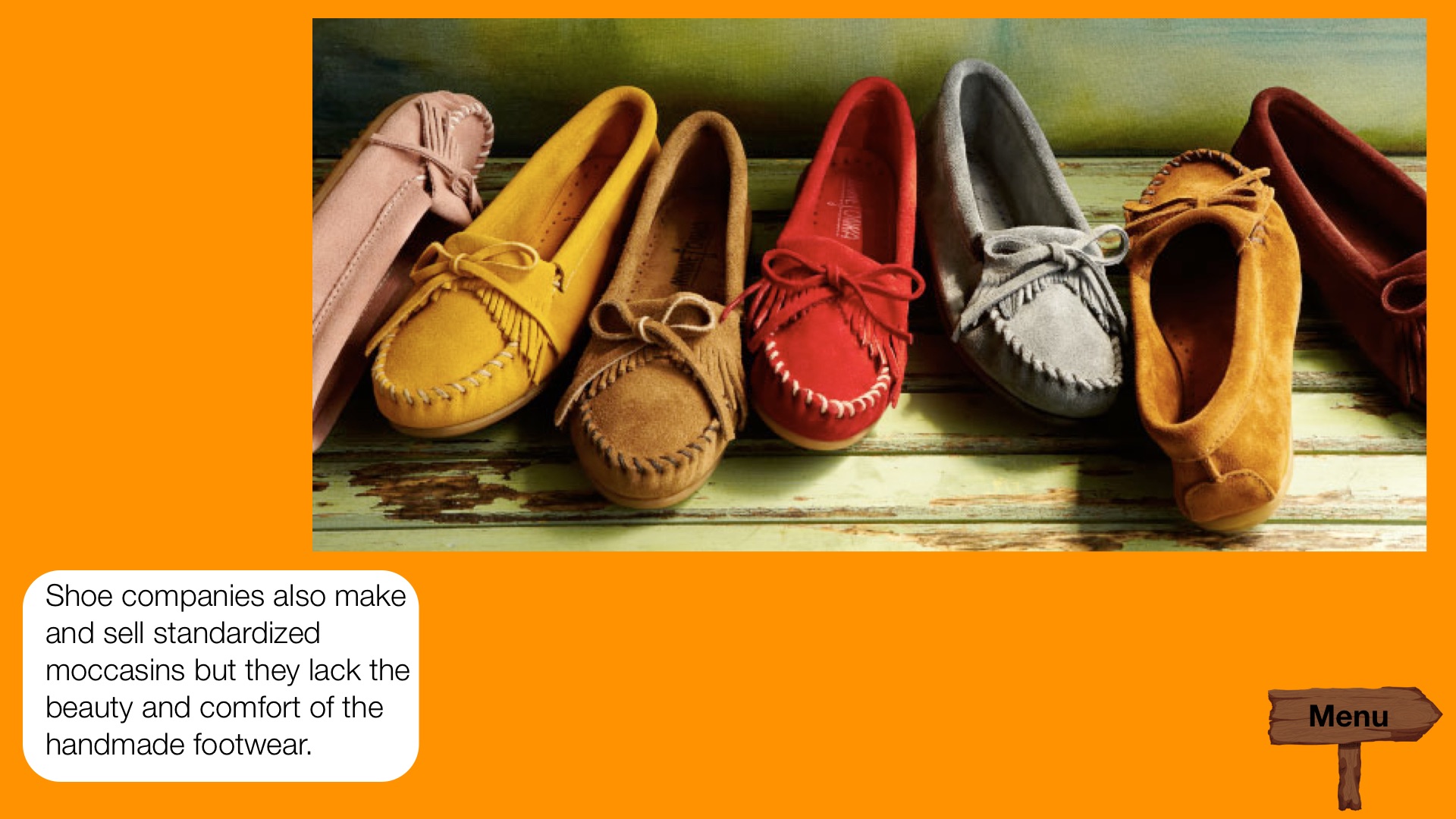
Shoe companies also make and sell standardized moccasins but they lack the beauty and comfort of the handmade footwear.
Menu
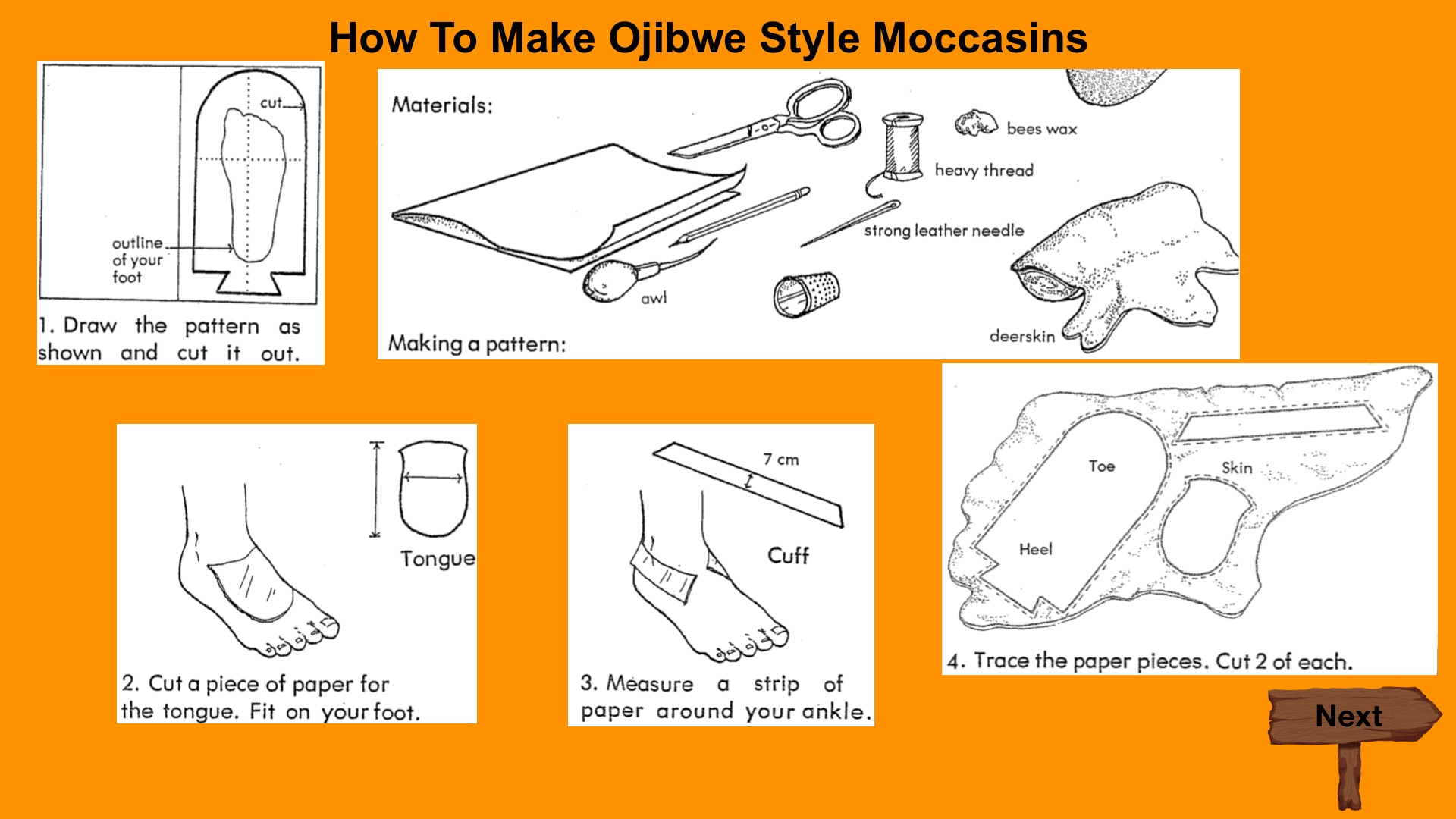
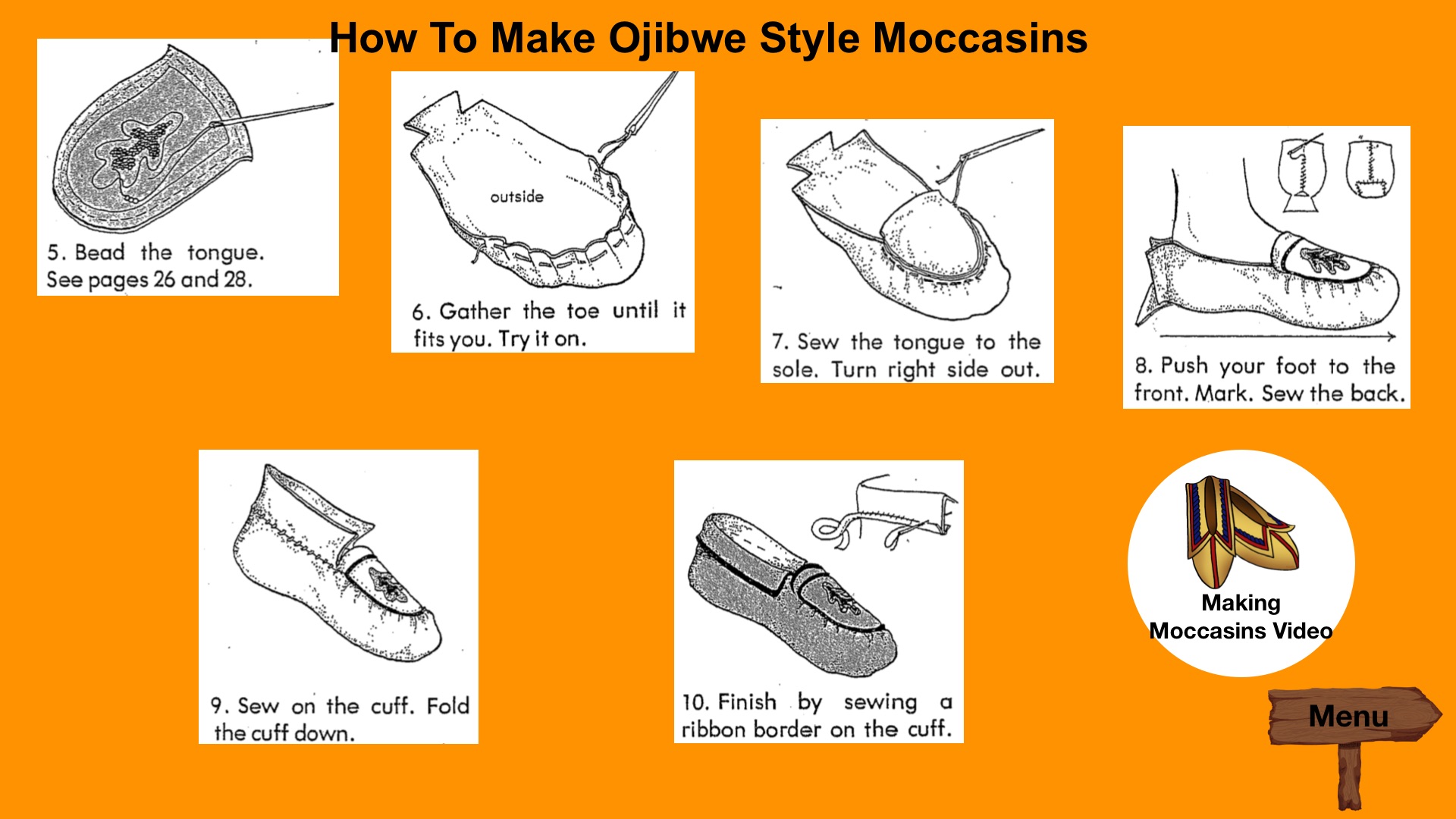
How To Make Ojibwe Style Moccasins
https://cdn.flowvella.com/watch
Next
How To Make Ojibwe Style Moccasins
Making Moccasins Video
Menu
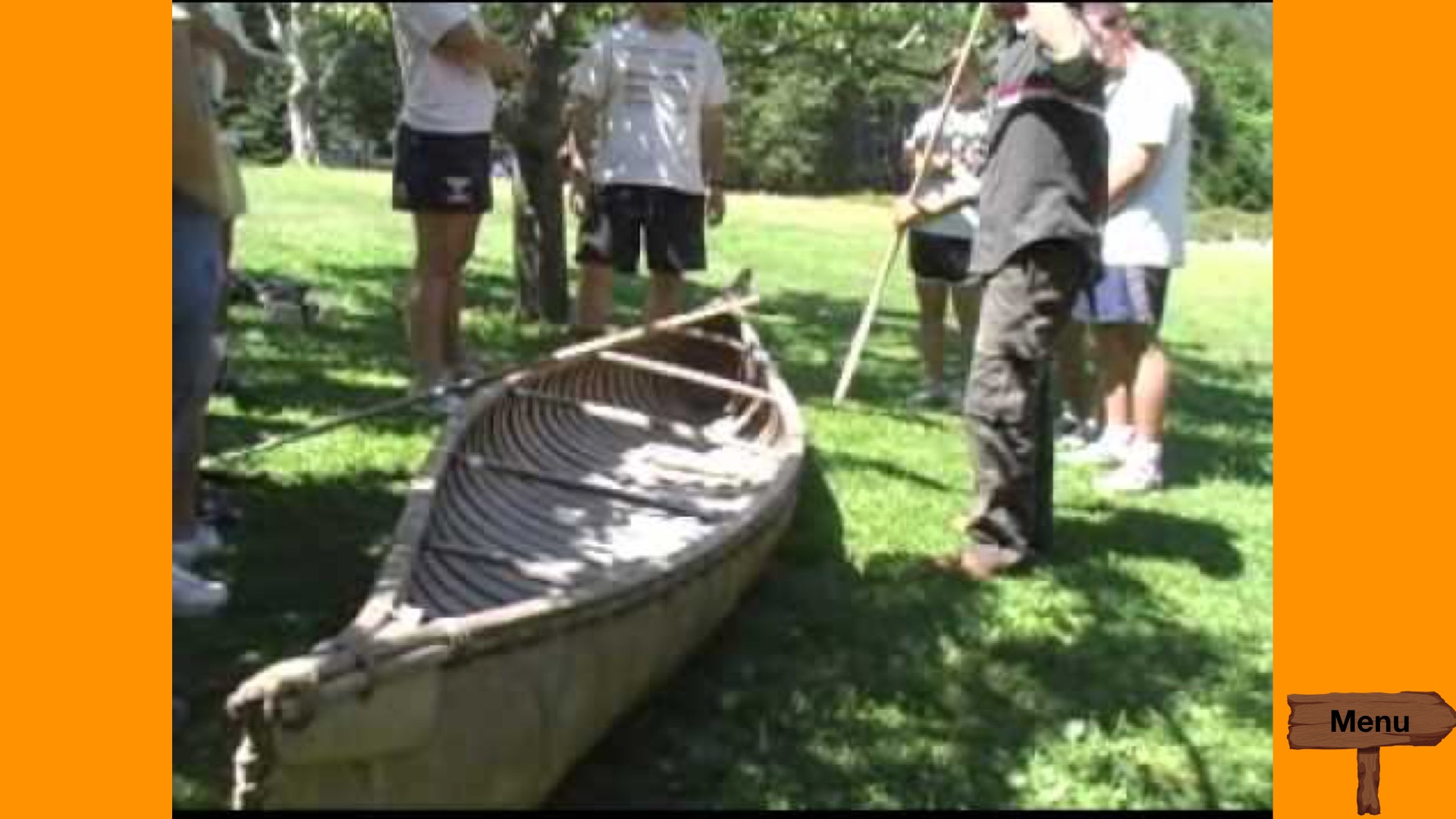
Canoe
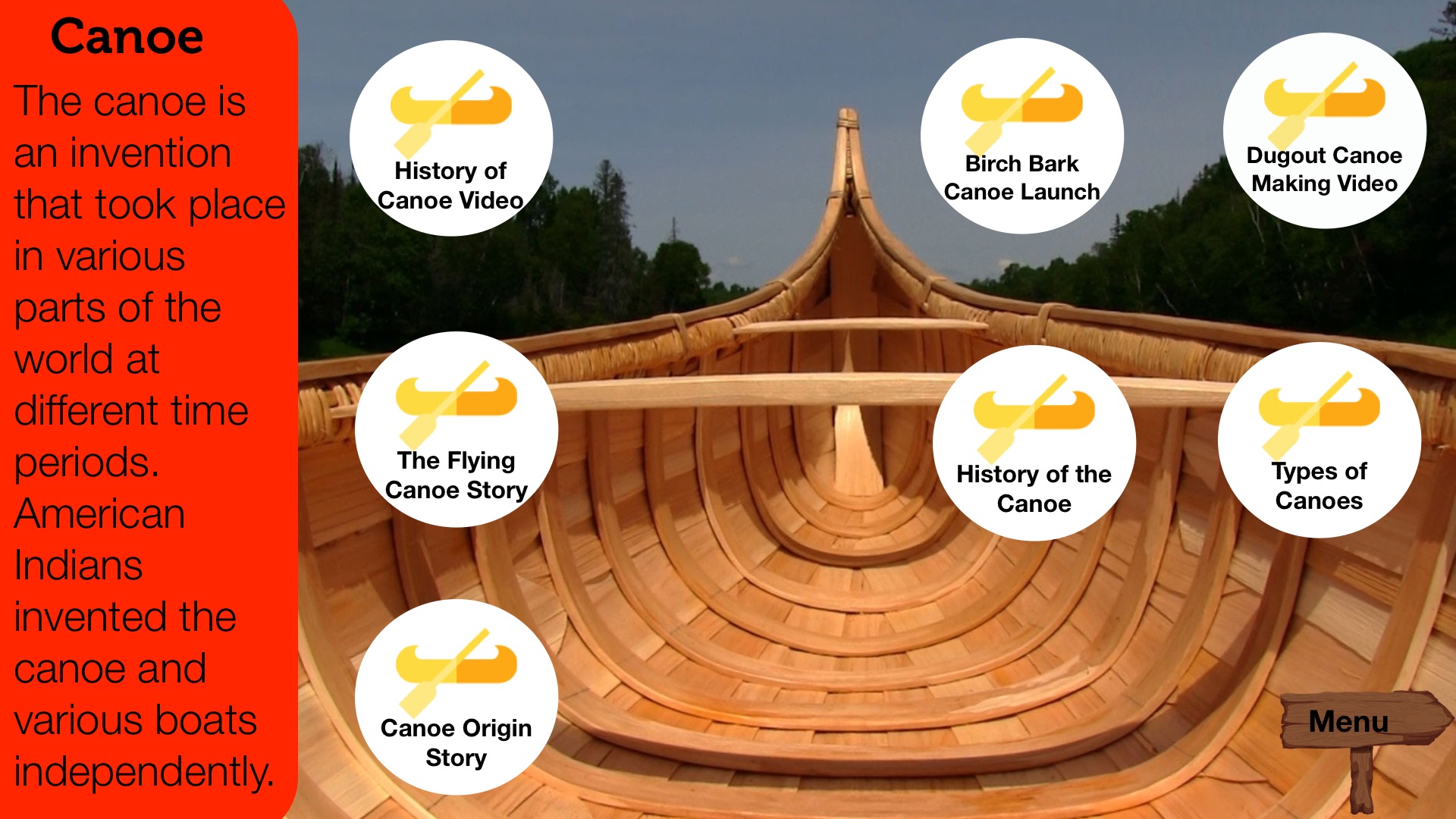
The canoe is an invention that took place in various parts of the world at different time periods. American Indians invented the canoe and various boats independently.
Birch Bark Canoe Launch
Dugout Canoe Making Video
History of Canoe Video
The Flying Canoe Story
History of the Canoe
Types of Canoes
Menu
Canoe Origin Story
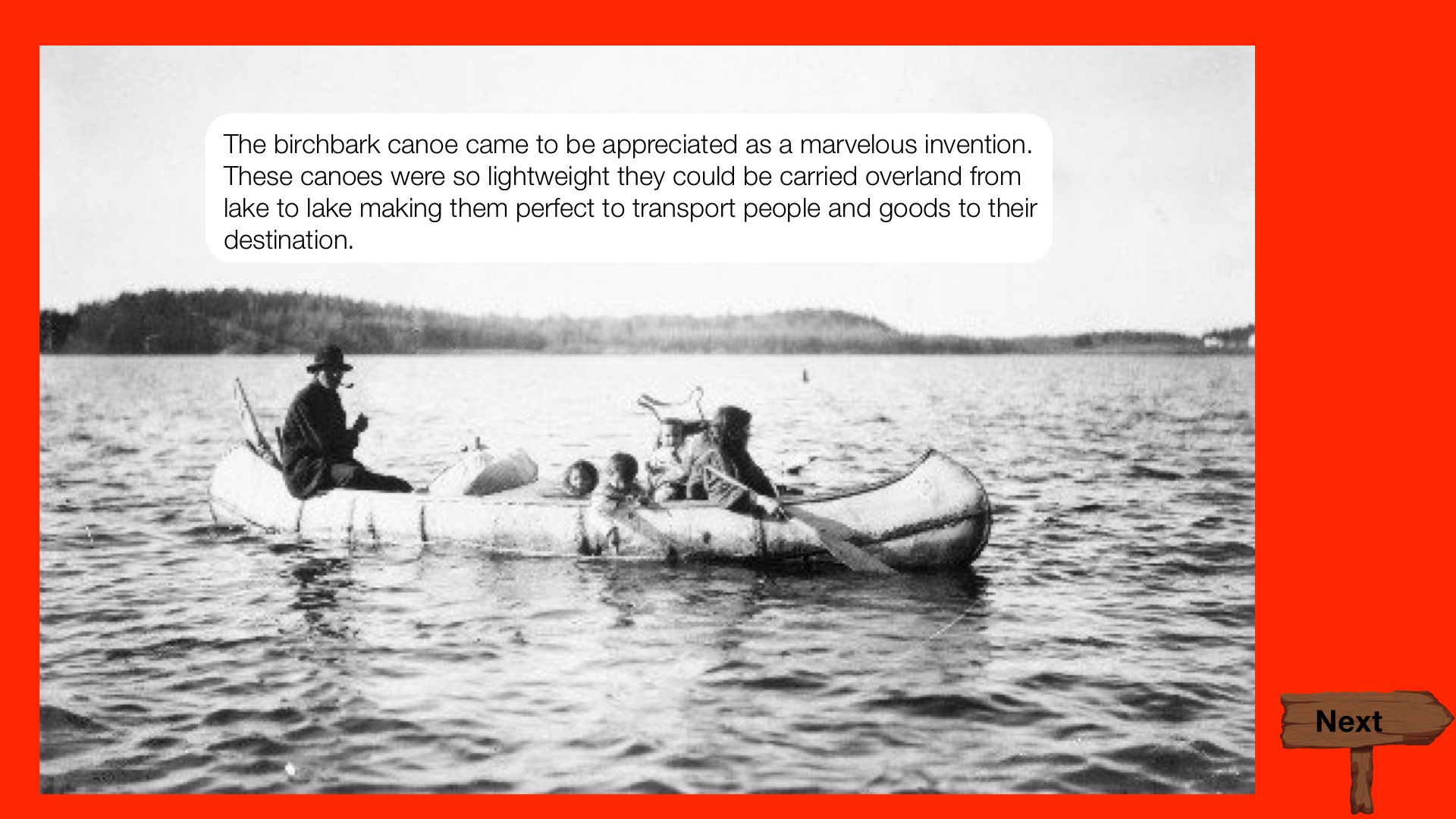
The birchbark canoe came to be appreciated as a marvelous invention. These canoes were so lightweight they could be carried overland from lake to lake making them perfect to transport people and goods to their destination.
Next
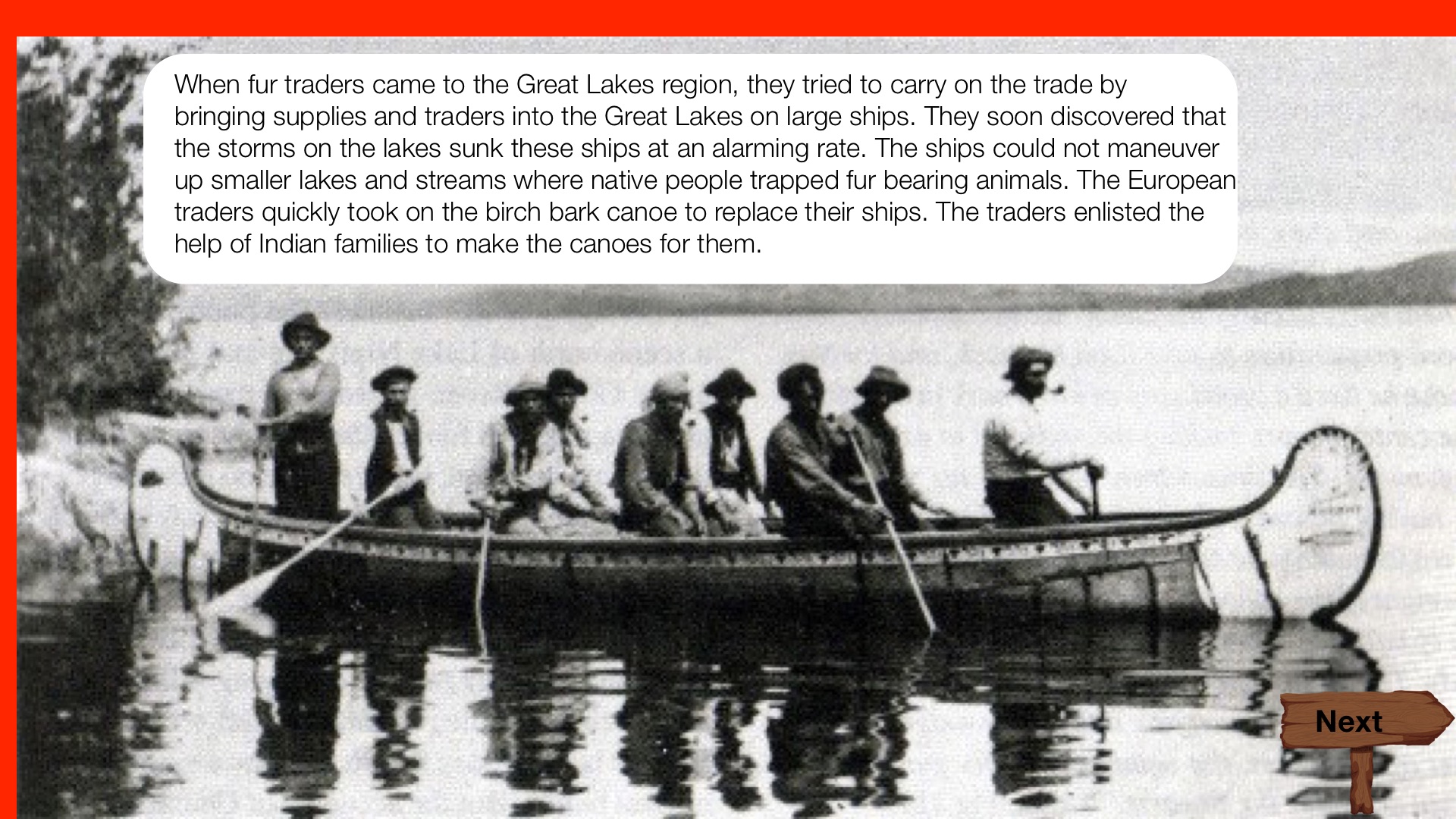
When fur traders came to the Great Lakes region, they tried to carry on the trade by bringing supplies and traders into the Great Lakes on large ships. They soon discovered that the storms on the lakes sunk these ships at an alarming rate. The ships could not maneuver up smaller lakes and streams where native people trapped fur bearing animals. The European traders quickly took on the birch bark canoe to replace their ships. The traders enlisted the help of Indian families to make the canoes for them.
Next
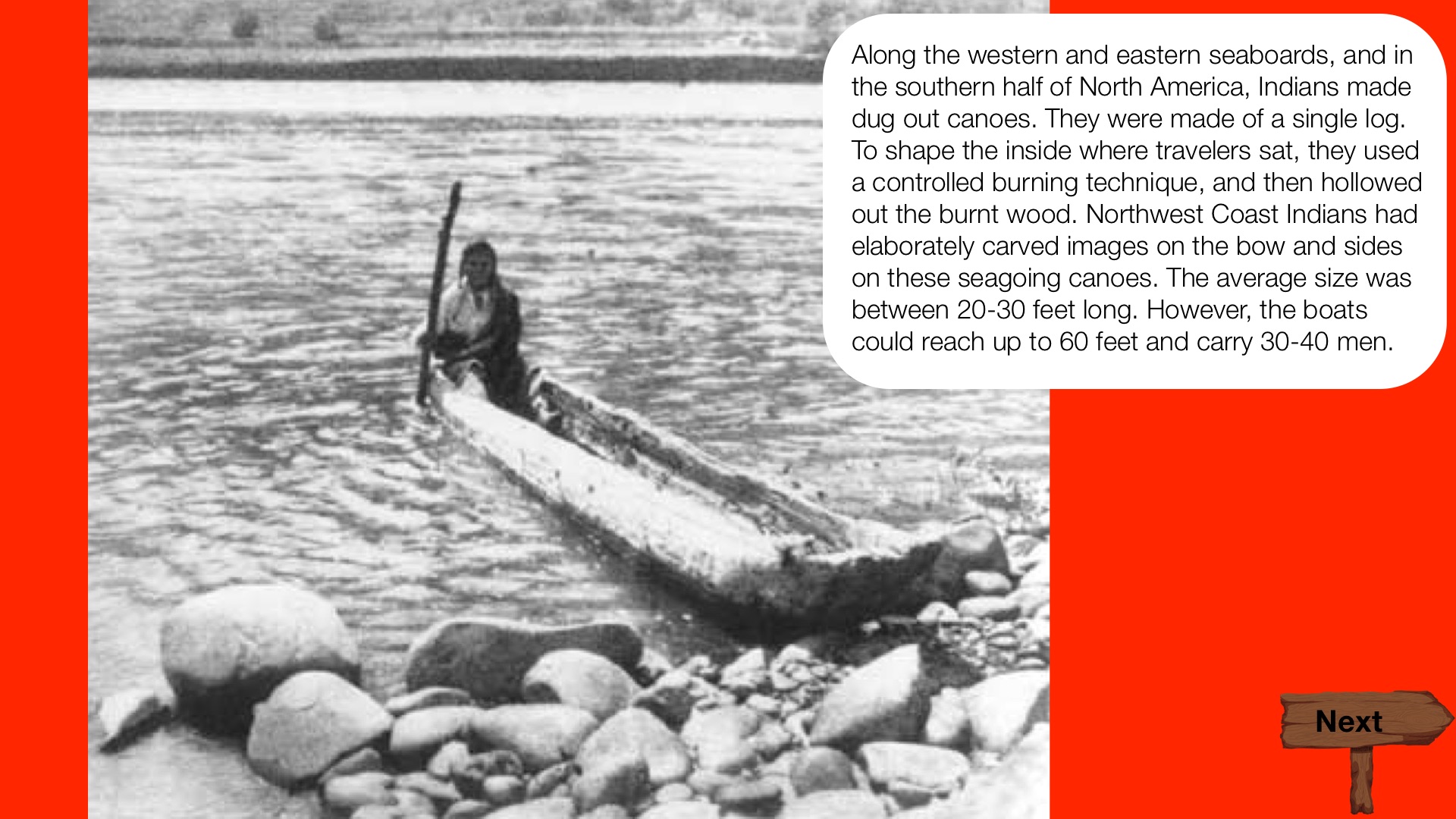
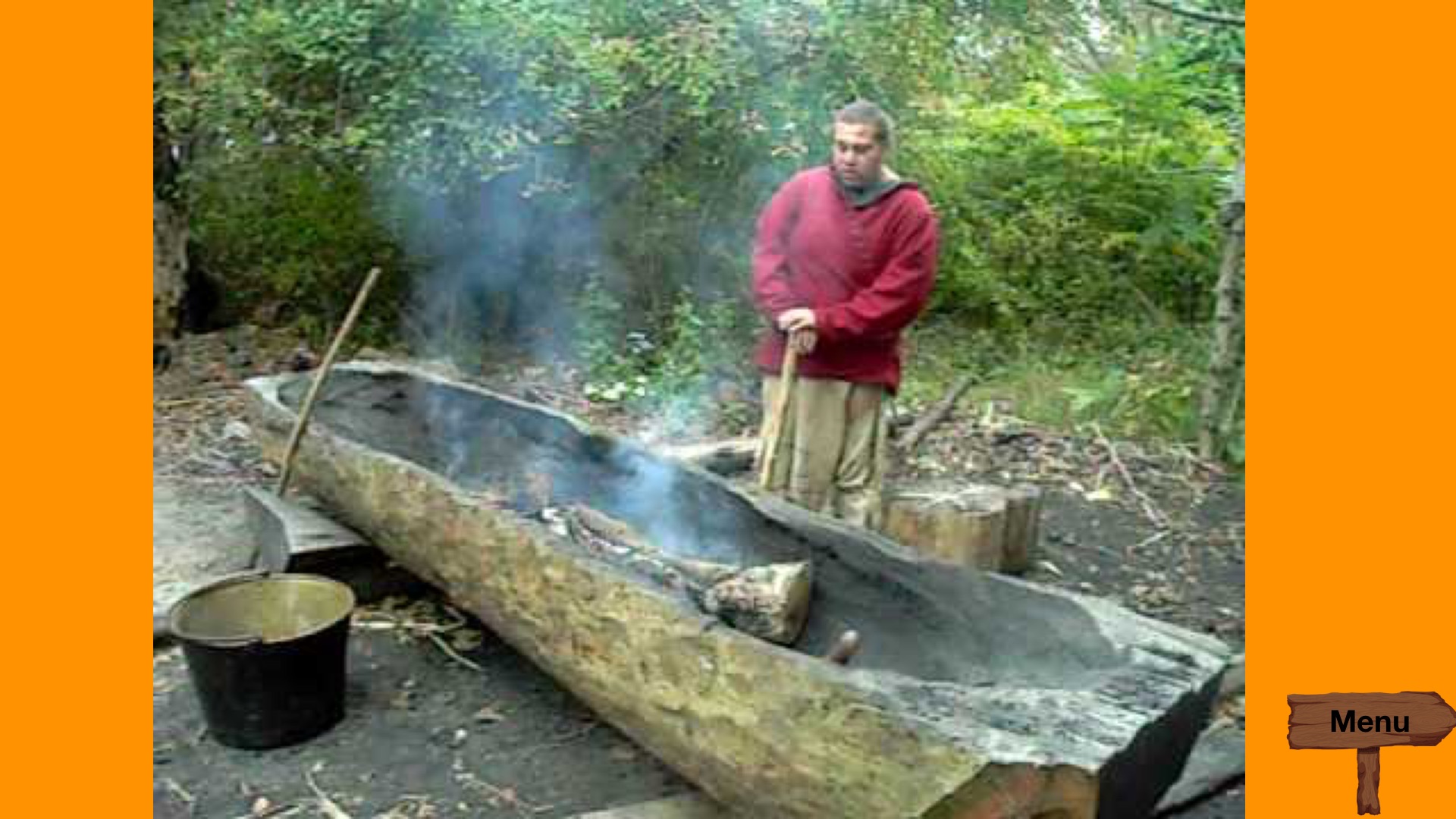
Along the western and eastern seaboards, and in the southern half of North America, Indians made dug out canoes. They were made of a single log. To shape the inside where travelers sat, they used a controlled burning technique, and then hollowed out the burnt wood. Northwest Coast Indians had elaborately carved images on the bow and sides on these seagoing canoes. The average size was between 20-30 feet long. However, the boats could reach up to 60 feet and carry 30-40 men.
Next
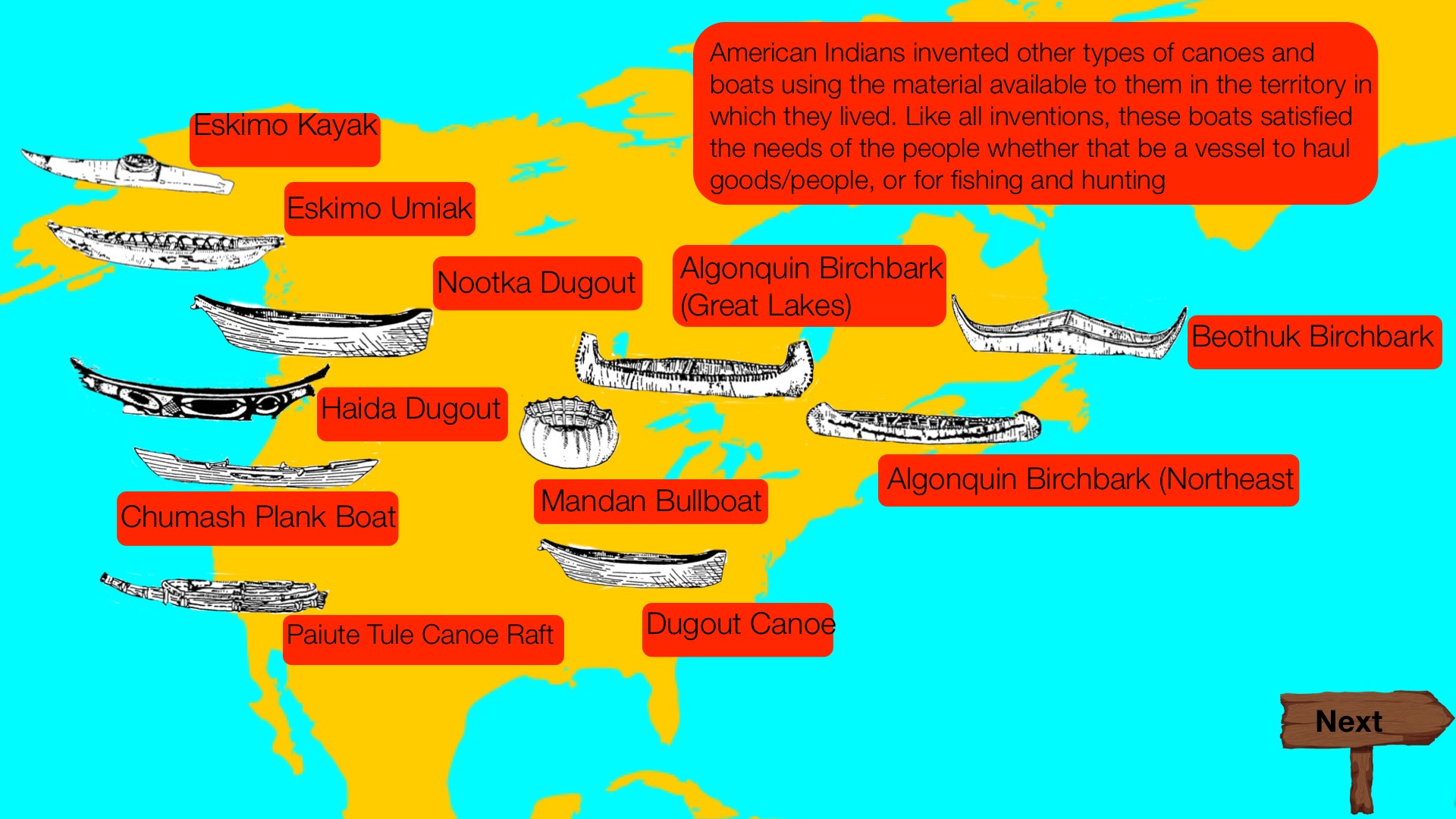
American Indians invented other types of canoes and boats using the material available to them in the territory in which they lived. Like all inventions, these boats satisfied the needs of the people whether that be a vessel to haul goods/people, or for fishing and hunting
Eskimo Kayak
Eskimo Umiak
Algonquin Birchbark (Great Lakes)
Nootka Dugout
Beothuk Birchbark
Haida Dugout
Algonquin Birchbark (Northeast
Mandan Bullboat
Chumash Plank Boat
Dugout Canoe
Paiute Tule Canoe Raft
Next
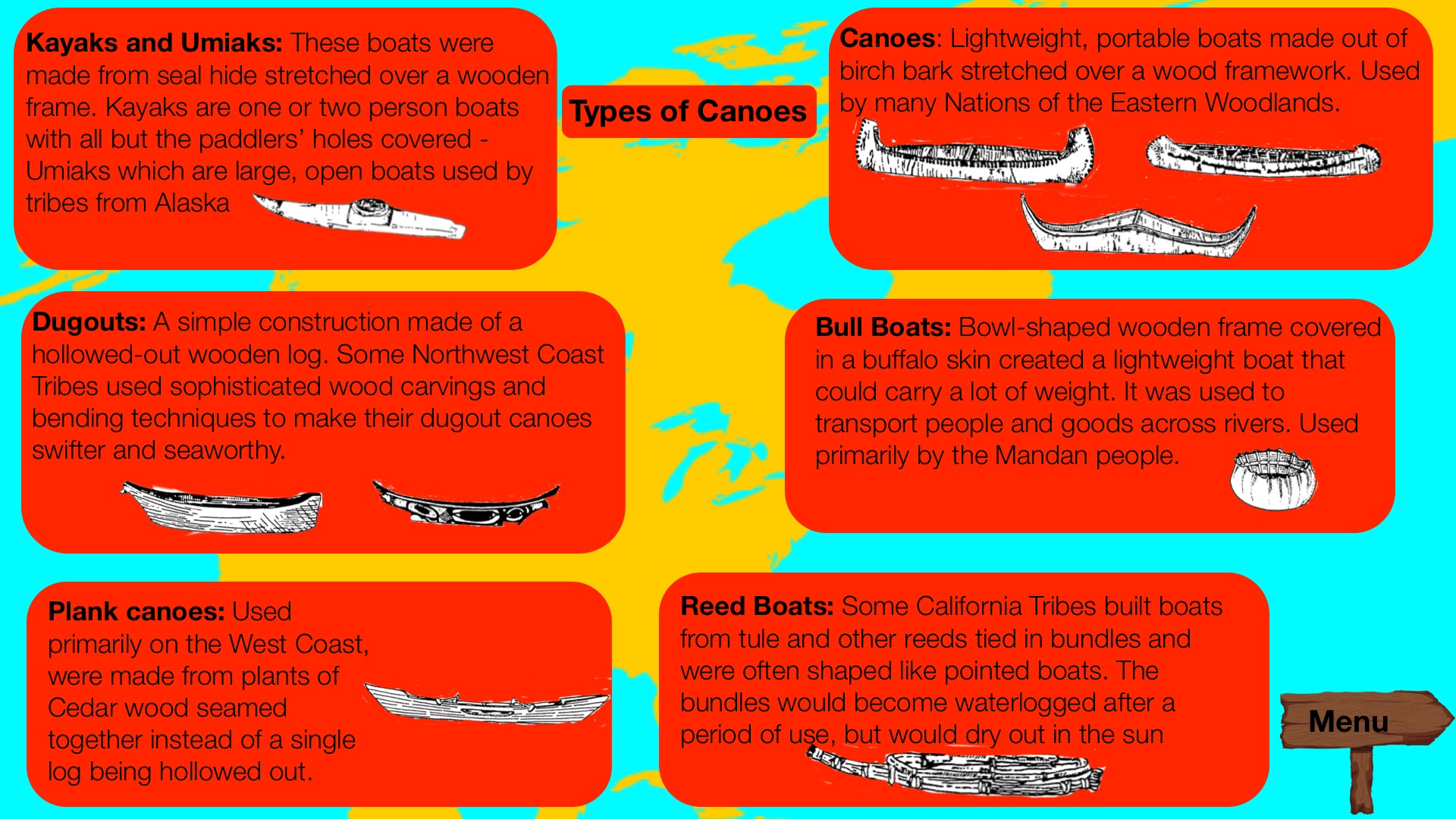
Kayaks and Umiaks: These boats were made from seal hide stretched over a wooden frame. Kayaks are one or two person boats with all but the paddlers’ holes covered - Umiaks which are large, open boats used by tribes from Alaska
Canoes: Lightweight, portable boats made out of birch bark stretched over a wood framework. Used by many Nations of the Eastern Woodlands.
Types of Canoes
Dugouts: A simple construction made of a hollowed-out wooden log. Some Northwest Coast Tribes used sophisticated wood carvings and bending techniques to make their dugout canoes swifter and seaworthy.
Bull Boats: Bowl-shaped wooden frame covered in a buffalo skin created a lightweight boat that could carry a lot of weight. It was used to transport people and goods across rivers. Used primarily by the Mandan people.
Plank canoes: Used primarily on the West Coast, were made from plants of Cedar wood seamed together instead of a single log being hollowed out.
Reed Boats: Some California Tribes built boats from tule and other reeds tied in bundles and were often shaped like pointed boats. The bundles would become waterlogged after a period of use, but would dry out in the sun
Menu
Tobaggon
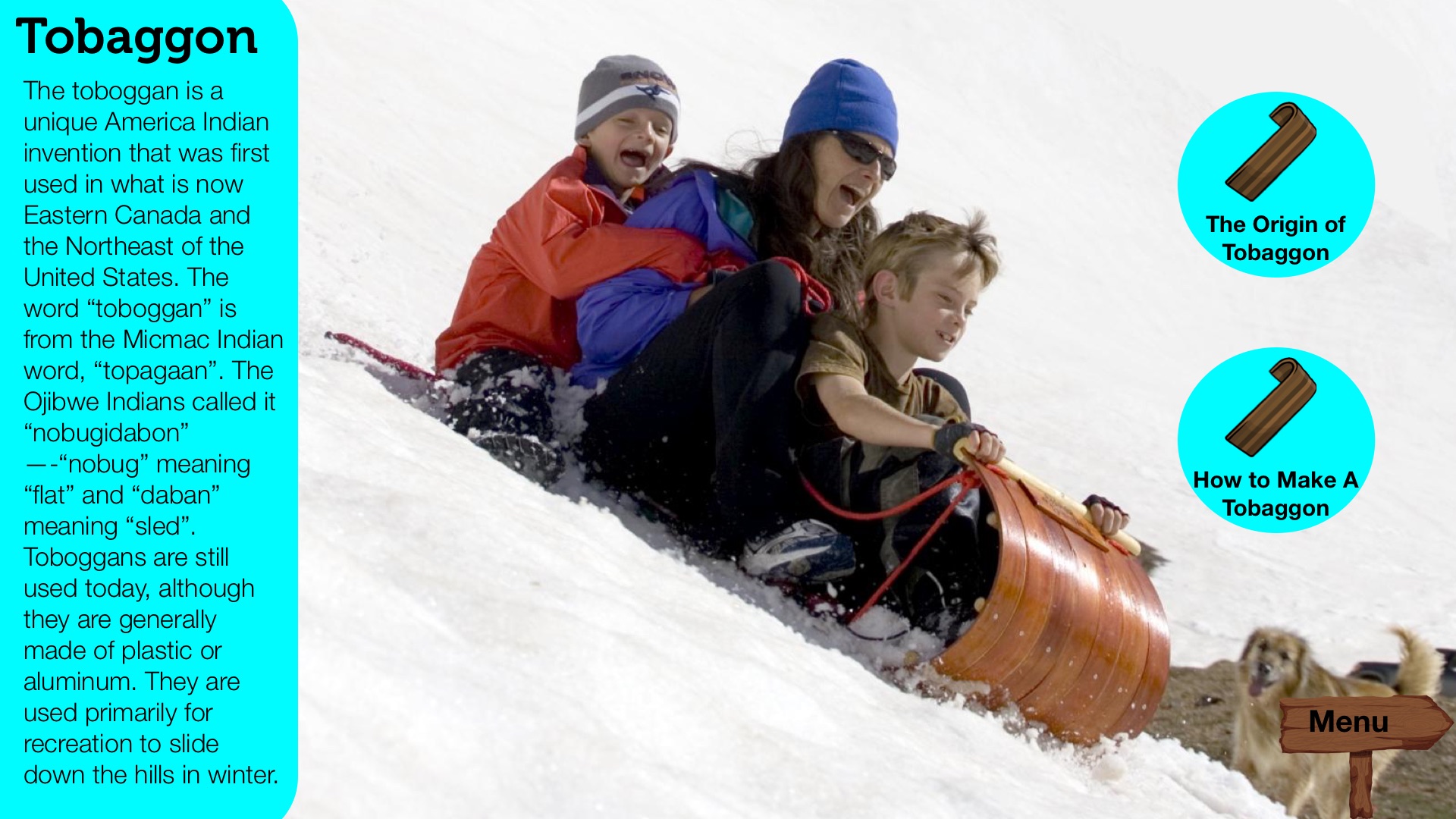
The toboggan is a unique America Indian invention that was first used in what is now Eastern Canada and the Northeast of the United States. The word “toboggan” is from the Micmac Indian word, “topagaan”. The Ojibwe Indians called it “nobugidabon” —-“nobug” meaning “flat” and “daban” meaning “sled”. Toboggans are still used today, although they are generally made of plastic or aluminum. They are used primarily for recreation to slide down the hills in winter.
The Origin of Tobaggon
How to Make A Tobaggon
Menu
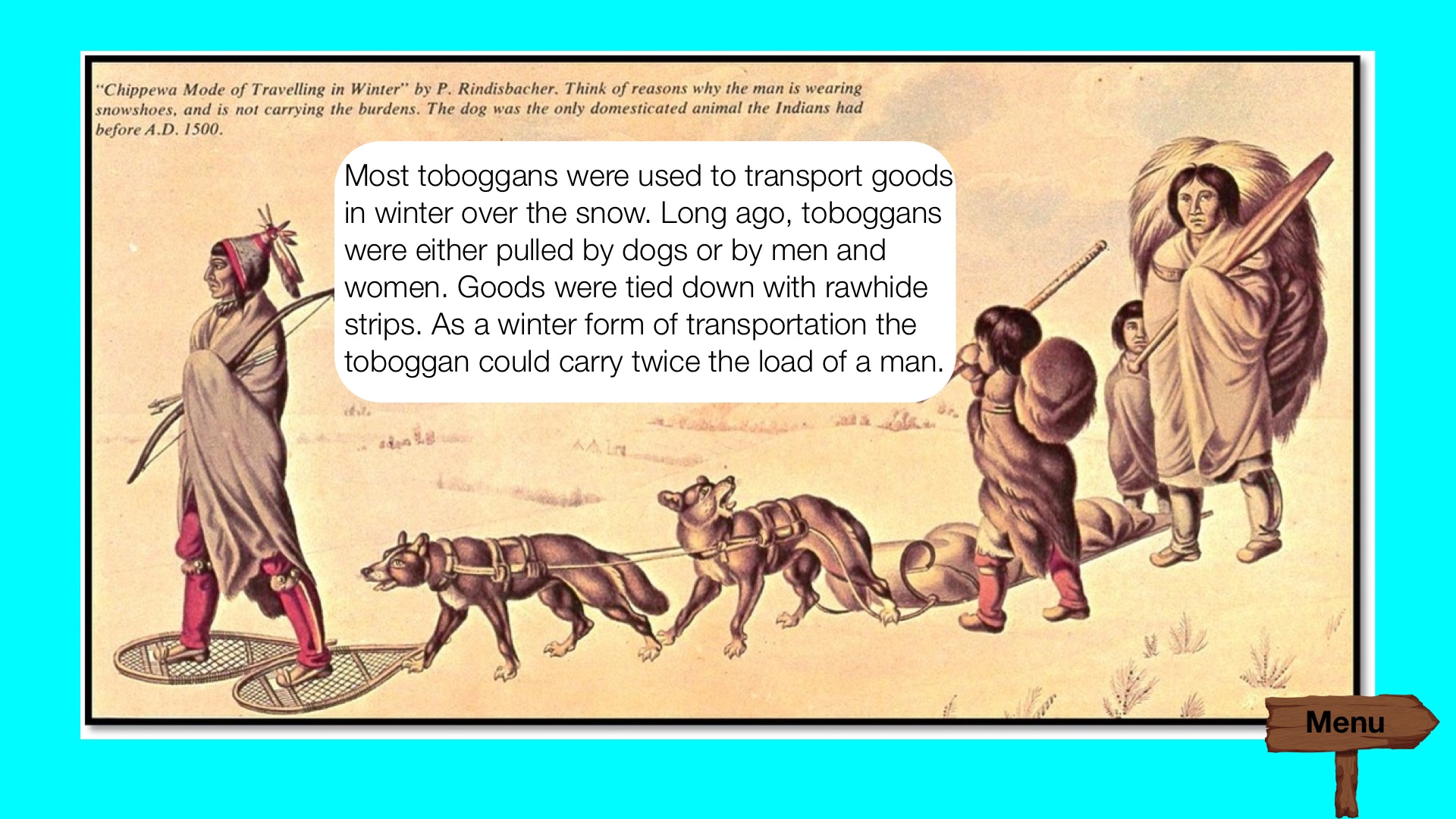
Most toboggans were used to transport goods in winter over the snow. Long ago, toboggans were either pulled by dogs or by men and women. Goods were tied down with rawhide strips. As a winter form of transportation the toboggan could carry twice the load of a man.
Menu
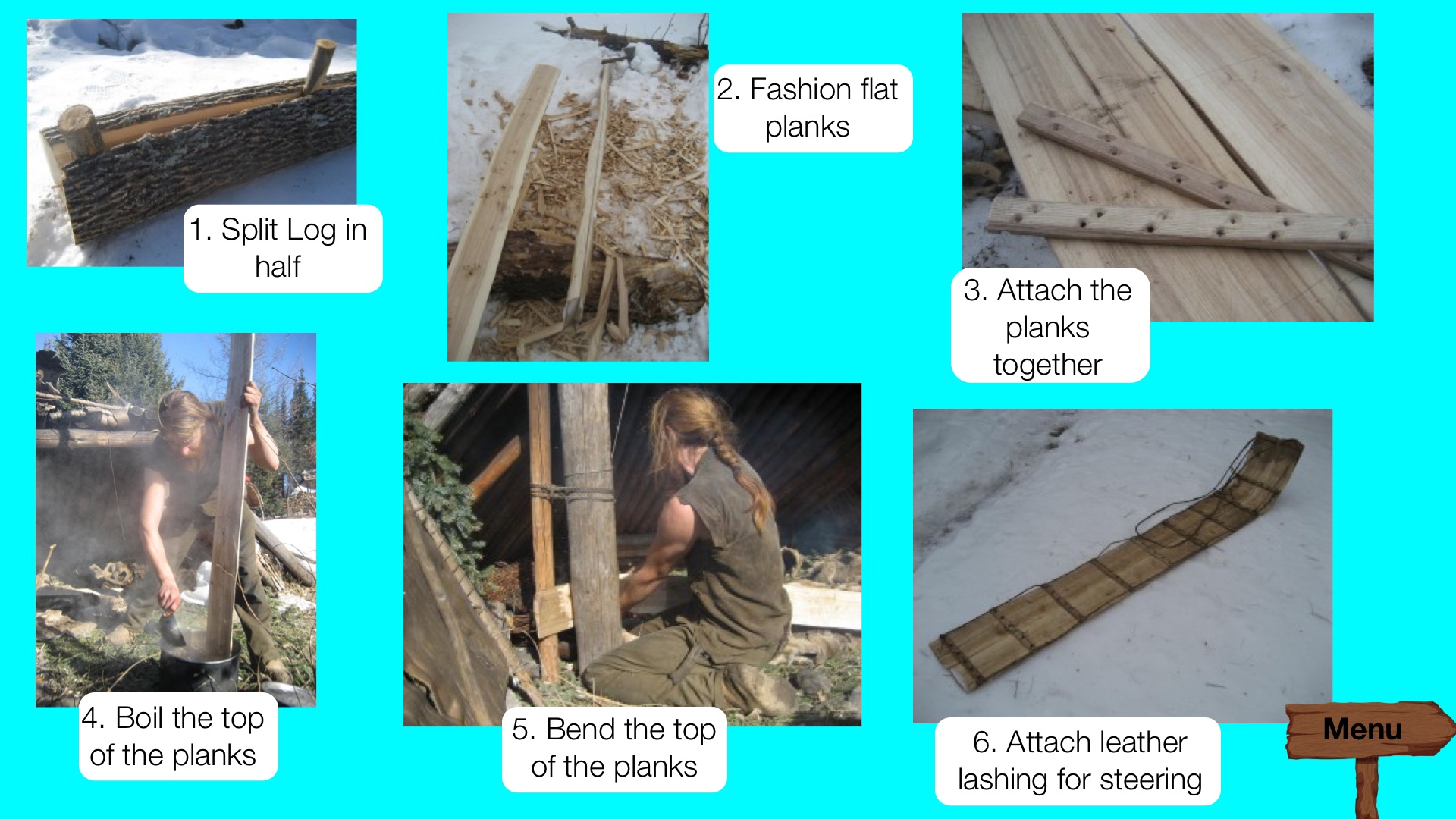
2. Fashion flat planks
1. Split Log in half
3. Attach the planks together
4. Boil the top of the planks
5. Bend the top of the planks
Menu
6. Attach leather lashing for steering
Agricultural Engineering
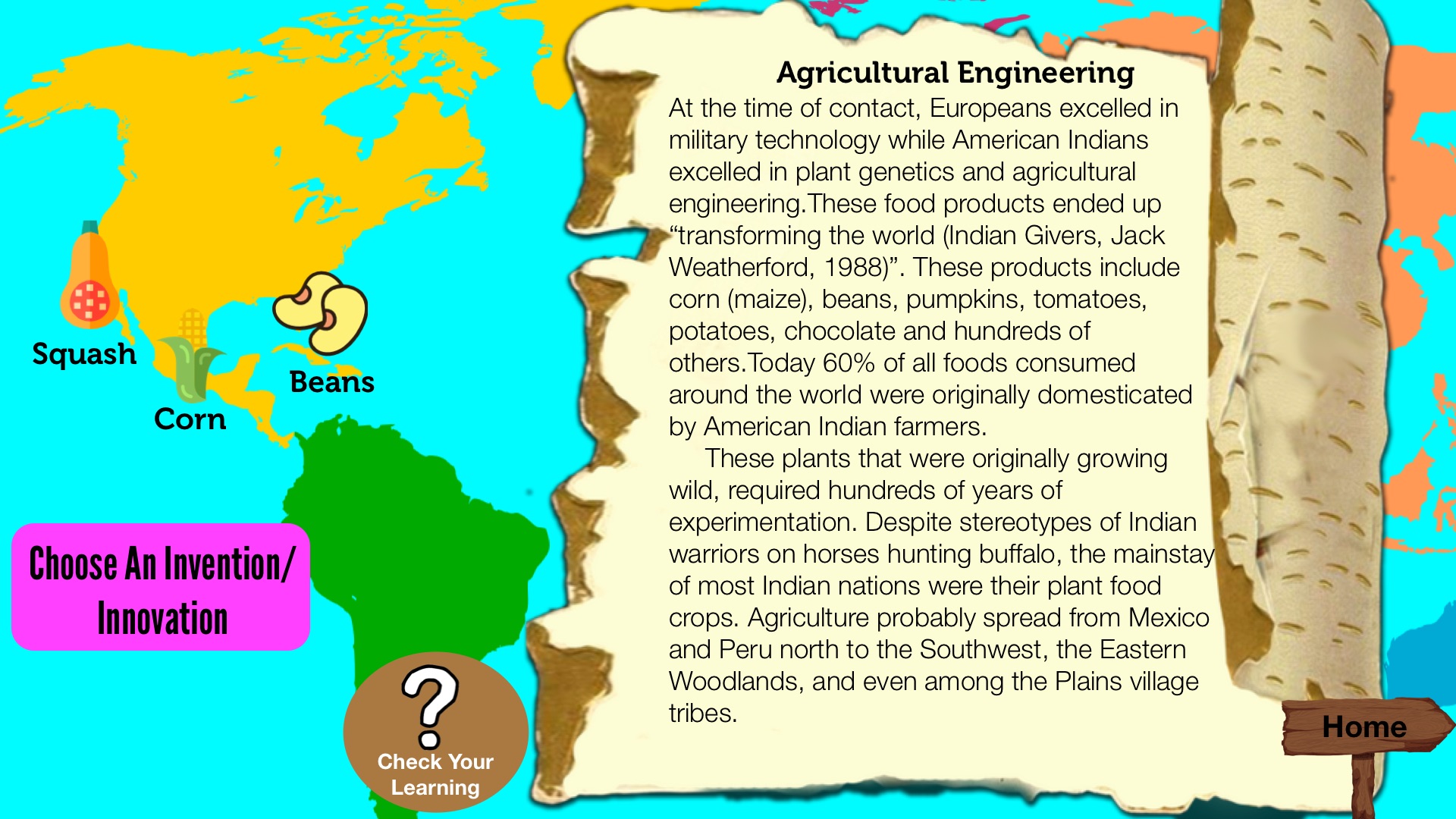
At the time of contact, Europeans excelled in military technology while American Indians excelled in plant genetics and agricultural engineering.These food products ended up “transforming the world (Indian Givers, Jack Weatherford, 1988)”. These products include corn (maize), beans, pumpkins, tomatoes, potatoes, chocolate and hundreds of others.Today 60% of all foods consumed around the world were originally domesticated by American Indian farmers. These plants that were originally growing wild, required hundreds of years of experimentation. Despite stereotypes of Indian warriors on horses hunting buffalo, the mainstay of most Indian nations were their plant food crops. Agriculture probably spread from Mexico and Peru north to the Southwest, the Eastern Woodlands, and even among the Plains village tribes.
Squash
Beans
Corn
Choose An Invention/Innovation
Home
Check Your Learning
Beans
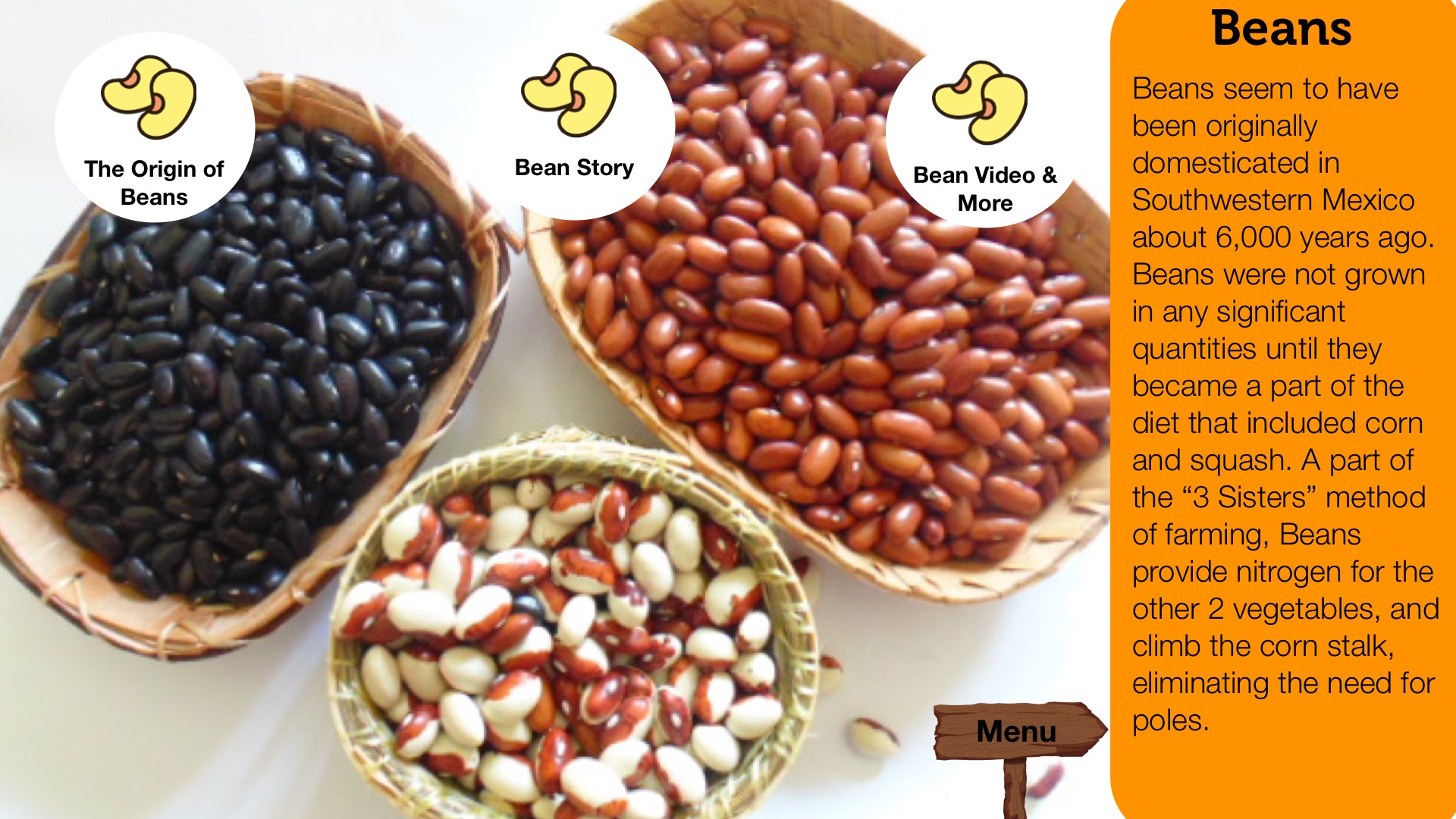
Beans seem to have been originally domesticated in Southwestern Mexico about 6,000 years ago. Beans were not grown in any significant quantities until they became a part of the diet that included corn and squash. A part of the “3 Sisters” method of farming, Beans provide nitrogen for the other 2 vegetables, and climb the corn stalk, eliminating the need for poles.
The Origin of Beans
Bean Story
Bean Video & More
Menu
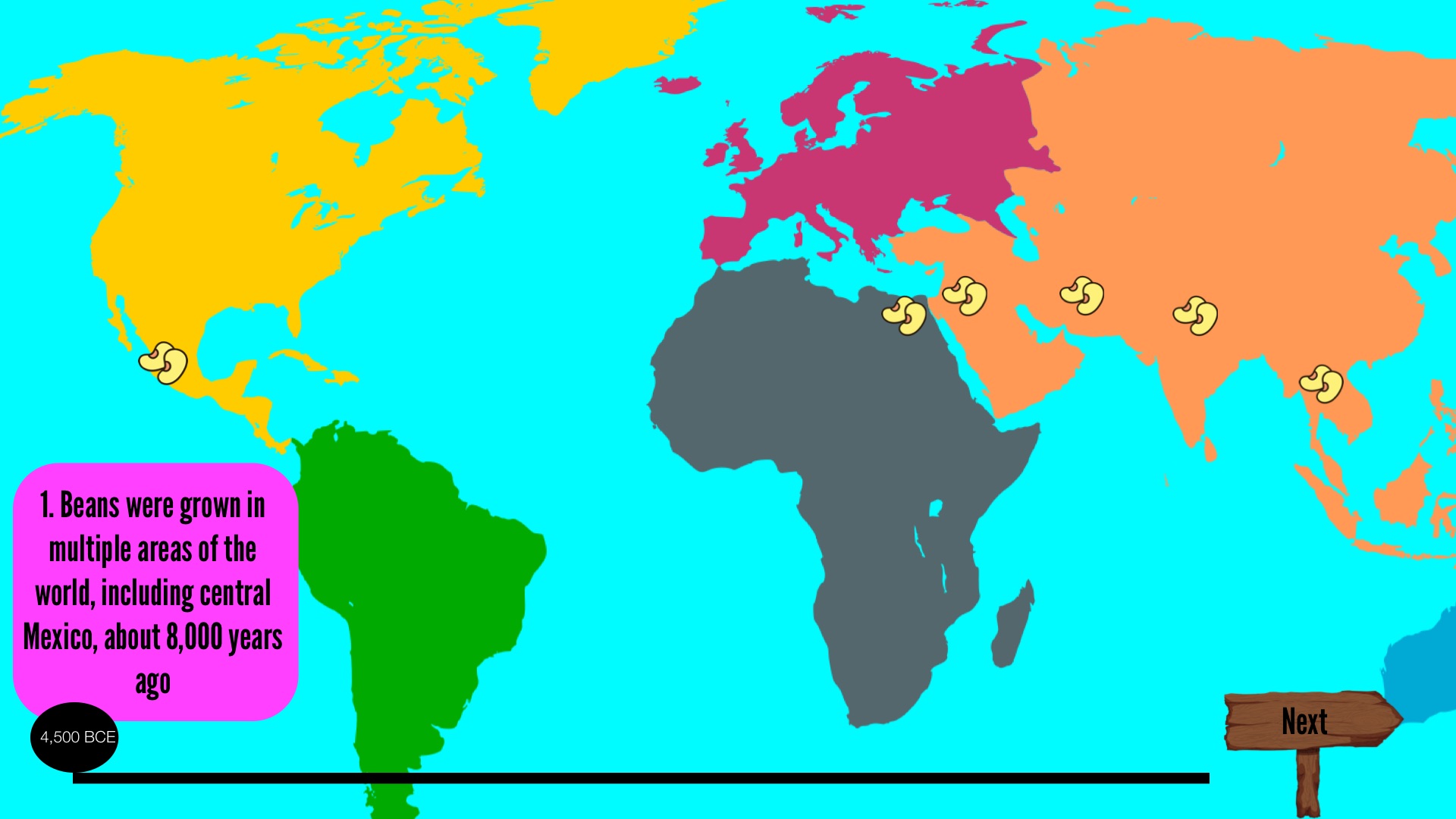
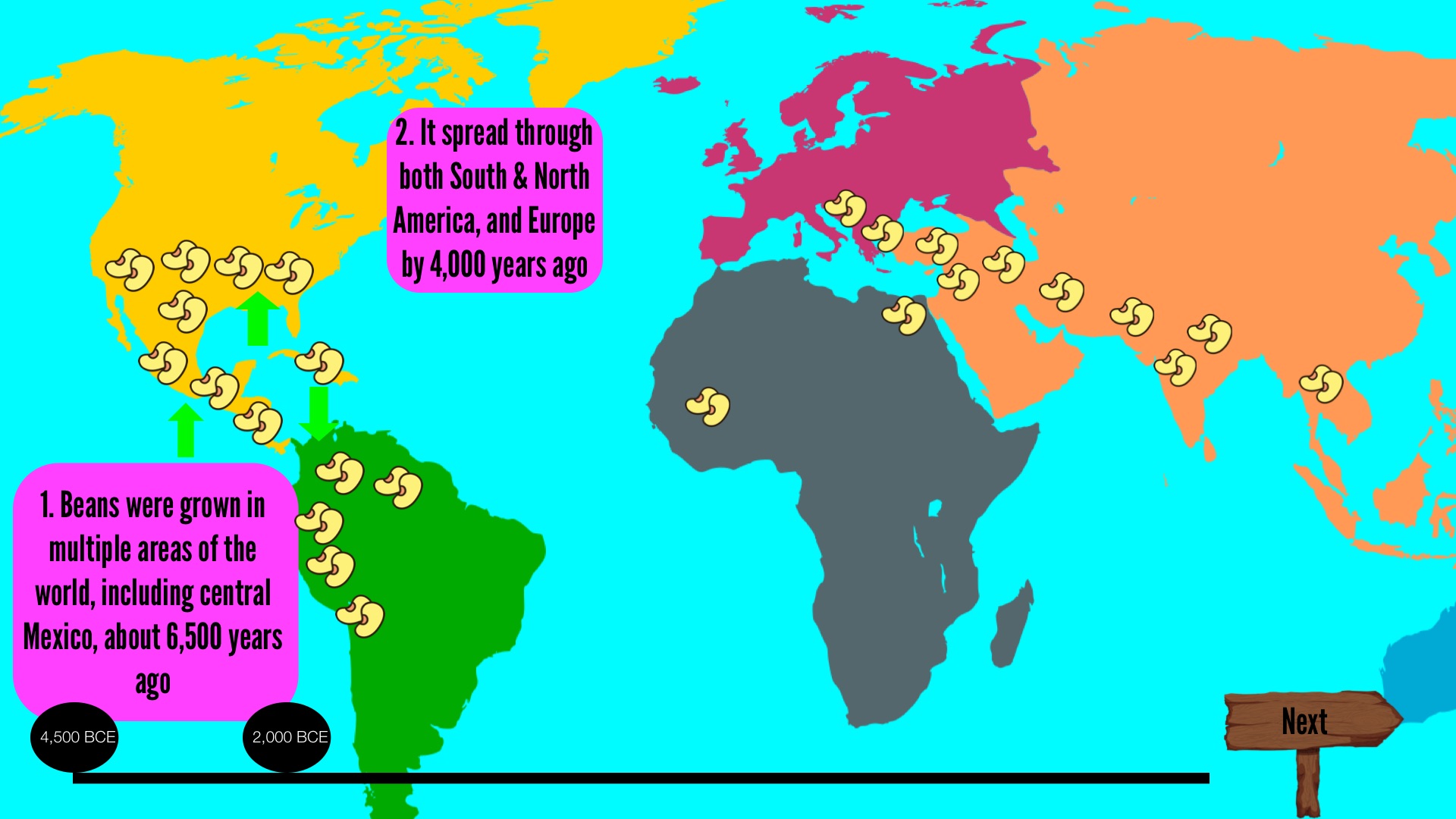
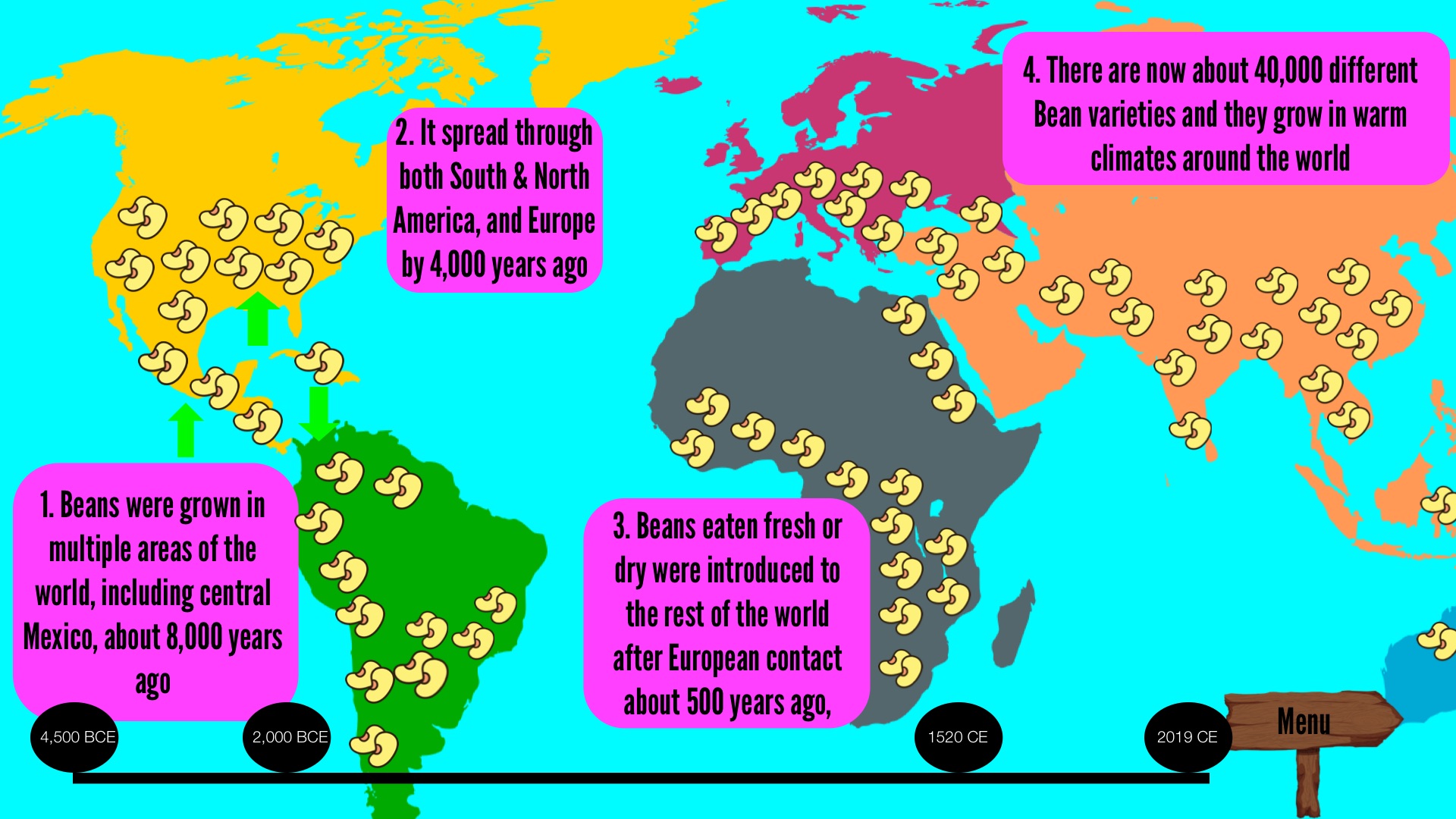
1. Beans were grown in multiple areas of the world, including central Mexico, about 8,000 years ago
Next
4,500 BCE
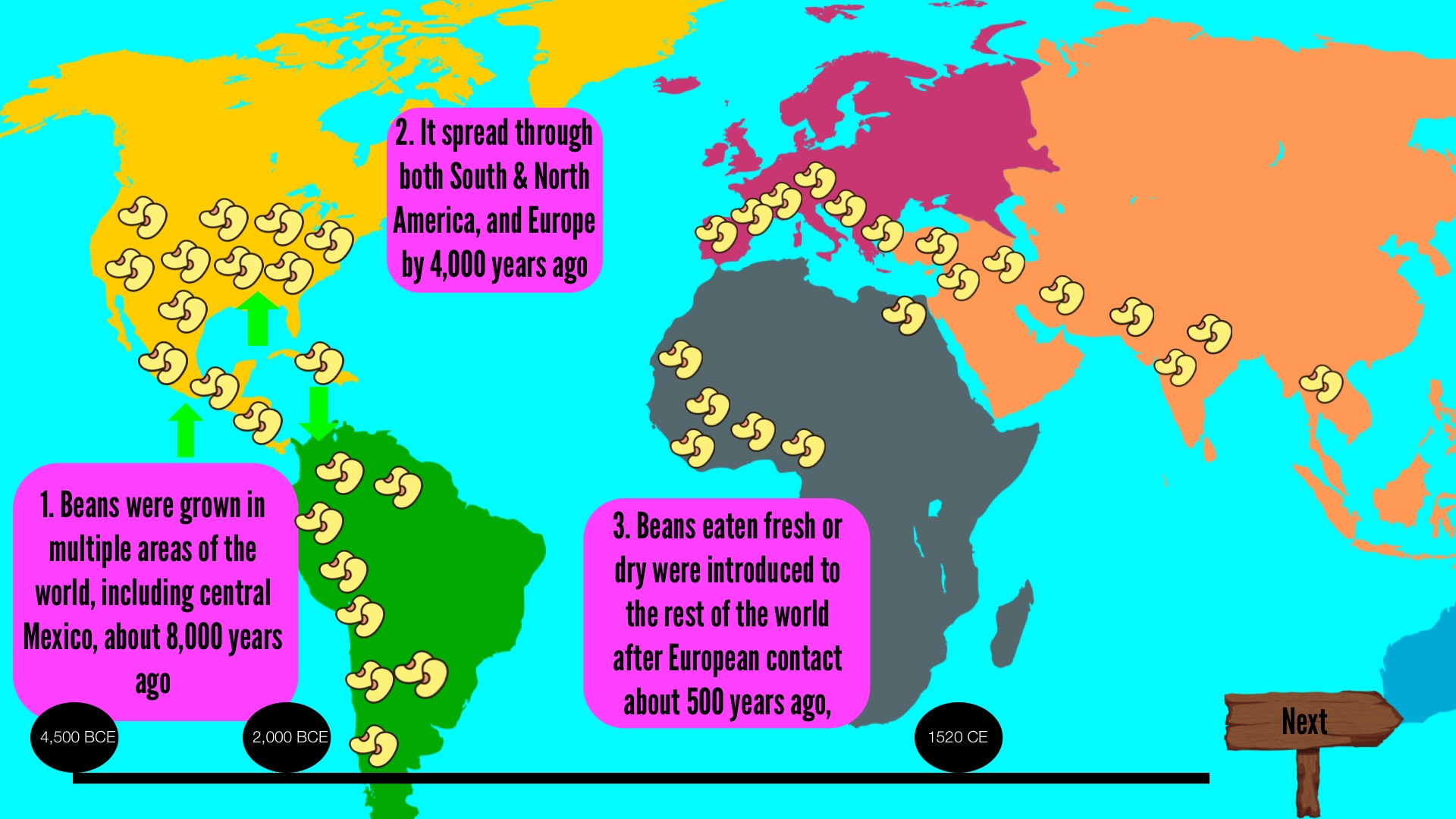
2. It spread through both South & North America, and Europe by 4,000 years ago
1. Beans were grown in multiple areas of the world, including central Mexico, about 6,500 years ago
Next
4,500 BCE
2,000 BCE
2. It spread through both South & North America, and Europe by 4,000 years ago
1. Beans were grown in multiple areas of the world, including central Mexico, about 8,000 years ago
3. Beans eaten fresh or dry were introduced to the rest of the world after European contact about 500 years ago,
Next
4,500 BCE
2,000 BCE
1520 CE
4. There are now about 40,000 different Bean varieties and they grow in warm climates around the world
2. It spread through both South & North America, and Europe by 4,000 years ago
1. Beans were grown in multiple areas of the world, including central Mexico, about 8,000 years ago
3. Beans eaten fresh or dry were introduced to the rest of the world after European contact about 500 years ago,
Menu
4,500 BCE
2,000 BCE
1520 CE
2019 CE
Squash
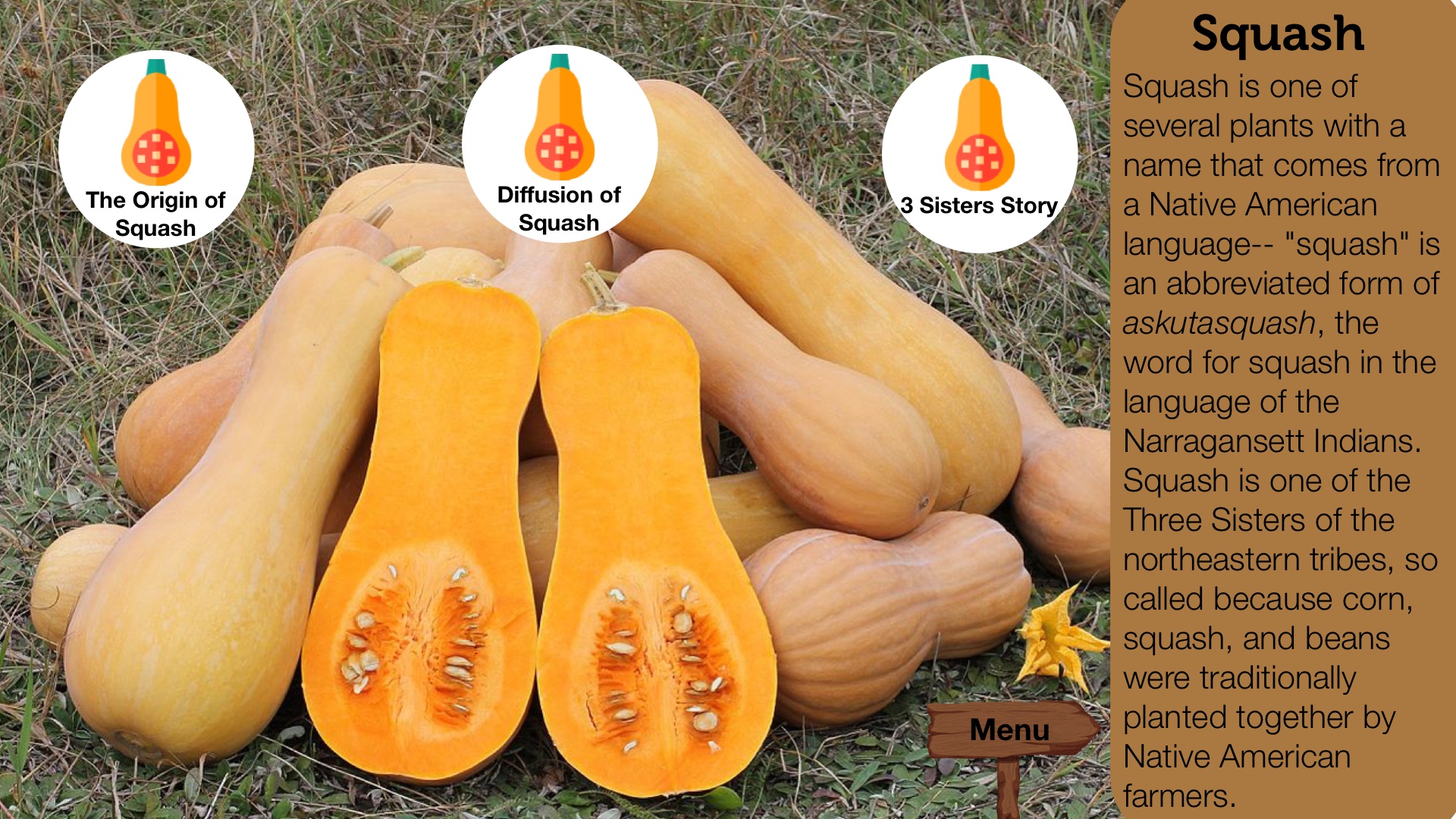
Squash is one of several plants with a name that comes from a Native American language-- "squash" is an abbreviated form of askutasquash, the word for squash in the language of the Narragansett Indians. Squash is one of the Three Sisters of the northeastern tribes, so called because corn, squash, and beans were traditionally planted together by Native American farmers.
The Origin of Squash
Diffusion of Squash
3 Sisters Story
Menu
History Of Squash
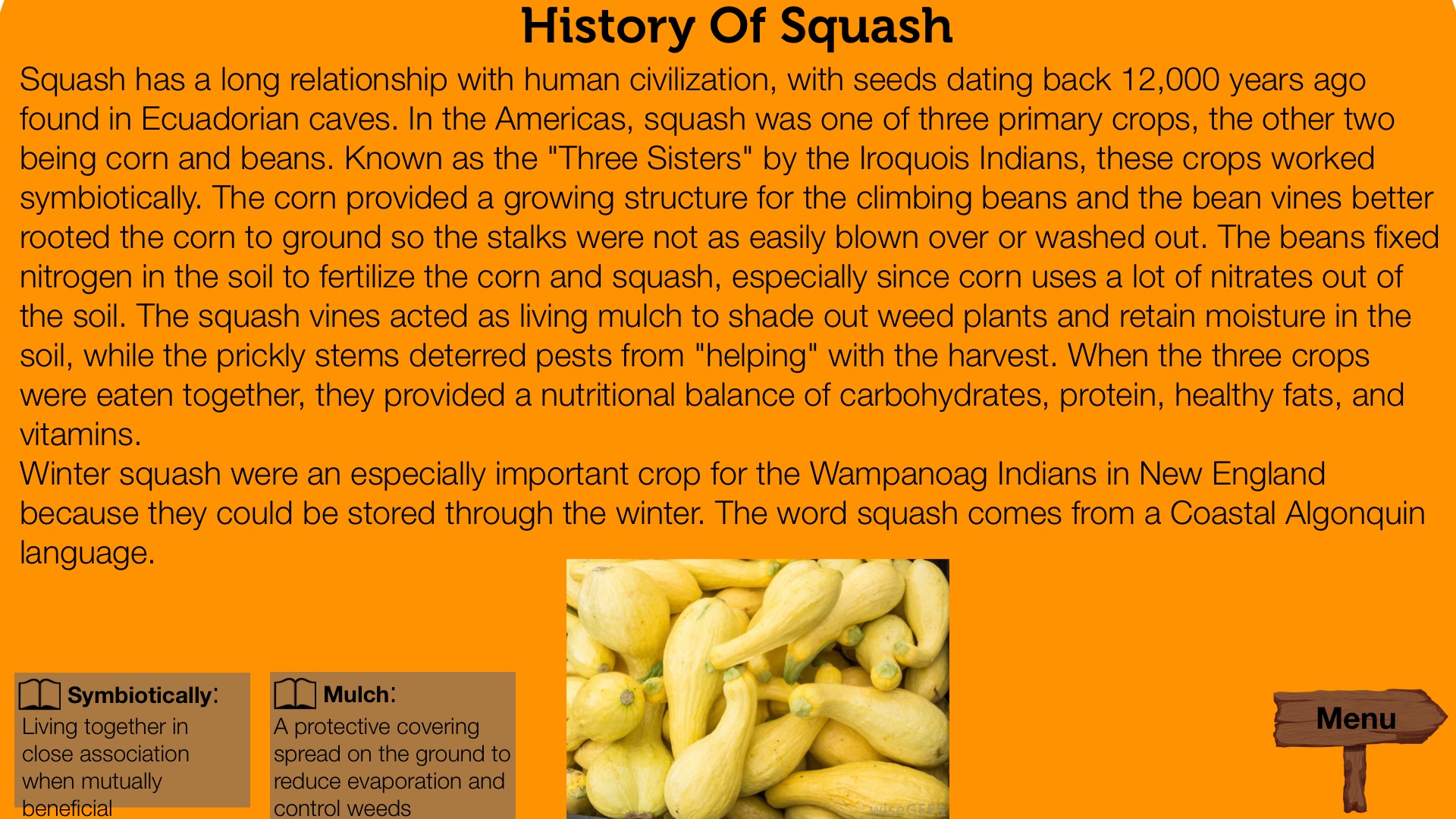
Squash has a long relationship with human civilization, with seeds dating back 12,000 years ago found in Ecuadorian caves. In the Americas, squash was one of three primary crops, the other two being corn and beans. Known as the "Three Sisters" by the Iroquois Indians, these crops worked symbiotically. The corn provided a growing structure for the climbing beans and the bean vines better rooted the corn to ground so the stalks were not as easily blown over or washed out. The beans fixed nitrogen in the soil to fertilize the corn and squash, especially since corn uses a lot of nitrates out of the soil. The squash vines acted as living mulch to shade out weed plants and retain moisture in the soil, while the prickly stems deterred pests from "helping" with the harvest. When the three crops were eaten together, they provided a nutritional balance of carbohydrates, protein, healthy fats, and vitamins. Winter squash were an especially important crop for the Wampanoag Indians in New England because they could be stored through the winter. The word squash comes from a Coastal Algonquin language.
Symbiotically:
Mulch:
Menu
Living together in close association when mutually beneficial
A protective covering spread on the ground to reduce evaporation and control weeds
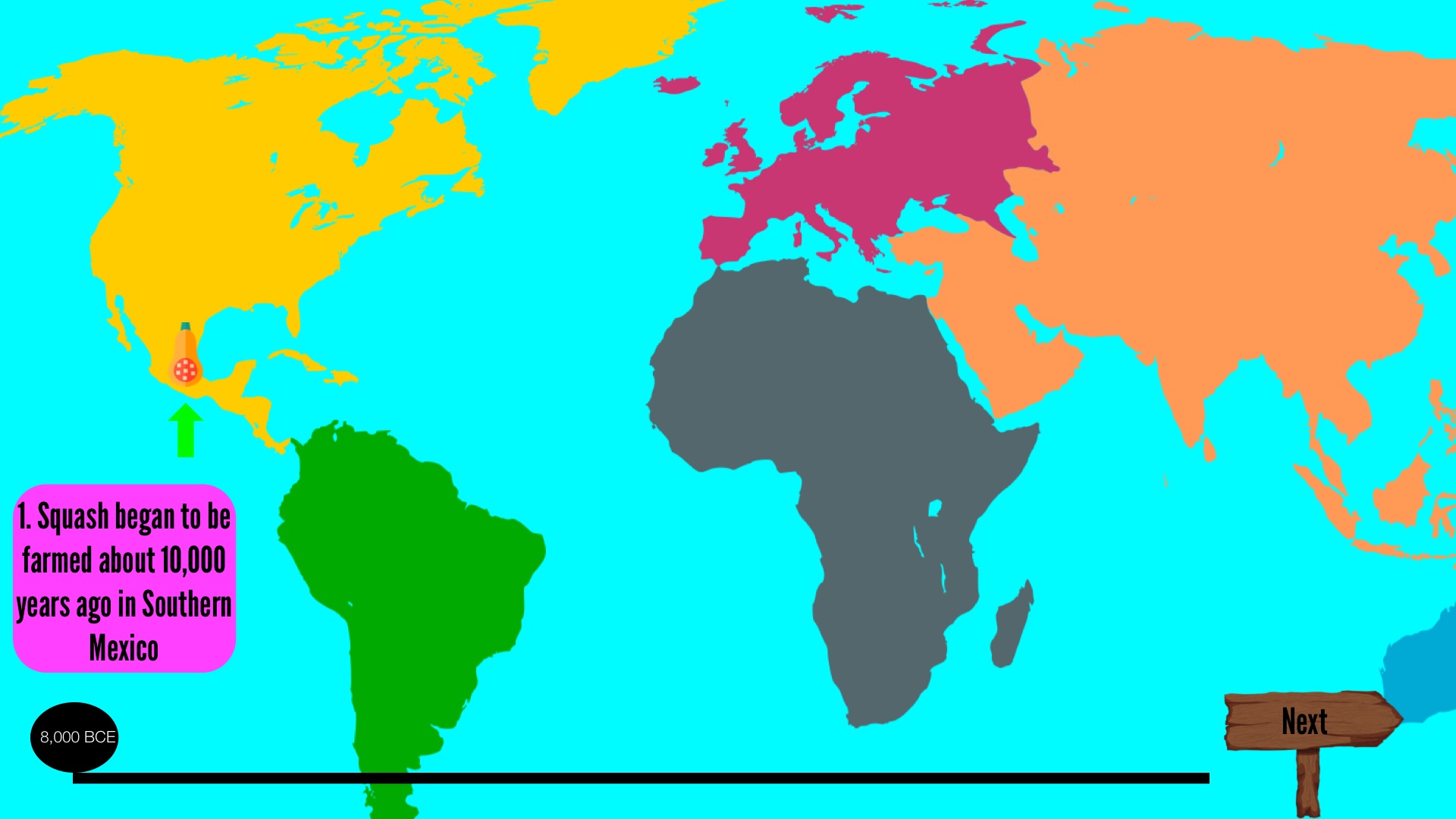
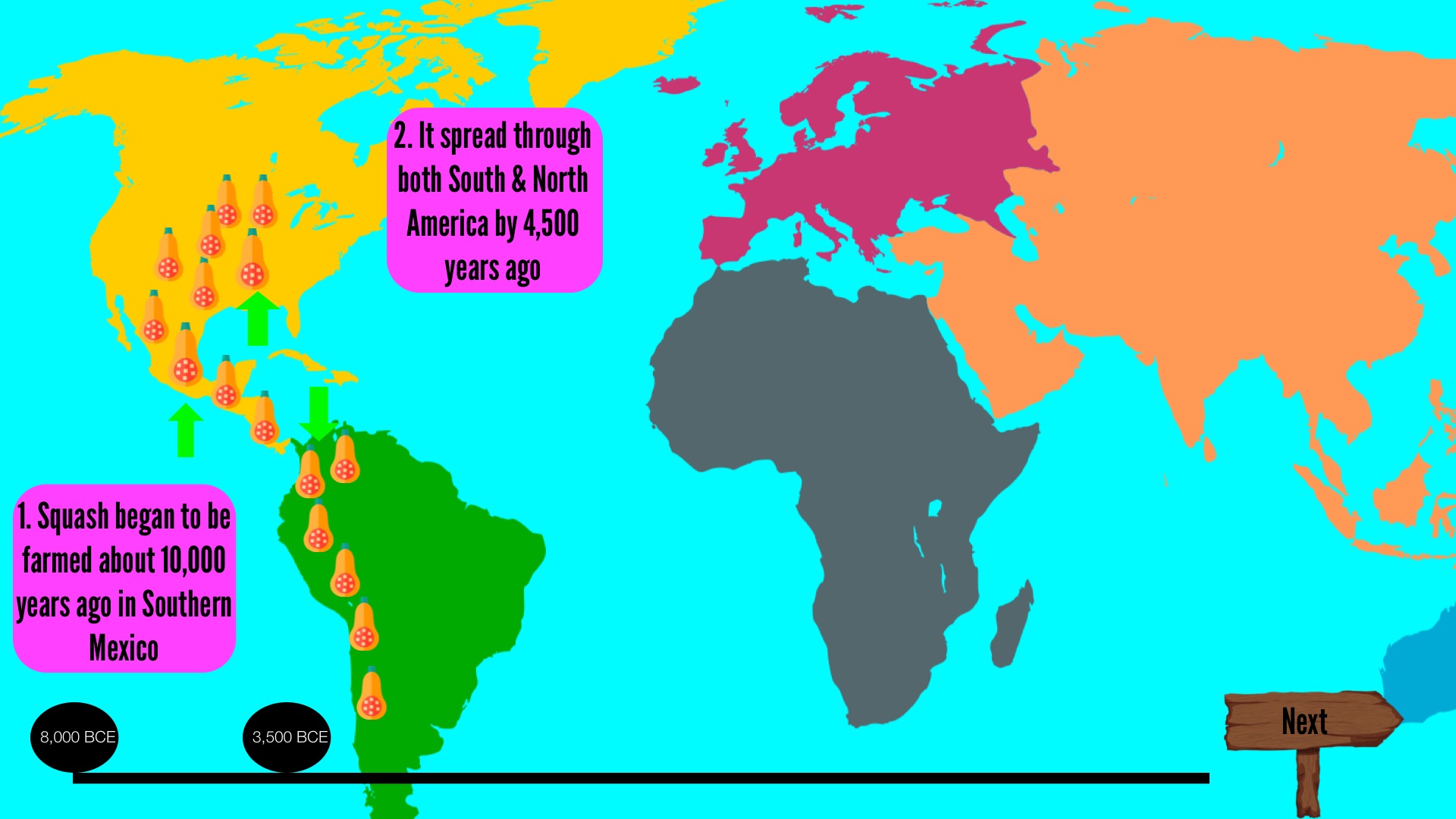
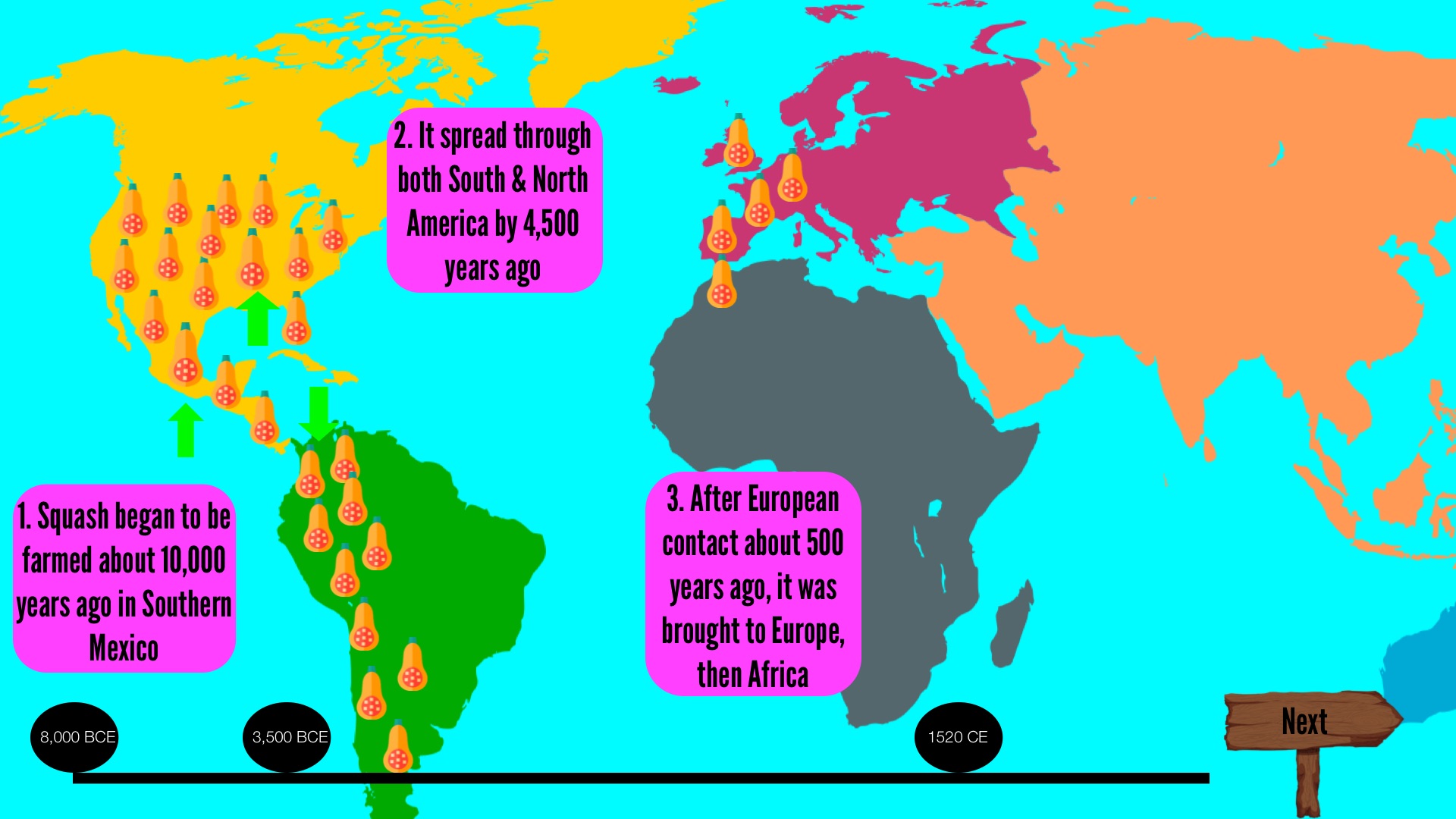
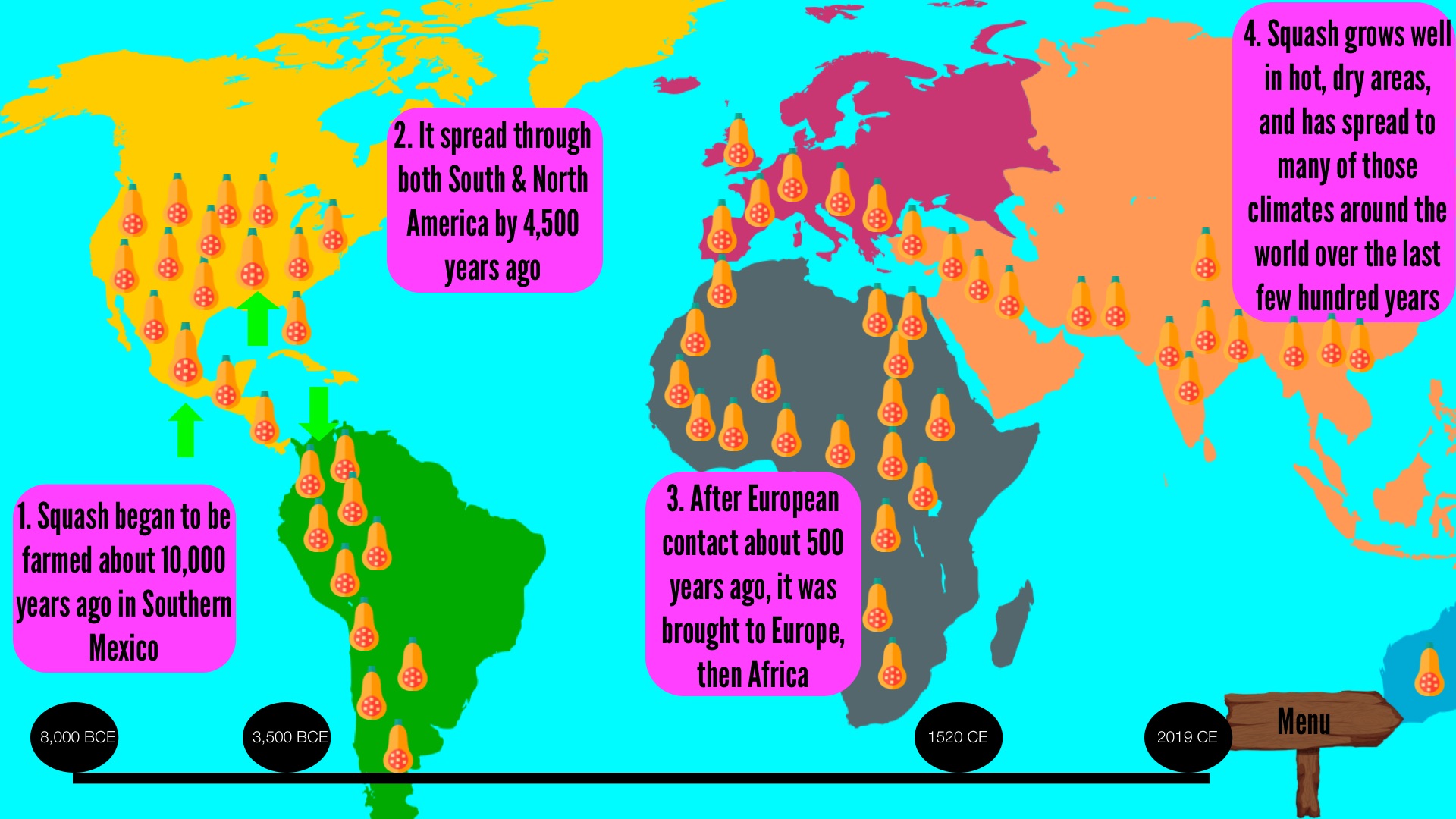
1. Squash began to be farmed about 10,000 years ago in Southern Mexico
Next
8,000 BCE
2. It spread through both South & North America by 4,500 years ago
1. Squash began to be farmed about 10,000 years ago in Southern Mexico
Next
8,000 BCE
3,500 BCE
2. It spread through both South & North America by 4,500 years ago
3. After European contact about 500 years ago, it was brought to Europe, then Africa
1. Squash began to be farmed about 10,000 years ago in Southern Mexico
Next
8,000 BCE
3,500 BCE
1520 CE
4. Squash grows well in hot, dry areas, and has spread to many of those climates around the world over the last few hundred years
2. It spread through both South & North America by 4,500 years ago
3. After European contact about 500 years ago, it was brought to Europe, then Africa
1. Squash began to be farmed about 10,000 years ago in Southern Mexico
Menu
8,000 BCE
3,500 BCE
1520 CE
2019 CE
Corn
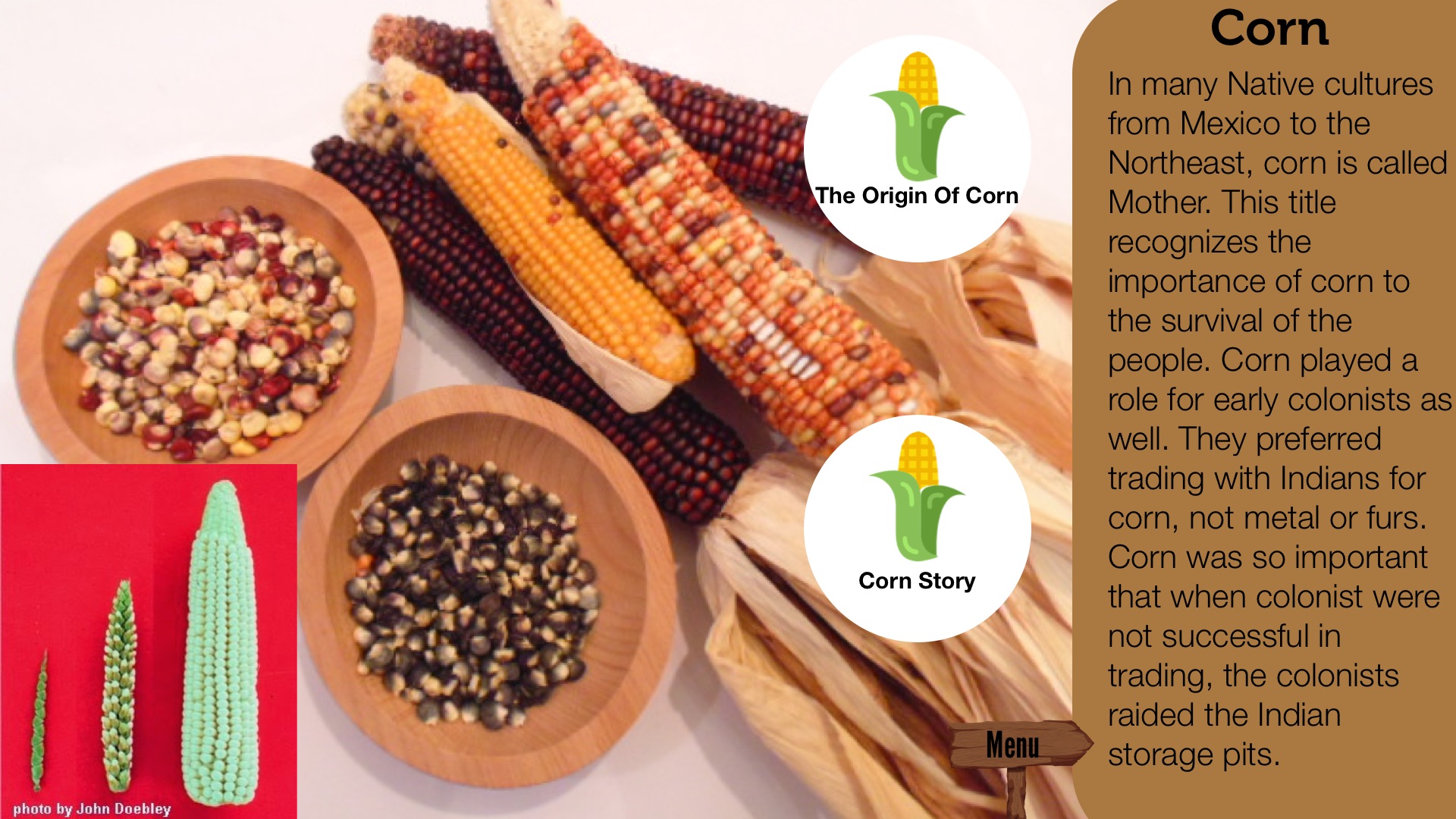
In many Native cultures from Mexico to the Northeast, corn is called Mother. This title recognizes the importance of corn to the survival of the people. Corn played a role for early colonists as well. They preferred trading with Indians for corn, not metal or furs. Corn was so important that when colonist were not successful in trading, the colonists raided the Indian storage pits.
The Origin Of Corn
Corn Story
Menu
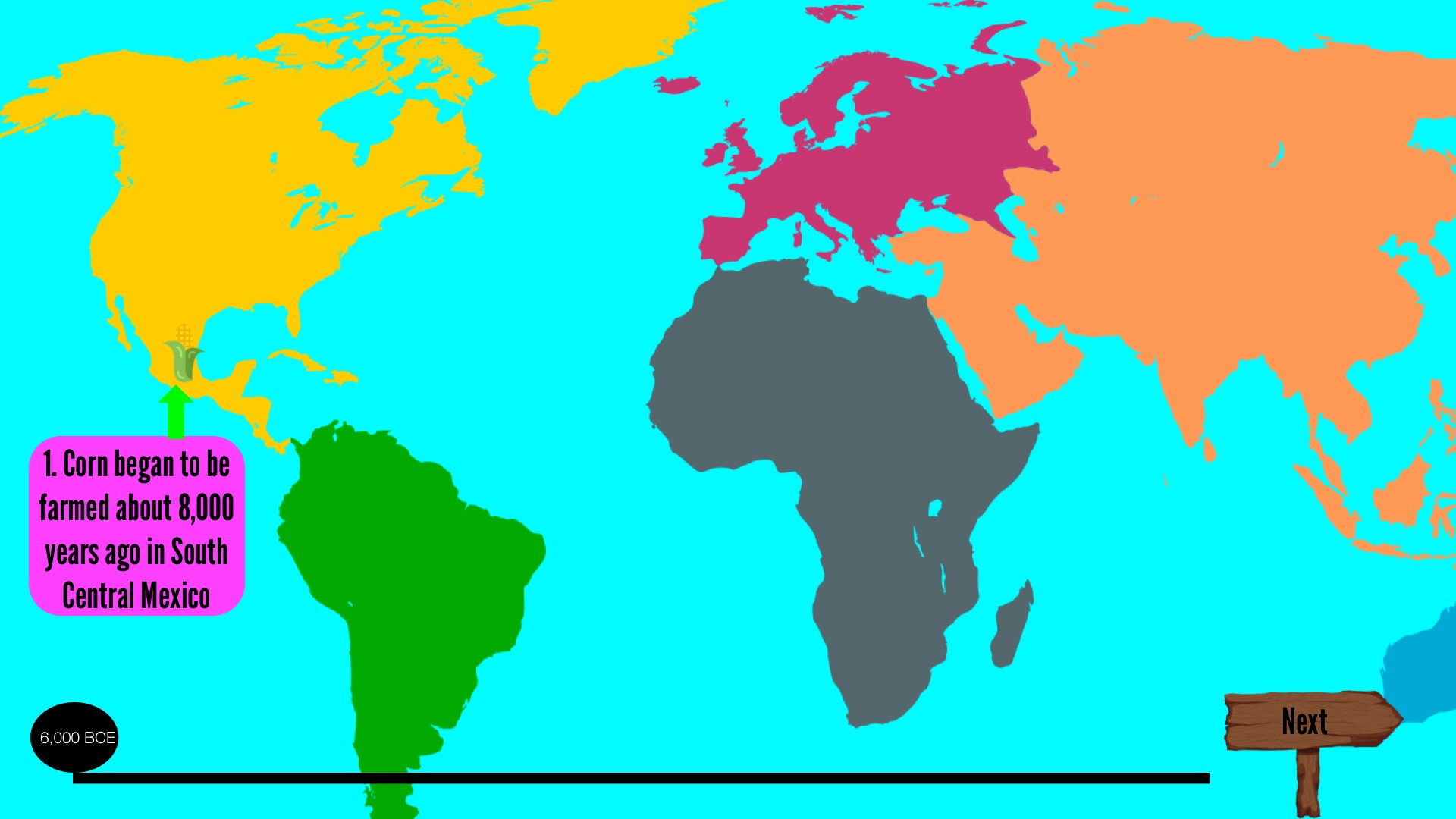
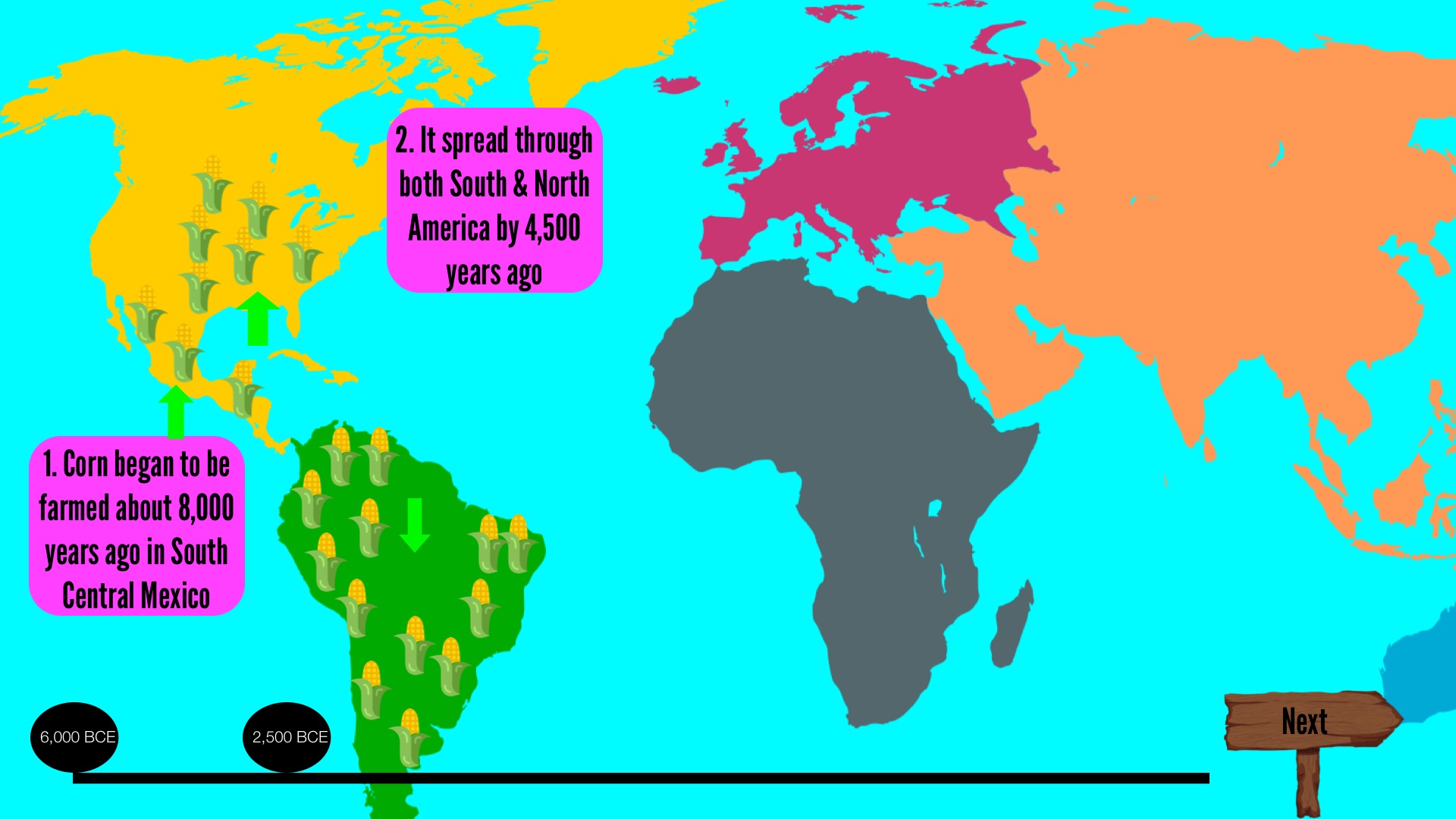
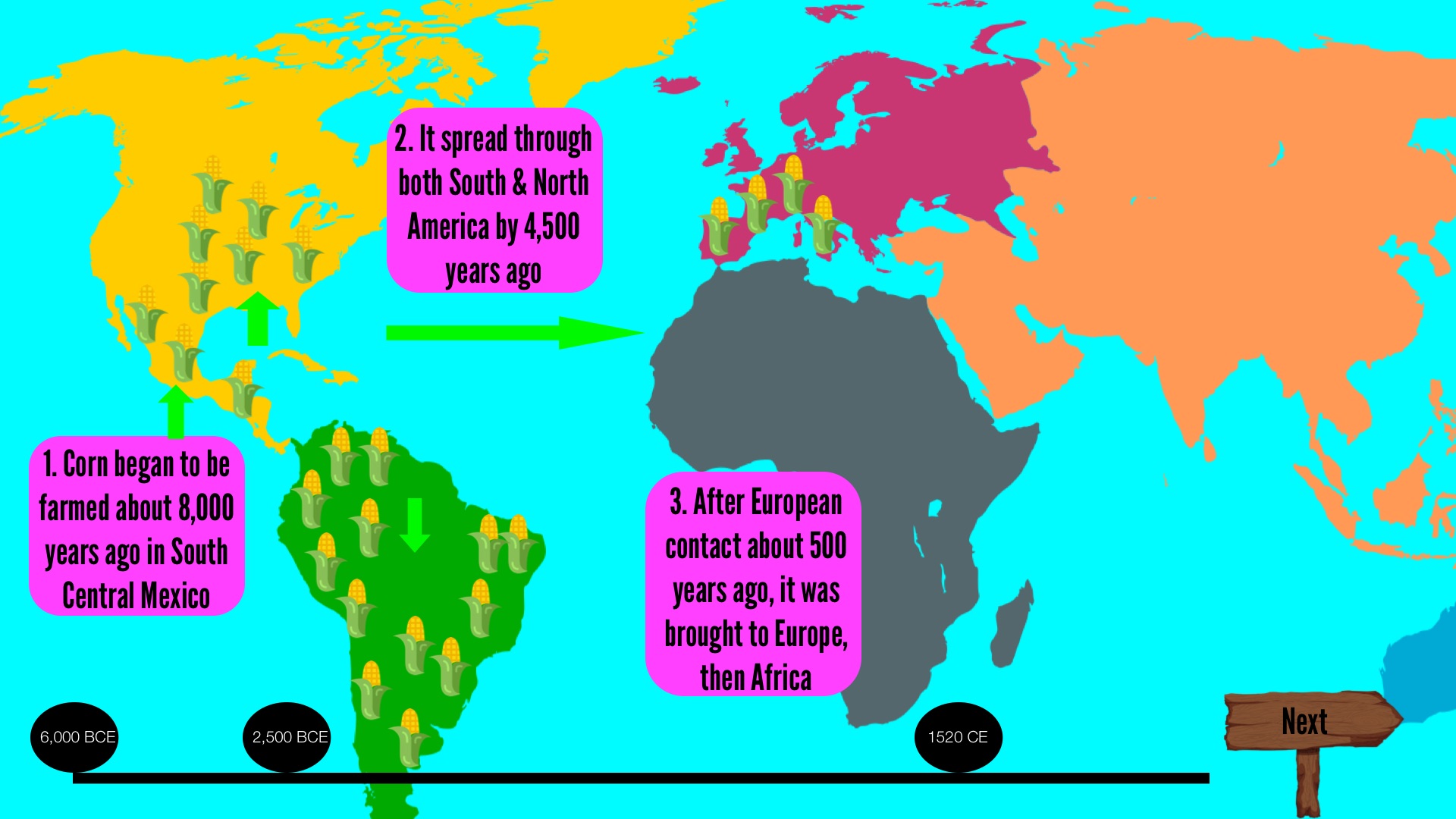
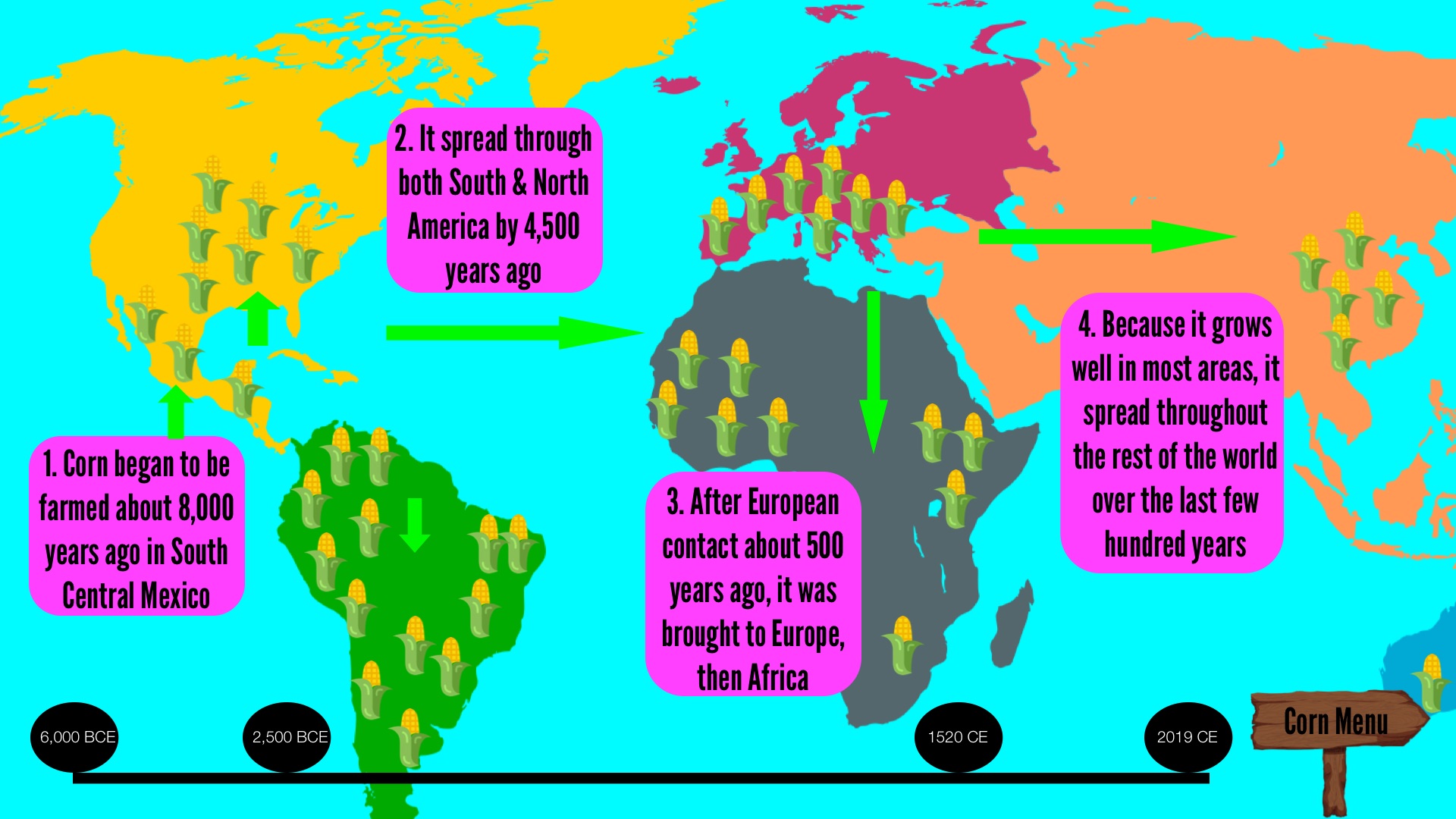
1. Corn began to be farmed about 8,000 years ago in South Central Mexico
Next
6,000 BCE
2. It spread through both South & North America by 4,500 years ago
1. Corn began to be farmed about 8,000 years ago in South Central Mexico
Next
6,000 BCE
2,500 BCE
2. It spread through both South & North America by 4,500 years ago
1. Corn began to be farmed about 8,000 years ago in South Central Mexico
3. After European contact about 500 years ago, it was brought to Europe, then Africa
Next
6,000 BCE
2,500 BCE
1520 CE
2. It spread through both South & North America by 4,500 years ago
4. Because it grows well in most areas, it spread throughout the rest of the world over the last few hundred years
1. Corn began to be farmed about 8,000 years ago in South Central Mexico
3. After European contact about 500 years ago, it was brought to Europe, then Africa
Corn Menu
6,000 BCE
2,500 BCE
1520 CE
2019 CE
Videos
Menu
Menu
Menu
Menu
Menu
Menu
Menu
Menu
Additional Resources
MDE Indian Education Framework
Menu
Lesson Extensions
The Dog & Travois
Ecology Lessons From Native Cultures
Inventions Compare & Contrast
Foods Of The World
American Indian Games
Menu
Extensions (excluding Compare & Contrast) by Priscilla Buffalohead