Sign up for FlowVella
Sign up with FacebookAlready have an account? Sign in now
By registering you are agreeing to our
Terms of Service
Loading Flow

Downloading Image /
Downloading Image /
Downloading Image /
Downloading Image /
Downloading Image /
Downloading Image /
Downloading Image /
Downloading Image /

Dred Scott v. Stanford
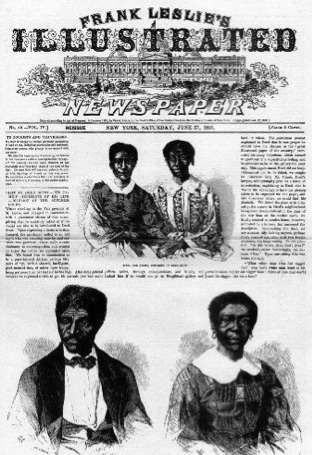
Dred Scott first went to trial in order to gain his freedom in 1847 when he went to court. Scott had sought his freedom through the courts but was unable to gain it due to a technicality, he couldn't prove that Emerson, his diseased owner's wife owned him and his wife. A year after this the court decided to to retire the case. When it went to a retrial a court decided he was free until the Missouri Supreme Court decided te reverse the decision. Then Scott went to appeal to the Supreme Court. The decision of the court was read in March of 1857. Chief Justice Roger B. Taney wrote the "majority opinion" for the court. The "majority opinion" said that due to his race Scott was not a citizen and because of this had no right to sue for his freedom. This decision also declared that the Missouri Compromise of 1820 was unconstitutional.
Dred Scott's trial made the north furious thus increasing the tenacity in which the north fought to have the slaves freed ultimately leading to Lincoln being elected and then eventually the civil war.
Downloading Image /
Downloading Image /
Downloading Image /
Downloading Image /
Downloading Image /
Downloading Image /
Downloading Image /
Downloading Image /
Downloading Image /



FlowVella, Previously Known As Flowboard
© 2026 FlowVella
 FlowVella