Sign up for FlowVella
Sign up with FacebookAlready have an account? Sign in now
By registering you are agreeing to our
Terms of Service
Loading Flow

Downloading Image /
Downloading Image /
Downloading Image /
Downloading Image /
Downloading Image /
Downloading Image /
Downloading Image /
Downloading Image /
Downloading Image /
Downloading Image /
Downloading Image /
Downloading Image /
Downloading Image /
Downloading Image /
Downloading Image /
Downloading Image /
Downloading Image /
Downloading Image /
Downloading Image /
Downloading Image /
Downloading Image /
Downloading Image /
Downloading Image /
Downloading Image /
Downloading Image /
Downloading Image /
Downloading Image /
Downloading Image /
Downloading Image /
Downloading Image /
Downloading Image /
Downloading Image /
Downloading Image /
Downloading Image /
Downloading Image /
Downloading Image /
Downloading Image /
Downloading Image /
Downloading Image /
Downloading Image /
Downloading Image /
Downloading Image /
Downloading Image /
Downloading Image /
Downloading Image /
Downloading Image /
Downloading Image /
Downloading Image /
Downloading Image /
Downloading Image /
Downloading Image /
Downloading Image /
Downloading Image /
Downloading Image /
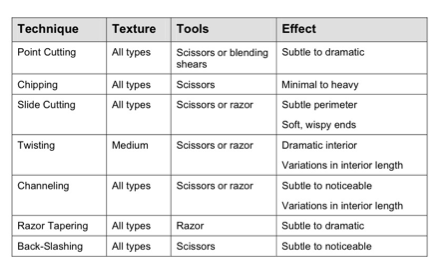
Keep in mind the following:
• Always use the razor on wet hair. Other tools can be usedon either wet or dry hair.
• Use extreme caution when applying any of these
techniques on highly textured or overly processed hair.
Twisting
Use this technique either to create an entire haircut or to
texturize a specific area.
1. Take a 1" square section of hair and twist it.
Note: If the client has finely textured hair, the section can be larger. If the hair is extremely dense, you can reduce the size of the square section.
2. Place the open blade of the standard scissors at the bottom of the twisted hair.
3. Slide the blade through the strand, opening and closing the scissors slightly.
4. When you reach the end of the section and want to remove length, close the scissors as you slide through theends.
5. Release the twist and comb the hair down.
You will find a variation of lengths within the twisted section. This variation gives the hair volume and movement, without thinning the hair too much.
Razor Tapering
This technique is performed with a straight razor. Use a lighttouch to produce a softness at the ends of the hair. Or, to create a dramatic effect in the interior of the hair, cut at a 45° angle to the hair strand. Use extreme caution when using the razor on extremely curly hair. It can be difficult to judge the tension when curly hair is wet. Don’t use a razor on bleached hair because it can cause the hair strands to stretch and break.
Back-Slashing
Use this technique to create a "shattered" look to the hair ends. This unique approach creates a soft, beautiful look.
1. Create a circular section on the top of the head, encompassing the crown, and let the rest of the hair fall away.
2. Be sure that plenty of hair falls away. If not, reduce the size of the circle.
3. Pick up a subsection of the circular section and strongly back-comb it. This hair should stand off the top of the head on its own.
4. Place an open blade of the scissors into the back- combed subsection and slide it up toward the ends.
5. Repeat 2 more times.
6. Comb down the subsection to see the results. If necessary, repeat the back-combing and back-slashing
process.
7. Repeat steps 3–6 for additional subsections of the
circular section.
Channeling
This technique is performed with a standard scissors in theinterior of a haircut in either long or short hair. Use it to create a strong effect with noticeable variations in length.
Also use it to reduce bulk or weight in a shape.
1. Starting at the first section where you want to reduce weight, place the stationary blade of a standard scissors against the head.
2. Slide the scissors diagonally across the section until you reach the end of that section.
3. Comb the area where the hair has been cut.
4. Check to see if you have removed enough weight.
5. If necessary, repeat the process.
6. Repeat with additional areas where you want to reduce weight.
25.C
Downloading Image /
Downloading Image /
Downloading Image /



FlowVella, Previously Known As Flowboard
© 2026 FlowVella
 FlowVella