Sign up for FlowVella
Sign up with FacebookAlready have an account? Sign in now
By registering you are agreeing to our
Terms of Service
Loading Flow

Downloading Image /
Downloading Image /
Downloading Image /
Downloading Image /
Downloading Image /
Downloading Image /
Downloading Image /
Downloading Image /
Downloading Image /
Downloading Image /
Downloading Image /
Downloading Image /
Downloading Image /
Downloading Image /
Downloading Image /
Downloading Image /
Downloading Image /
Downloading Image /
Downloading Image /
Downloading Image /
Downloading Image /
Downloading Image /
Downloading Image /
Downloading Image /
Downloading Image /
Downloading Image /
Downloading Image /
Downloading Image /
Downloading Image /
Downloading Image /
Downloading Image /
Downloading Image /
Downloading Image /
Text
5. Marcel the Rest of the Hair
As you continue moving up the head and marcelling the hair, follow these steps:
1. Drop another entire subsection. The previously waved hair is your guide; check the previous direction before
beginning the next wave.
2. Divide the subsection into as many panels as necessary. Each panel should be a little shorter than the length of the barrel.
❗️Hint: To more easily match waves, take narrower subsections, especially in the back of the head.
‼️Note: Make sure that the iron is still hot enough. If it isn’t, change to another iron.
3. Starting with the center panel, glide the iron lightly over the hair until it reaches the first ridge of this panel.
4. Hold the hair at an elevation close to the previously
waved hair so it can be used to match waves, but high enough so that the iron does not touch the wave underneath.
5. Match the wave to the one below it and marcel in the
same direction.
6. Continue the marcel procedure on adjacent panels.
7. Work subsection by subsection, until there is enough
length at the top of a panel to require adding another
wave (ridge). This means that there isn’t a wave underneath that part of the hair.
8. Add a wave as necessary, making sure that it goes in the
reverse direction of the one directly below it.
9. When waving the sides of the client’s head, stand on the
side.
10. When you finish, wait for the hair to cool thoroughly, andthen lightly comb the hair.
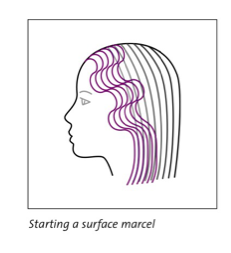
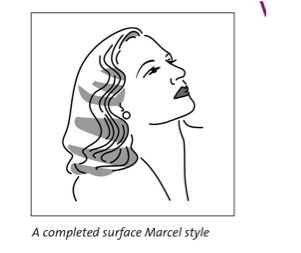
Variation: Surface Marcel
A surface marcel is when only the top layer of the hair is
waved. Follow the same procedure as the standard marcel,
except as follows:
• Start at the “heavy” side of the part in front and wave
the entire front panel.
• Then move around the head, matching up the ridges and troughs, and marcelling only the top layer of hair. Turn
the ends under.
Variation: Vertical and Diagonal Waves
Although marcel waves are usually horizontal, you can
create vertical and diagonal waves using the same
technique as outlined in this lesson. Make sure to change
your hand, comb, and iron positions to reflect the angle of
the wave.
15.c
MarcelingMarceling
Downloading Image /
Downloading Image /
Downloading Image /
Downloading Image /
Downloading Image /
Downloading Image /
Downloading Image /
Downloading Image /
Downloading Image /
Downloading Image /
Downloading Image /
Downloading Image /
Downloading Image /
Downloading Image /
Downloading Image /
Downloading Image /
Downloading Image /
Downloading Image /
Downloading Image /
Downloading Image /
Downloading Image /
Downloading Image /
Downloading Image /
Downloading Image /



FlowVella, Previously Known As Flowboard
© 2026 FlowVella
 FlowVella